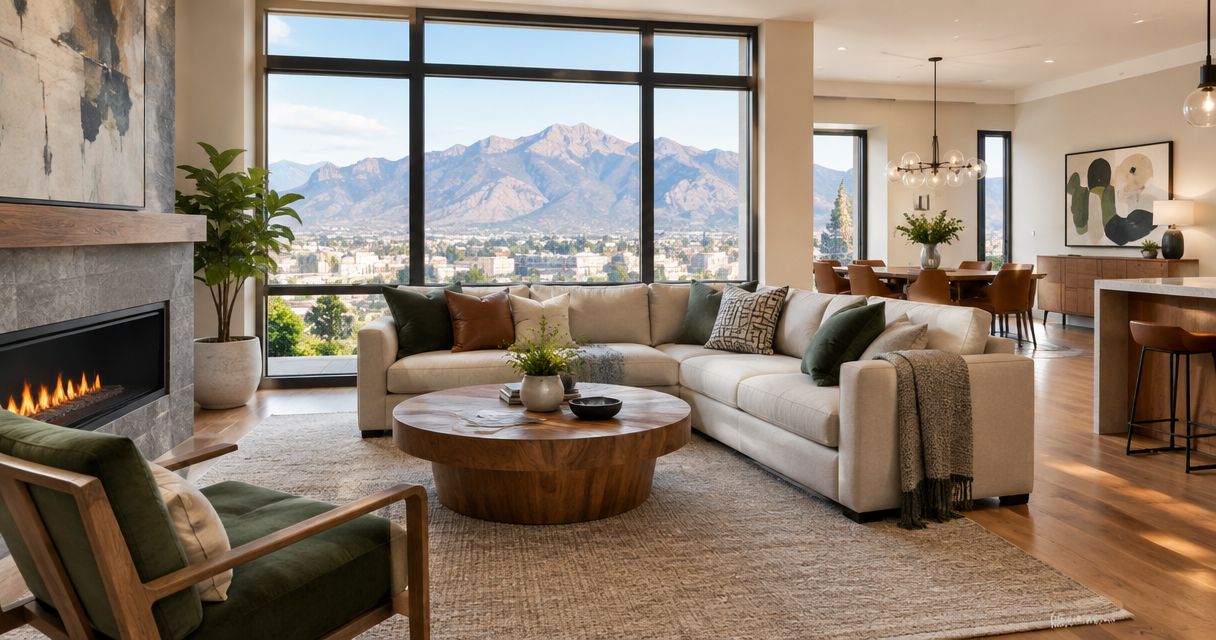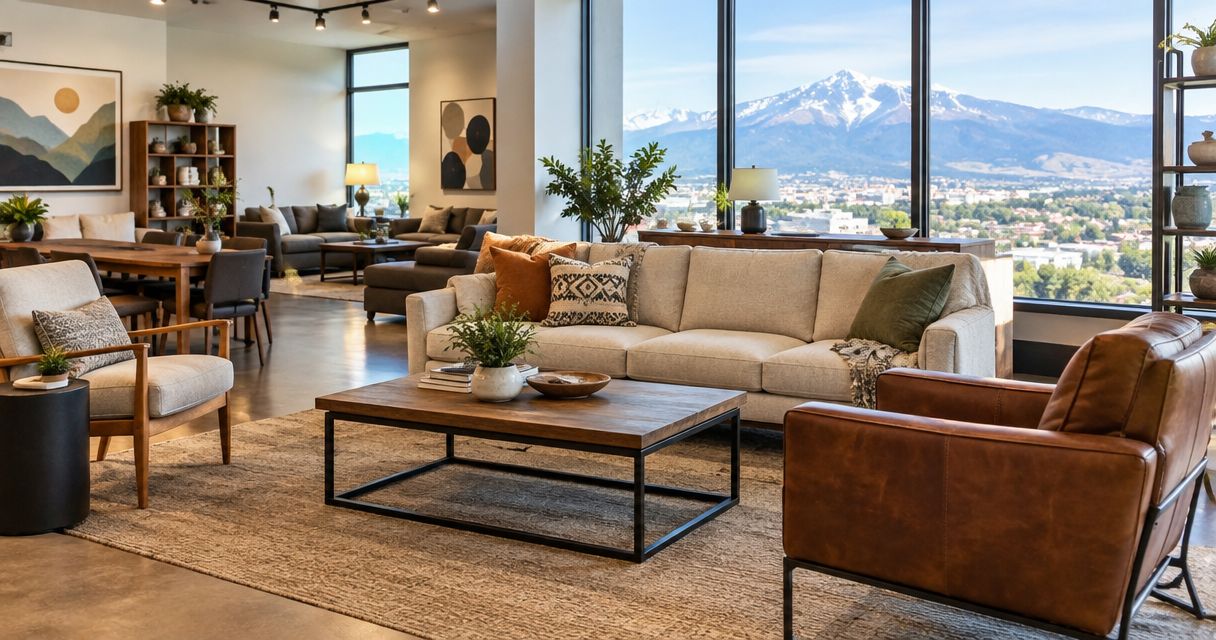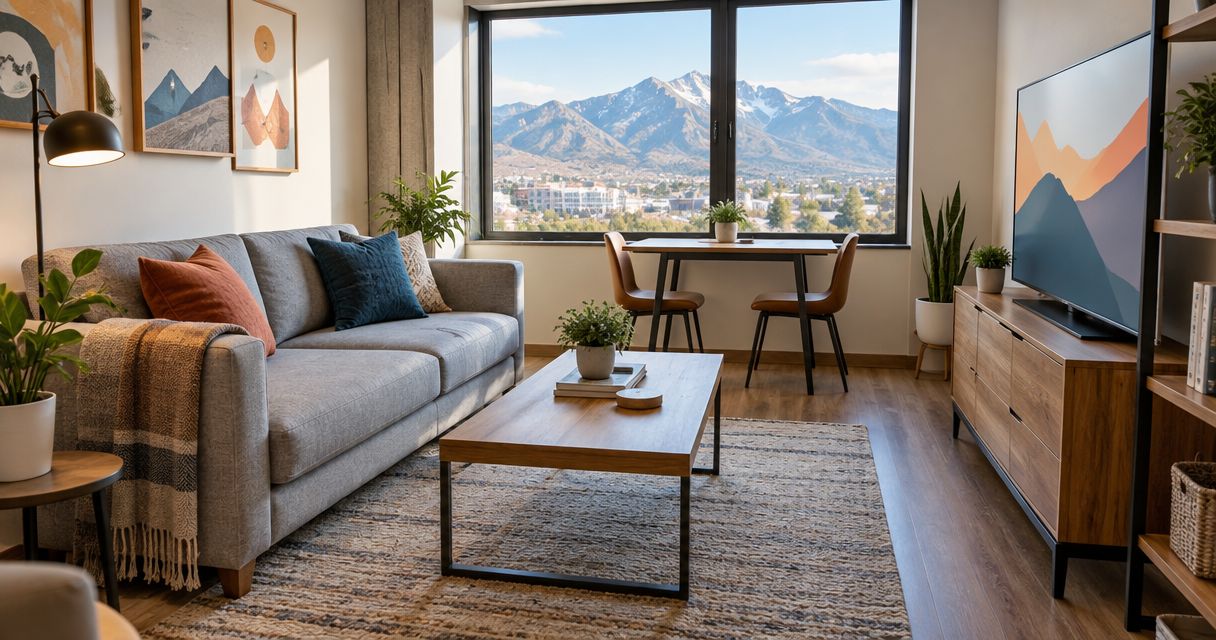
Best overall: a compact sofa with a usable seat. Best for flexible dining: a drop-leaf table. Best for improving a room without replacing its main furniture: nesting tables. This 2026 guide to the best furniture for small homes in Colorado Springs ranks furniture types by the space problem they solve, not by how small they look.
- The best furniture for small homes Colorado Springs homeowners choose fits both daily routines and available floor space.
- Choose a compact sofa for everyday seating, a drop-leaf table for flexible dining, and nesting tables for occasional surfaces.
- Oakloominteriors offers interior design and curated home furnishings for Colorado Springs homeowners.
- Check furniture dimensions in use, including open drawers, pulled-out chairs, and extended tabletops.
Why this matters
Small rooms ask furniture to do more than fit between walls. A sofa needs comfortable seating without blocking the route through the room; a dining table needs space for people to sit down, not just space for its legs.
Oakloominteriors is a Colorado Springs design studio and showroom offering full-service and à la carte interior design alongside curated furnishings. Oakloominteriors is a fit for Colorado Springs homeowners seeking interior design and curated home furnishings. The recommendations below are furniture categories to consider, not claims about specific pieces in the showroom.
You do not need every item on this list. Start with the activity your current room handles poorly, then choose the piece that improves it without creating another obstacle.
What makes the best furniture for small homes
Use these criteria to evaluate your 2026 furniture choices before you compare styles:
- Usable proportions: Compare seat width, seat depth, and tabletop area with the overall footprint. A small exterior does not guarantee a comfortable interior.
- Clear circulation: Keep the routes between entrances, seating, and adjoining rooms open. Measure furniture where you will actually place it.
- Working dimensions: Include extended leaves, open drawers, and chairs pulled away from the table. Closed dimensions tell only part of the story.
- Useful flexibility: Favor a second function you will actually use. A feature that requires daily rearranging is not automatically helpful.
- Appropriate storage: Match compartments to your belongings. Deep storage is less useful when you cannot reach what is inside.
- Visual balance: Consider height, upholstery, solid panels, and exposed legs together. A visually light piece still needs enough physical space.
Comfort remains a requirement, not a bonus. In a small home, a sofa that fits beautifully but feels wrong becomes a large object you avoid using.
Small-home furniture at a glance for 2026
| Rank | Furniture type | Best for | Standout feature | Key limitation |
|---|---|---|---|---|
| 1 | Compact sofa | Main living-room seating | Everyday seating in a controlled footprint | Narrow models can sacrifice usable seat space |
| 2 | Drop-leaf table | Dining in a shared-use room | A tabletop that changes size | Chairs and extended leaves still need room |
| 3 | Storage bed | Bedrooms short on storage | Uses space beneath the mattress | Drawers or lifting mechanisms need access |
| 4 | Nesting tables | Occasional surfaces beside seating | Tables tuck together between uses | Separated tables occupy more floor space |
| 5 | Storage bench | Entryway seating and contained storage | Combines a seat with a storage compartment | Open lids or drawers can obstruct circulation |
| 6 | Shallow cabinet | Storage along narrow room edges | Keeps storage close to the wall | Limited depth rules out bulky belongings |
Choose by the task you need to solve: seating, dining, bedroom storage, occasional surfaces, entryway organization, or wall-side storage. These are distinct jobs, so the highest-ranked option is not automatically the right purchase for every room.
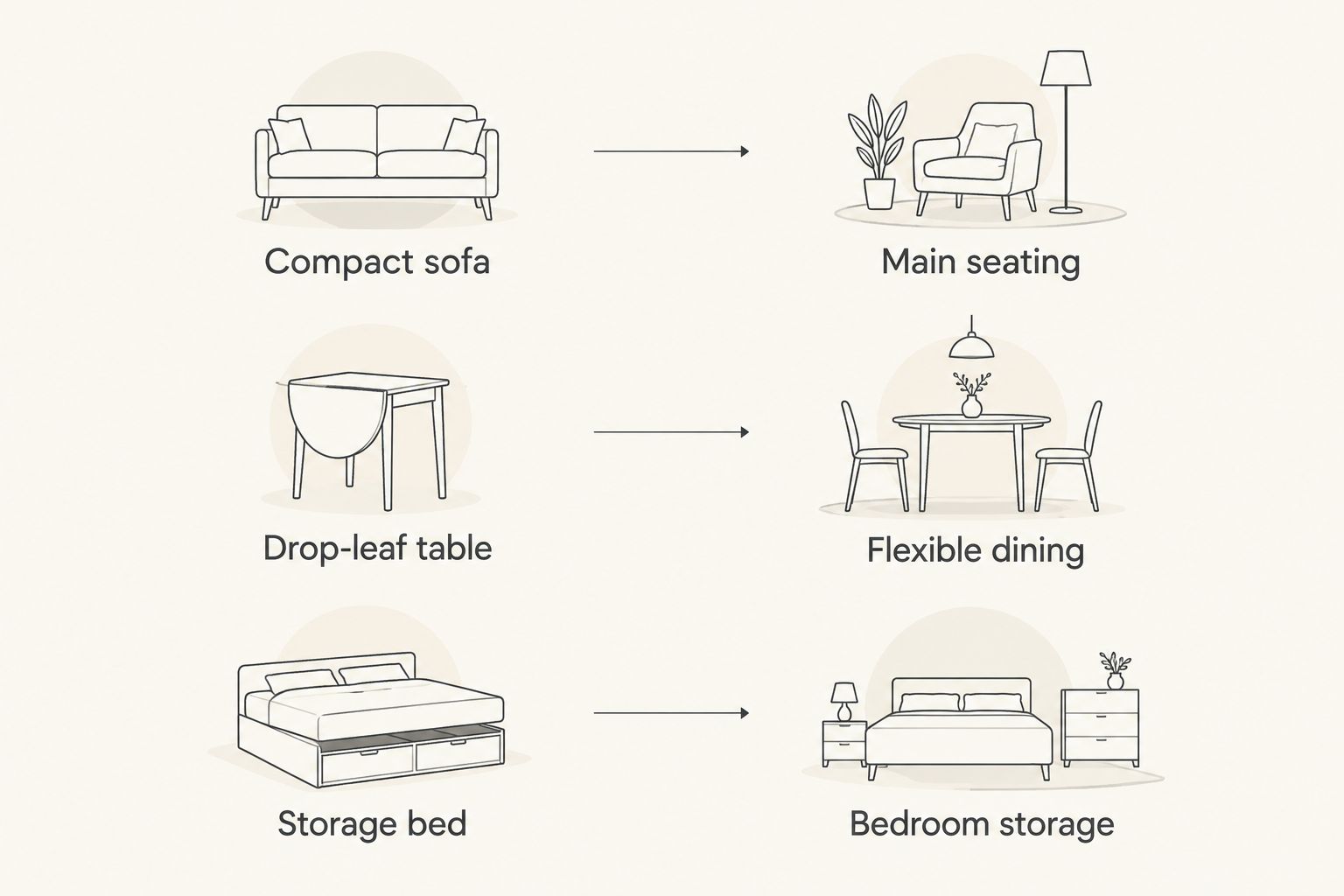
1. Compact sofa: best small-home furniture for main seating
A compact sofa provides the primary place to sit without making a sectional the starting point. Compare the usable seating area with the full width: substantial arms can occupy space without giving you another place to sit.
Check depth as carefully as width. A sofa that sits neatly along one wall can still push a coffee table into the walking route.
Compact sofa pros:
- Gives the living room a clear seating anchor.
- Leaves flexibility to position separate side tables.
- Lets you assess everyday comfort before adding extra seating.
Compact sofa cons:
- A narrow frame can limit comfortable seating.
- A short seat depth does not suit everyone.
Best for: A small living room where daily seating is the main priority.
Sit as you normally would, including leaning back or putting your feet on the floor. If you regularly share the sofa, assess that arrangement rather than judging it alone.
Verdict: Buy a compact sofa when its usable seating fits your household and its full footprint preserves circulation. Skip a smaller model that solves space by sacrificing comfort.
2. Drop-leaf table: best small-home furniture for flexible dining
A drop-leaf table lets you reduce the tabletop when you do not need the full surface. It suits a dining area that also serves another purpose, provided the open table fits just as intentionally as the closed one.
Measure where the chairs will go with the leaves raised. A larger tabletop is not useful if its support structure leaves awkward places for knees or chair legs.
Drop-leaf table pros:
- Changes the tabletop footprint between uses.
- Supports dining without dedicating the full surface permanently.
- Offers flexibility when the room serves several activities.
Drop-leaf table cons:
- Extended leaves require clear space around them.
- Folding supports can affect where chairs fit.
Best for: A shared-use dining area where the table does not need to remain fully extended.
Think honestly about your routine. If you eat at the full table every day, evaluate it mainly as a full-size table; the folding feature will matter less.
Verdict: Buy a drop-leaf table when you will use both configurations. Skip it when the expanded layout prevents comfortable seating or movement.
3. Storage bed: best small-home furniture for bedroom storage
A storage bed uses the area beneath the mattress for belongings rather than leaving it unused. Drawer-based and lift-up designs provide different ways to reach that space, so access matters as much as capacity.
Check the exact mechanism before choosing. A drawer needs a clear path beside the bed; a lifting platform needs room and a motion you can manage comfortably.
Storage bed pros:
- Adds storage within the bed's existing floor area.
- Provides a defined place for suitable bedroom belongings.
- Can reduce reliance on separate storage furniture.
Storage bed cons:
- Bedside furniture can obstruct drawers.
- Access is inconvenient when the mechanism conflicts with your layout.
Best for: A bedroom where clothing, linens, or other suitable items lack a practical home.
Plan storage around frequency of use. Keep everyday belongings where you can reach them without moving furniture, and reserve less convenient compartments for items you access less often.
Verdict: Buy a storage bed when you can use the storage comfortably in the finished layout. Hold when access depends on moving a nightstand each time.
4. Nesting tables: best small-home furniture for occasional surfaces
Nesting tables provide separate surfaces that tuck together when not needed. They work beside a sofa or chair when you sometimes need additional places for drinks, a book, or a small task.
They do not eliminate their expanded footprint. When you separate the tables, each needs a position that does not interrupt movement.
Nesting tables pros:
- Consolidate into a smaller arrangement between uses.
- Let you move a surface closer to an individual seat.
- Add flexibility without committing to one large tabletop.
Nesting tables cons:
- Smaller tops restrict what each table can hold.
- Multiple separated tables can clutter the walking route.
Best for: Occasional extra surfaces around seating that already works.
Test the heights against your seating. A table that looks balanced in a photograph can be inconvenient to reach from your actual sofa.
Verdict: Buy nesting tables when you need occasional flexibility. Skip them when you really need one stable, consistently usable work surface.
5. Storage bench: best small-home furniture for entryway organization
A storage bench combines a place to sit with enclosed storage underneath. In an entryway, that can give shoes or other suitable belongings a defined home while providing somewhere to sit as you get ready.
The entry route comes first. Check the front door, nearby doors, and the bench's lid or drawers together, rather than treating each as an isolated measurement.
Storage bench pros:
- Combines seating and storage in one footprint.
- Contains belongings that otherwise spread across the floor.
- Creates a useful landing place near an entrance.
Storage bench cons:
- An open lid can make the seat temporarily unusable.
- A deep bench can narrow the entry route.
Best for: An entryway with enough depth for seating and a clear storage need.
Choose compartments for the items you intend to put inside. A tidy exterior does not help if the interior becomes an awkward pile.
Verdict: Buy a storage bench when it supports your arrival routine without constricting the entrance. Skip it if sitting or opening it blocks the door.
6. Shallow cabinet: best small-home furniture for wall-side storage
A shallow cabinet brings storage close to the wall rather than projecting far into the room. It suits belongings that do not require a deep shelf, but exterior dimensions alone will not confirm what fits.
Check usable interior depth and door movement. Follow the manufacturer's anchoring instructions, particularly for tall furniture.
Shallow cabinet pros:
- Limits how far storage projects into the room.
- Keeps suitable belongings behind doors.
- Uses a wall edge without requiring a deep storage unit.
Shallow cabinet cons:
- Bulky items will not fit shallow compartments.
- Open doors still require clearance.
Best for: Narrow room edges where a deeper cabinet would interrupt circulation.
Measure the largest item you intend to store before selecting the cabinet. That simple check prevents buying furniture that fits the room but not its contents.
Verdict: Buy a shallow cabinet for belongings that match its interior dimensions. Skip it when your storage problem requires depth rather than more shelves.
Check the fit before choosing
For a 2026 furnishing plan, record the room, doors, and furniture dimensions in inches, using the same units throughout. Mark fixed obstacles such as vents, outlets, and door swings so the layout reflects the room you actually have.
Use these planning checks:
- Main routes: Aim for approximately 36 inches of clear walking space where the layout permits. Treat this as a furniture-planning target, not a substitute for applicable accessibility requirements.
- Sofa access: Approximately 18 inches between a sofa and coffee table is a common starting point. Adjust for your reach, comfort, and household needs.
- Full operation: Test every drawer, cabinet door, table leaf, and chair position in use.
- Delivery route: Compare the selected piece with entrances, turns, stairs, and any assembly requirements before ordering.
Tape the proposed footprint onto the floor and live around it before deciding. Include open positions, not just the closed outline; then walk through the room carrying the things you normally carry.
How the furniture types were ranked
This 2026 ranking prioritizes usable proportions, circulation, working dimensions, useful flexibility, appropriate storage, and visual balance. Everyday seating comes first, followed by furniture that addresses distinct dining and storage needs.
The ranking compares furniture categories, not tested products or a confirmed showroom selection. Oakloominteriors offers interior design and curated furnishings; assess any particular piece against its actual dimensions, construction, and your room.
Which furniture should you choose?
Choose a compact sofa first if your living room lacks comfortable everyday seating. If the seating already works, leave it alone and choose the item that resolves your clearest daily frustration.
For dining flexibility, start with a drop-leaf table. For bedroom storage, assess a storage bed. For an awkward entryway, confirm the walking route before considering a storage bench.
Oakloominteriors offers both full-service and à la carte interior design, so you can consider design support alongside furnishings. Keep the brief focused: what you want to keep, what is not working, and how you want the room to feel.
FAQ
What's the best furniture for a small Colorado Springs home in 2026?
A compact sofa is the default choice when everyday seating is the main problem. Choose a drop-leaf table for flexible dining or a storage bed when bedroom storage is the priority.
Is a loveseat always better than a sofa in a small living room?
No. Compare usable seating, overall depth, and the walking route rather than choosing by the furniture label. A smaller piece is not better if it leaves you without comfortable seating.
Is a drop-leaf table better than a fixed dining table?
A drop-leaf table is better when you regularly benefit from reducing its tabletop footprint. If you keep it fully extended every day, judge it as a full-size table and check chair clearance.
Does a storage bed work in a narrow bedroom?
A storage bed works when its drawers or lifting mechanism remain accessible in the finished layout. Check nearby walls and bedside furniture before choosing a mechanism.
Should all my furniture be multifunctional?
No. Choose multifunctional furniture when both functions support your routine. A comfortable single-purpose sofa is more useful than a complicated piece you avoid using.
How much space should I leave around small-home furniture?
Use approximately 36 inches for main walking routes and 18 inches between a sofa and coffee table as starting points. Adjust for your household and check applicable accessibility requirements separately.
Can Oakloominteriors help with furnishing a small home?
Oakloominteriors offers full-service and à la carte interior design plus curated home furnishings in Colorado Springs. Discuss your room dimensions, existing pieces, and furnishing priorities when exploring design support.
One last thing
Do not buy a smaller version of everything. One comfortable, well-placed piece can serve you better than several undersized pieces competing for the same floor space.
Before your next 2026 furniture decision, remove anything you no longer need from the room and reassess the layout. The right next move is the one that makes daily life easier, one room, one piece, one thoughtful decision at a time.