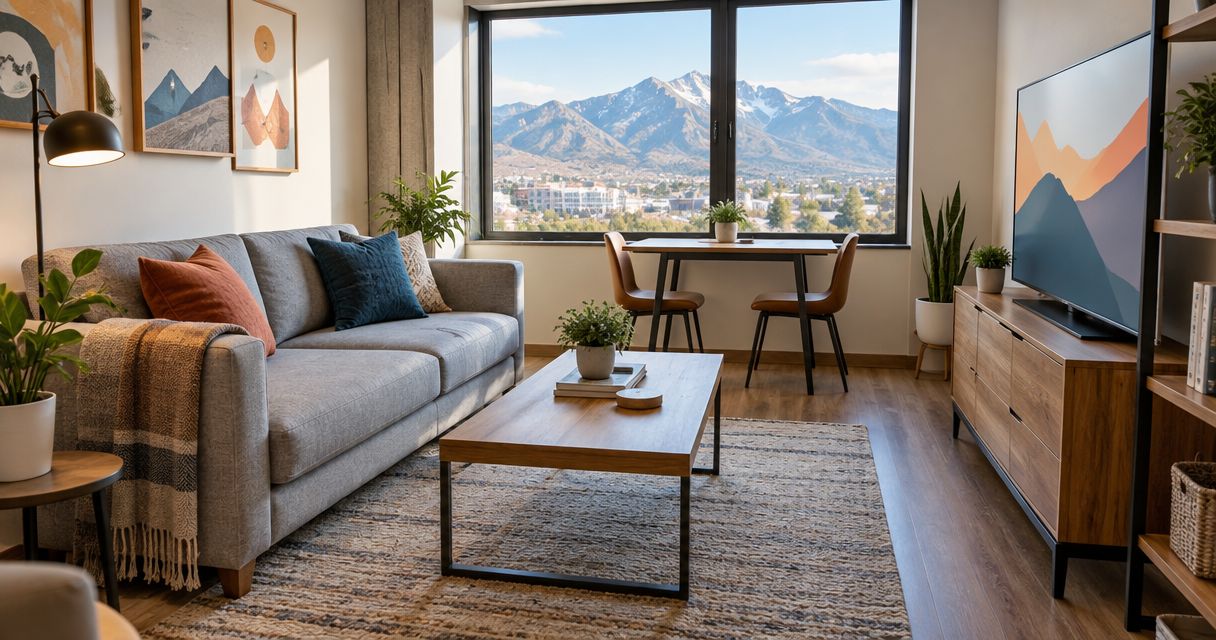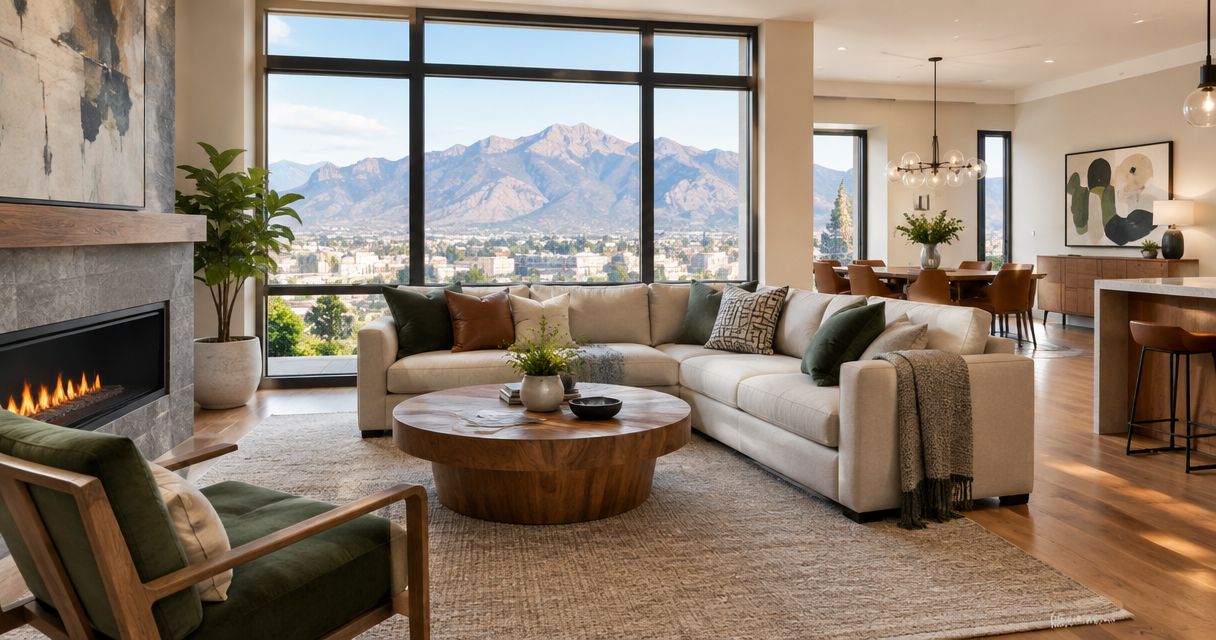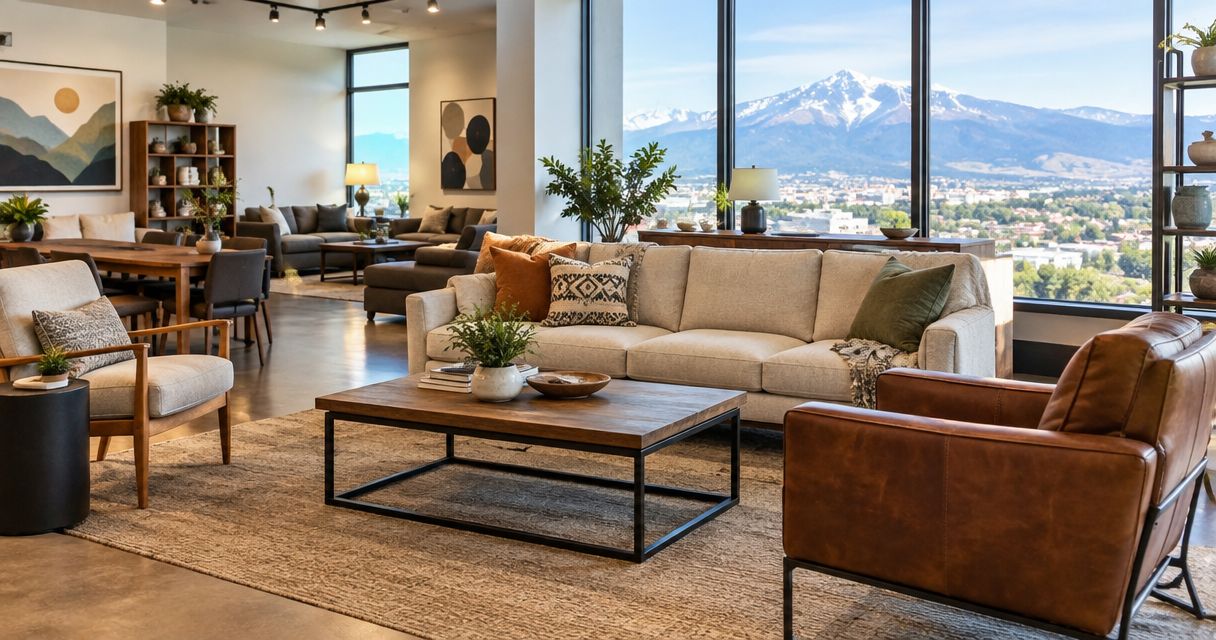
Best overall for a coordinated home project: full-service interior design. Best for a focused decision: à la carte design. Best for choosing furnishings: a design showroom. For homeowners comparing the best interior design consultation services in Colorado Springs, Oak + Loom Interiors offers full-service and à la carte design alongside curated furniture, lighting, and wallpaper.
- For best interior design consultation services Colorado Springs, match the consultation format to your project before choosing a provider.
- Oak + Loom Interiors offers full-service and à la carte interior design plus a Colorado Springs showroom.
- Choose full-service design for connected decisions, à la carte for focused needs, and showroom guidance for furnishings.
- Confirm the consultation scope, deliverables, and responsibilities before committing to a design partnership.
Why this matters
A consultation should help you make a decision, not simply introduce you to a designer. Your next step differs depending on whether you are renovating connected rooms, finishing a living room, or choosing a light fixture.
For your 2026 project, start with the problem you want solved. A beautiful portfolio helps you understand a designer's taste; a clear scope helps you understand whether the service fits your home.
Oak + Loom Interiors is best suited to Colorado Springs homeowners seeking interior design services and curated furnishings through a studio and showroom. The right starting point within that offering depends on how much of the project you want help shaping.
This guide ranks service formats by their purpose. It is a decision guide for choosing support, not a citywide ranking of independently evaluated studios.
What makes the best interior design consultation service?
Use these criteria before comparing service names. A consultation earns its place when it addresses your actual decisions and leaves you clear about what happens next.
- Scope clarity: Establish which rooms, questions, and decisions the consultation covers. A furniture discussion and a renovation discussion need different preparation.
- Practical fit: Explain how you live, what you intend to keep, and what currently frustrates you. Attractive suggestions still need to work in your home.
- Connected decisions: Consider furniture, lighting, finishes, and layout together when they affect one another. Avoid solving a single detail while leaving the larger conflict untouched.
- Useful deliverables: Confirm whether you receive verbal guidance, written recommendations, drawings, selections, or another agreed output. Do not assume these are interchangeable.
- Clear responsibilities: Establish who measures, orders, coordinates, and approves. A consultation does not automatically include ongoing project management.
- Personal partnership: Look for a conversation that takes your preferences seriously. You should understand the reasoning behind a recommendation, not feel rushed into accepting it.
For a 2026 consultation, ask about these points before discussing individual pieces. That keeps the conversation centered on your home rather than a service label.
Interior design consultation options at a glance
| Consultation format | Best for | Standout purpose | Key limitation |
|---|---|---|---|
| Full-service interior design | Connected rooms or a broader furnishing or renovation project | Brings related design decisions into a coordinated project scope | A broader engagement is not the natural starting point for one isolated question |
| À la carte interior design | A room-specific problem or clearly defined design decision | Lets you focus the engagement on a particular need | Separate decisions still need to fit the rest of the home |
| Showroom-based furnishing guidance | Choosing furniture, lighting, or wallpaper | Centers the conversation on furnishings and their place in your space | Product selection alone does not establish a complete renovation plan |
The distinction is the work you need, not which format sounds most impressive. Choose the smallest scope that fully addresses the problem, rather than the smallest scope available.
1. Full-service interior design: best for connected home decisions
Full-service interior design is the strongest starting point when your choices depend on one another. A living room layout affects furniture size; furniture placement affects lighting; adjoining spaces affect how finishes relate.
Oak + Loom Interiors offers full-service interior design for homeowners furnishing or renovating their spaces. Before choosing this format, discuss what full-service means for your specific project and which responsibilities belong to the studio, the homeowner, and any other professionals involved.
When full-service design fits
Choose this route when a solution in one room changes decisions elsewhere. You do not need to be redesigning every space to benefit from a connected plan, but you do need a clear reason for treating the work as a larger project.
A useful opening question is: which decisions must be resolved together? That identifies the real scope more effectively than beginning with a list of things to buy.
Full-service interior design pros:
- Creates a framework for discussing related rooms and selections together.
- Gives broader project goals a place in individual design decisions.
- Helps you distinguish the overall direction from isolated preferences.
- Suits homeowners seeking an ongoing design partnership rather than a single answer.
Full-service interior design cons:
- Requires a clear discussion of roles and boundaries across the project.
- Is a broader engagement than an isolated furniture or finish question calls for.
- Does not, by its name alone, establish construction oversight or purchasing responsibilities.
Best for: Homeowners whose furnishing or renovation decisions need a shared direction.
For a 2026 renovation, bring the intended scope and any existing plans to the opening discussion. Ask which decisions the designer can address and which require another professional's input.
Verdict: Choose full-service design when the project needs coordination, not just inspiration.
2. À la carte interior design: best for a defined room problem
À la carte interior design is the best starting point when you can name the decision you need help making. That might be a room that feels unresolved, a furniture arrangement that does not function, or uncertainty about how new selections relate to pieces you already own.
Oak + Loom Interiors offers à la carte interior design alongside its full-service offering. Confirm which individual services fit your question before treating this as a substitute for a broader engagement.
Make the question specific
Instead of asking how to improve the living room, explain what is not working. You might need seating that supports conversation, a clearer furniture layout, or a direction for finishes that feel disconnected.
A specific question gives the consultation a useful boundary. It also helps you recognize when the problem is larger than the service you initially had in mind.
À la carte interior design pros:
- Focuses the conversation on an identifiable need.
- Lets you approach your home one room or decision at a time.
- Gives existing furnishings and preferences a clear role in the brief.
- Makes it easier to describe what a successful outcome should address.
À la carte interior design cons:
- A narrow scope can leave connected issues unresolved.
- Separate consultations need a consistent overall direction.
- Follow-up work and implementation are not established by the service label.
Best for: Homeowners with a defined design question who do not need a whole-project engagement.
Ask what happens after the consultation. If you need a written plan to act on independently, confirm that output before booking rather than assuming the conversation includes it.
Verdict: Choose à la carte design for a clear problem; expand the scope when the answer depends on other rooms or decisions.
3. Showroom guidance: best for selecting home furnishings
A showroom-based conversation is the best starting point when the central question concerns furnishings. Oak + Loom Interiors has a Colorado Springs showroom and offers curated furniture, lighting, and wallpaper.
This format keeps the discussion close to what you are choosing and where it will go. Ask how showroom guidance connects with the studio's design services when your question extends beyond an individual selection.
Bring the room into the conversation
A piece should be considered in relation to the space, not in isolation. Bring room photographs, relevant measurements, and information about furnishings you intend to keep.
For lighting, explain the activities the room supports and what feels uncomfortable now. For wallpaper, describe the surrounding finishes and the atmosphere you want rather than choosing solely from a small sample.
Showroom-based furnishing guidance pros:
- Centers the discussion on furniture, lighting, and wallpaper selections.
- Gives you a concrete starting point when a room needs particular pieces.
- Encourages you to consider new furnishings alongside existing belongings.
- Connects product questions with the setting where those products will be used.
Showroom-based furnishing guidance cons:
- Selecting furnishings does not resolve every layout or renovation question.
- A room-level plan requires more context than an individual product discussion.
- Delivery, installation, and ordering responsibilities require separate confirmation.
Best for: Homeowners who know the room's purpose and need help choosing furnishings that fit it.
For your 2026 furnishing project, separate the decision about what belongs in the room from the decision about a particular piece. If the layout remains unresolved, address that first.
Verdict: Choose showroom guidance for furnishing selections; choose design support when the room itself needs a plan.
How to choose your consultation format
Start with the question, then select the service. You do not need a fully developed design brief to begin, but you should be able to describe where you feel stuck.
Define the problem
Write a short statement about what you want to change. Describe the problem in everyday terms: the room feels crowded, the furnishings do not relate, or the renovation needs a shared direction.
Map the dependencies
List the other decisions affected by that problem. If changing the layout means reconsidering furniture, lighting, and adjoining spaces, the scope is broader than choosing a single item.
Match the scope
Use full-service design for connected work, à la carte design for a bounded question, and showroom guidance for furnishing selections. If more than one format fits, ask where the initial conversation should begin.
Confirm the output
Agree on what you should leave with and what remains your responsibility. A useful consultation ends with clarity about the next decision, even when the larger project continues.
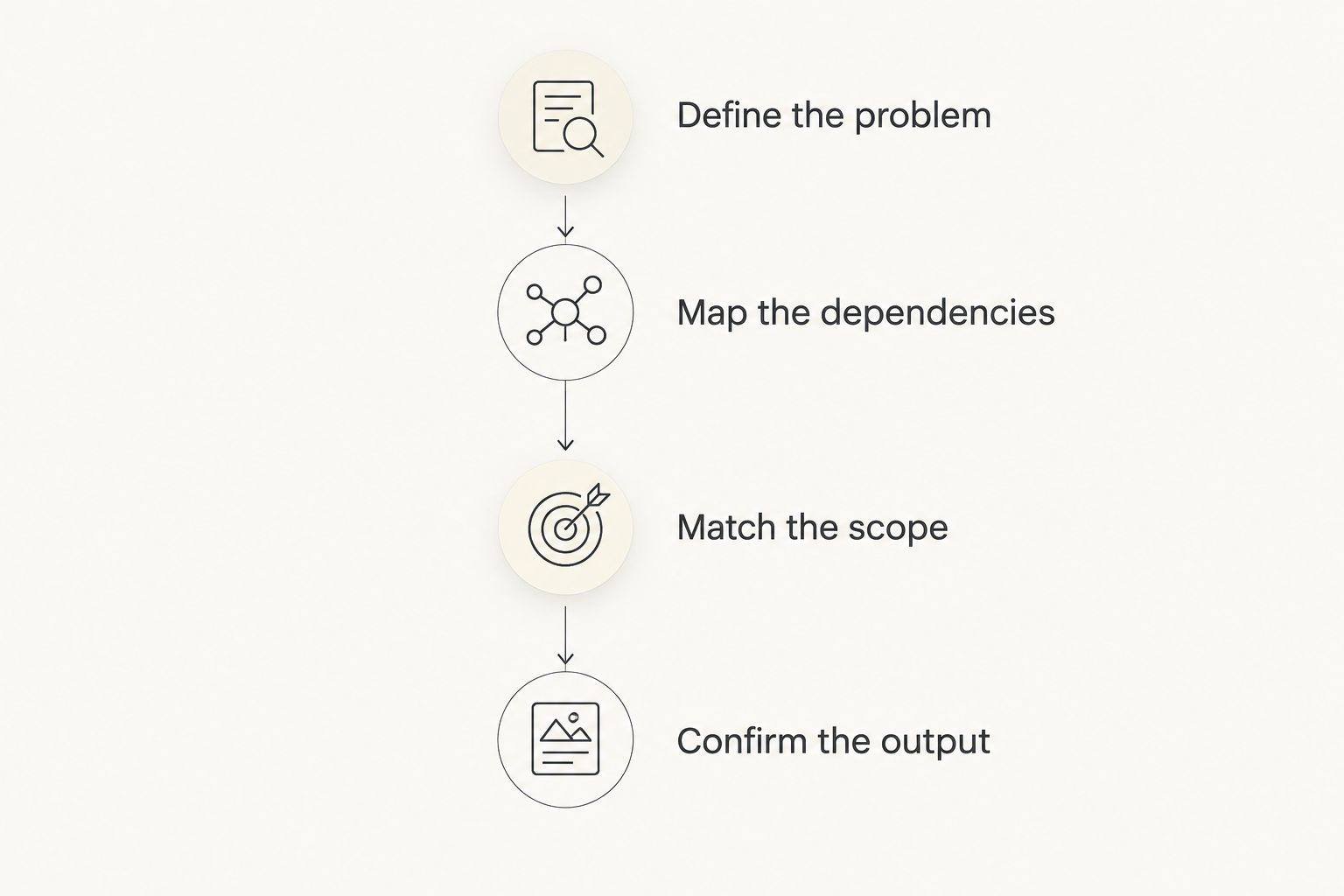
You can use this sequence even if you have already collected inspiration. Images help communicate taste, but the problem statement tells the designer what the home needs to do.
What to bring to an interior design consultation
Prepare a 1-page brief, 3 photos per room, and 2 priorities you want the conversation to address. These are preparation suggestions, not booking requirements; confirm any requested materials directly with the studio.
Include the following:
- Existing conditions: Room photographs, relevant measurements, and any plans you already have.
- Pieces to keep: Identify furniture, artwork, or finishes that should remain part of the design.
- Daily routines: Explain who uses the space and which activities need support.
- Preferences: Bring a small, edited selection of inspiration and explain what attracts you to each image.
- Boundaries: State your project budget, timing needs, and decisions you are not ready to make.
For a 2026 project, distinguish firm constraints from open preferences. A piece you must keep is a constraint; a color you like is a preference that can be considered alongside other choices.
How we ranked these consultation formats
The ranking follows scope clarity, practical fit, connected decisions, useful deliverables, clear responsibilities, and personal partnership. Full-service design ranks first for connected projects; à la carte design wins for focused questions; showroom guidance wins for furnishing selections.
Each format owns a different use case. The order does not claim that a broader service produces a better result for every homeowner.
Which interior design consultation should you choose?
Start with à la carte design if you have a clearly defined question and no broader project to coordinate. It gives the conversation a practical starting point without treating every room problem as a whole-home undertaking.
Choose full-service design when several decisions need to be made together. Choose showroom guidance when the room's direction is established and you need help selecting furniture, lighting, or wallpaper.
If you remain undecided, describe your problem before requesting a particular service. The consultation format should follow the work your home needs.
FAQ
What's the best interior design consultation service in Colorado Springs for a renovation?
Full-service interior design is the best starting point when renovation decisions need coordination. Oak + Loom Interiors offers this format; confirm the project scope and responsibilities before engaging the studio.
Should I choose full-service or à la carte interior design?
Choose full-service design for connected project decisions and à la carte design for a defined question. The distinction is the scope you need addressed, not simply the number of rooms involved.
Can I get design help for just one room?
À la carte interior design is the format to discuss for a focused room need. Confirm which services address your question and what the consultation delivers.
Is showroom guidance the same as an interior design consultation?
Showroom guidance and an interior design consultation serve different purposes. A furnishings discussion focuses on selections, while a design consultation can address a broader room or project question within its agreed scope.
What should I bring to an interior design consultation?
Bring room photographs, relevant measurements, information about pieces you want to keep, and a short description of the problem. Add your budget, timing needs, and a small selection of inspiration images.
Do I need to know my style before speaking with a designer?
You do not need a finished style label to explain what you like and what is not working. Describe your daily routines and show a few examples of spaces or details that appeal to you.
How much does an interior design consultation cost?
Request current fees for the specific consultation scope you need. Confirm the deliverables, follow-up, and responsibilities so you can compare the service itself rather than the fee alone.
One last thing
A favorite inspiration image can be useful for a reason that has nothing to do with its furniture. You might be responding to the open floor space, quiet lighting, or balance of texture.
Before your consultation, write down what you like about each image. That small step gives the conversation more substance than a collection of photographs alone, one room, one piece, one thoughtful decision at a time.