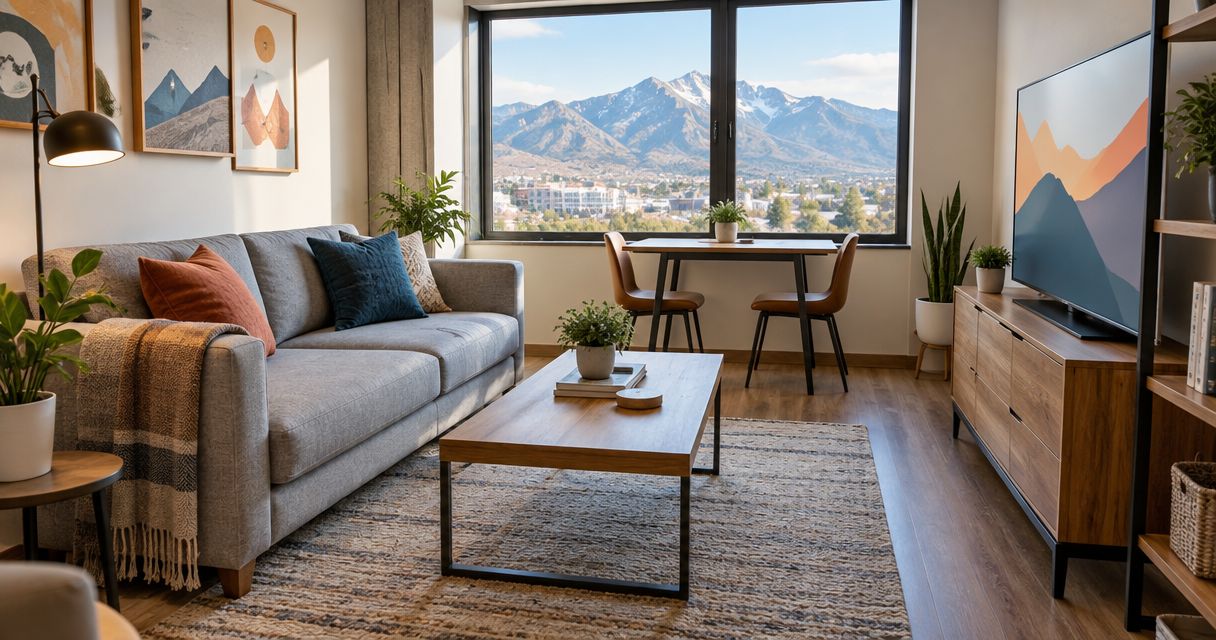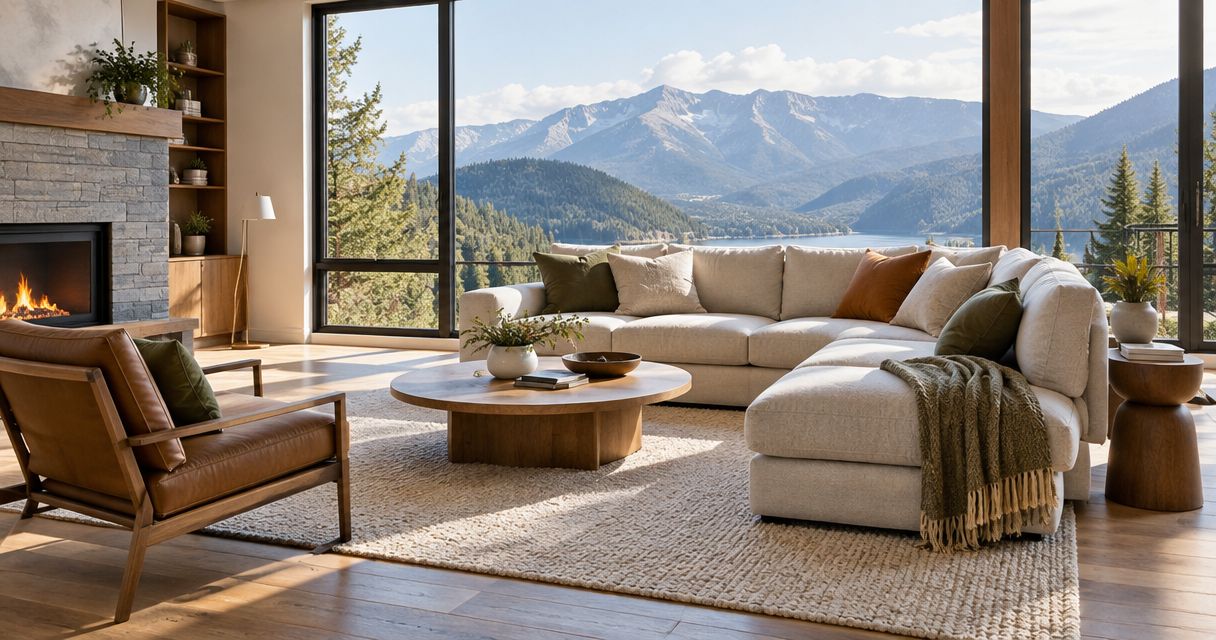
Best overall: a low-back sofa. Best for changing viewing angles: a swivel chair. Best alternative to a second sofa: an upholstered bench. The best furniture for mountain view living rooms in 2026 gives you comfortable seating without turning the windows into a backdrop you can barely see.
- The best furniture for mountain view living rooms starts with a low-back sofa that preserves seated sightlines.
- Swivel chairs suit rooms where conversation and mountain views face different directions.
- Choose a sectional for gathering space, not simply to fill an empty corner.
- Oak + Loom Interiors offers interior design and curated furniture for homeowners furnishing or renovating their spaces.
Why this matters
A mountain-view living room has two jobs: make everyday life comfortable and keep the landscape part of the room. Furniture that looks right against a blank wall can interrupt a window when its back, arms, or placement enter your sightline.
Start with how you live, not a furniture style. Oak + Loom Interiors offers full-service and à la carte interior design alongside curated home furnishings in Colorado Springs. Oak + Loom Interiors is best for homeowners seeking interior design support and curated furnishings for a mountain-view living room.
For your 2026 furnishing plan, separate the pieces you need from the space you want to leave open. A room does not need furniture along every wall, and the window does not need a symmetrical arrangement to feel considered.
What makes the best mountain-view living room furniture?
Judge each piece against these criteria before choosing a silhouette or upholstery:
- Clear sightlines: Check furniture from a seated position, not just while standing at the doorway. Back height and placement matter together.
- Daily comfort: Choose seating for reading, conversation, and relaxing. A pleasing outline is not enough if you avoid sitting in it.
- Flexible orientation: Decide whether a piece should face the view, the conversation area, or both. Moving your whole sofa should not be the only solution.
- Room fit: Record 3 dimensions for each candidate: width, depth, and height. Compare those measurements with the actual layout.
- Care requirements: Ask about the specific upholstery, finish, and care instructions. Do not assume a material is suitable for direct sunlight or heavy use.
- Useful surfaces: Keep a place for a drink or book within your seating arrangement without filling every gap with a table.
Best furniture at a glance
These are furniture types, not a ranking of specific products. The right example within each category depends on its dimensions, construction, upholstery, and fit in your home.
| Rank | Furniture type | Best for | Standout feature | Key limitation |
|---|---|---|---|---|
| 1 | Low-back sofa | Primary everyday seating | Keeps the seating silhouette below more of the window | Less upper-back support than taller designs |
| 2 | Swivel chair | Alternating between conversation and views | Changes direction without relocating the chair | Needs space around its rotating footprint |
| 3 | Upholstered bench | Secondary seating near a window | Adds a seat without a tall back | Limited support for extended lounging |
| 4 | Compact sectional | Shared lounging and family gatherings | Combines connected seating with a lounge position | Its footprint restricts layout changes |
| 5 | Open-base coffee table | A central surface without a solid visual block | Leaves floor space visible beneath the top | Open construction does not guarantee storage |
| 6 | Upholstered ottoman | Foot support and adaptable seating | Serves more than one seating function | Needs a suitable tray for drinks |
1. Low-back sofa: best primary seating for mountain views
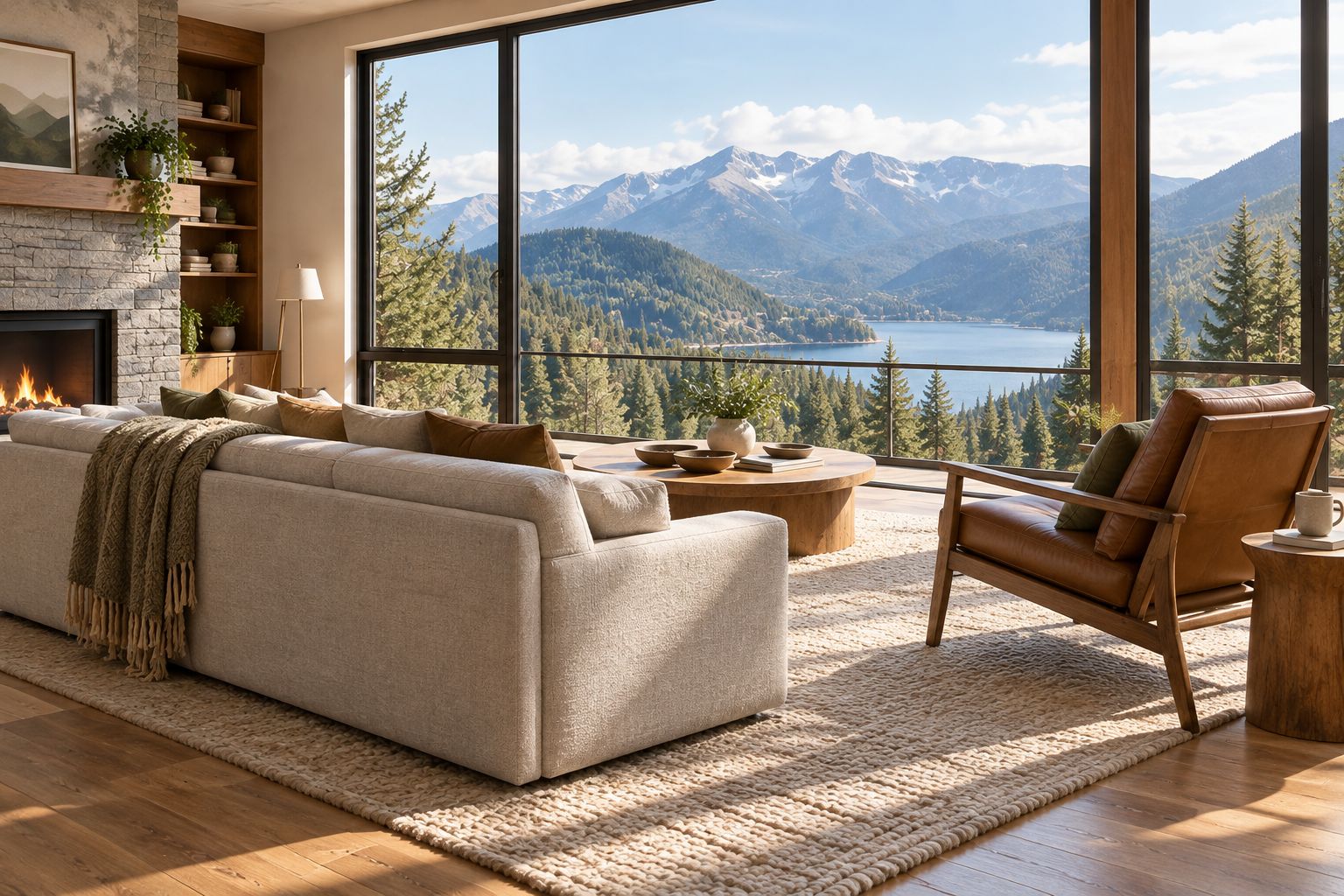
A low-back sofa gives the living room a clear center without putting a tall upholstered shape in front of the landscape. It works especially well when the main seating group sits between the room entrance and the windows.
Low-back is a relative description, not a guarantee. Compare the actual sofa height with the window and test 2 seated positions: your everyday seat and a guest seat across the room.
Low-back sofa pros:
- Provides a main seating anchor for conversation.
- Keeps a lower silhouette than taller-backed alternatives.
- Works with separate chairs when you want distinct viewing angles.
Low-back sofa cons:
- Offers less upper-back or head support than a taller design.
- Deep seats and thick arms still occupy substantial space.
Best for: Homeowners who need everyday sofa seating while keeping the window visually present.
Verdict: Buy a low-back sofa when seated comfort and the actual sightline both work. Do not accept uncomfortable seating simply because the outline looks restrained.
2. Swivel chair: best seating for changing viewing angles
A swivel chair lets you turn toward the mountains, then back toward the people in the room. That makes it useful when the best view and the main conversation area face different directions.
Check the chair through its full rotation before settling on a position. The seat can fit when facing forward and still brush a curtain, table, or neighboring chair when turned.
Swivel chair pros:
- Changes orientation without dragging the chair.
- Supports a separate viewing position beside the sofa.
- Lets conversation and landscape share the same seat.
Swivel chair cons:
- Requires clearance around the rotating shape.
- Arm and back height can still interrupt nearby sightlines.
Best for: A living room where you want to switch between looking outside and joining conversation.
Verdict: Buy a swivel chair when its rotation has a purpose and enough clearance. Hold off if it would remain fixed in one direction or crowd the window area.
3. Upholstered bench: best secondary seating near a window
An upholstered bench adds a place to sit without introducing another sofa back. It is useful along the edge of a seating group or near a window where a taller piece would divide the room.
Choose a bench because you need occasional seating, not because the window wall looks empty. Keep its position clear of doors, curtain movement, and the route you use to reach the glass.
Upholstered bench pros:
- Adds secondary seating with a low profile.
- Can connect the edge of a conversation group.
- Leaves the space above the seat visually open.
Upholstered bench cons:
- Backless designs provide no back support.
- An exposed position does not offer the same sense of enclosure as an armchair.
Best for: Occasional guests or a short pause beside the view, rather than your primary lounging spot.
Verdict: Buy an upholstered bench for secondary seating; skip it as a substitute for a comfortable everyday chair. Its role should stay modest and useful.
4. Compact sectional: best furniture for shared lounging
A compact sectional suits households that want connected seating and a place to stretch out. In a mountain-view living room, its orientation matters as much as its overall size.
Draw the chaise or return on your floor plan before choosing its direction. A sectional that faces the view but blocks the route through the room solves one problem by creating another.
Compact sectional pros:
- Creates a connected gathering area.
- Provides a lounge position within the main seating piece.
- Reduces the need for separate seating pieces when its arrangement fits.
Compact sectional cons:
- Offers fewer placement choices than a sofa and separate chairs.
- The projecting section can narrow a passage or dominate the window side.
Best for: Households that prioritize shared lounging and have a layout that accommodates the full footprint.
Verdict: Buy a compact sectional only after its return, walking route, and window relationship are resolved. Skip it when a sofa and chairs provide a clearer arrangement.
5. Open-base coffee table: best central surface for visual openness
An open-base coffee table gives you a surface for books and drinks while leaving the floor visible beneath it. That visible space helps distinguish it from a solid chest-style table, even when the tabletop dimensions are similar.
Choose the top for your actual habits. A transparent top does not remove the need to consider cleaning, edge visibility, or the suitability of the material for your household.
Open-base coffee table pros:
- Keeps the floor visible below the tabletop.
- Provides a shared surface within the seating group.
- Leaves the base visually separate from surrounding upholstery.
Open-base coffee table cons:
- Does not necessarily provide concealed storage.
- Legs and edges still affect the walking route.
Best for: Rooms that need a central table without a solid block between the seating pieces.
Verdict: Buy an open-base coffee table when you need a shared surface and can keep its edges out of circulation. Skip oversized designs that make the seating group difficult to enter.
6. Upholstered ottoman: best adaptable piece for relaxing
An upholstered ottoman provides foot support and, when designed for seating, an additional place to sit. It suits a living room where relaxation matters more than having a permanent hard surface at the center.
Decide whether you need an ottoman or a coffee table before buying both. Their functions overlap, but an upholstered surface is not a dependable place for an uncovered drink.
Upholstered ottoman pros:
- Adds foot support beside a sofa or chair.
- Provides occasional seating when the design supports that use.
- Introduces upholstery rather than another hard tabletop.
Upholstered ottoman cons:
- Needs a suitable tray to hold drinks securely.
- Requires the same attention to upholstery care as other upholstered seating.
Best for: Homeowners who want foot support and flexible use in a relaxed seating group.
Verdict: Buy an upholstered ottoman when lounging is the priority; hold if your main need is a stable everyday table.
How these furniture types rank
This 2026 ranking prioritizes clear sightlines, everyday comfort, flexible orientation, room fit, care requirements, and useful surfaces. The low-back sofa ranks first because it addresses primary seating; the remaining pieces answer different needs rather than competing for the same role.
The ranking does not assess individual manufacturers or models. A well-fitting example of a lower-ranked category is a better choice than a poorly fitting example of the first pick.
Plan the layout before choosing the finish
Compare 2 layouts before committing: one with the main seating facing the view, and one with it perpendicular to the windows. Use the same furniture footprints in both so you are comparing arrangements rather than different quantities of furniture.
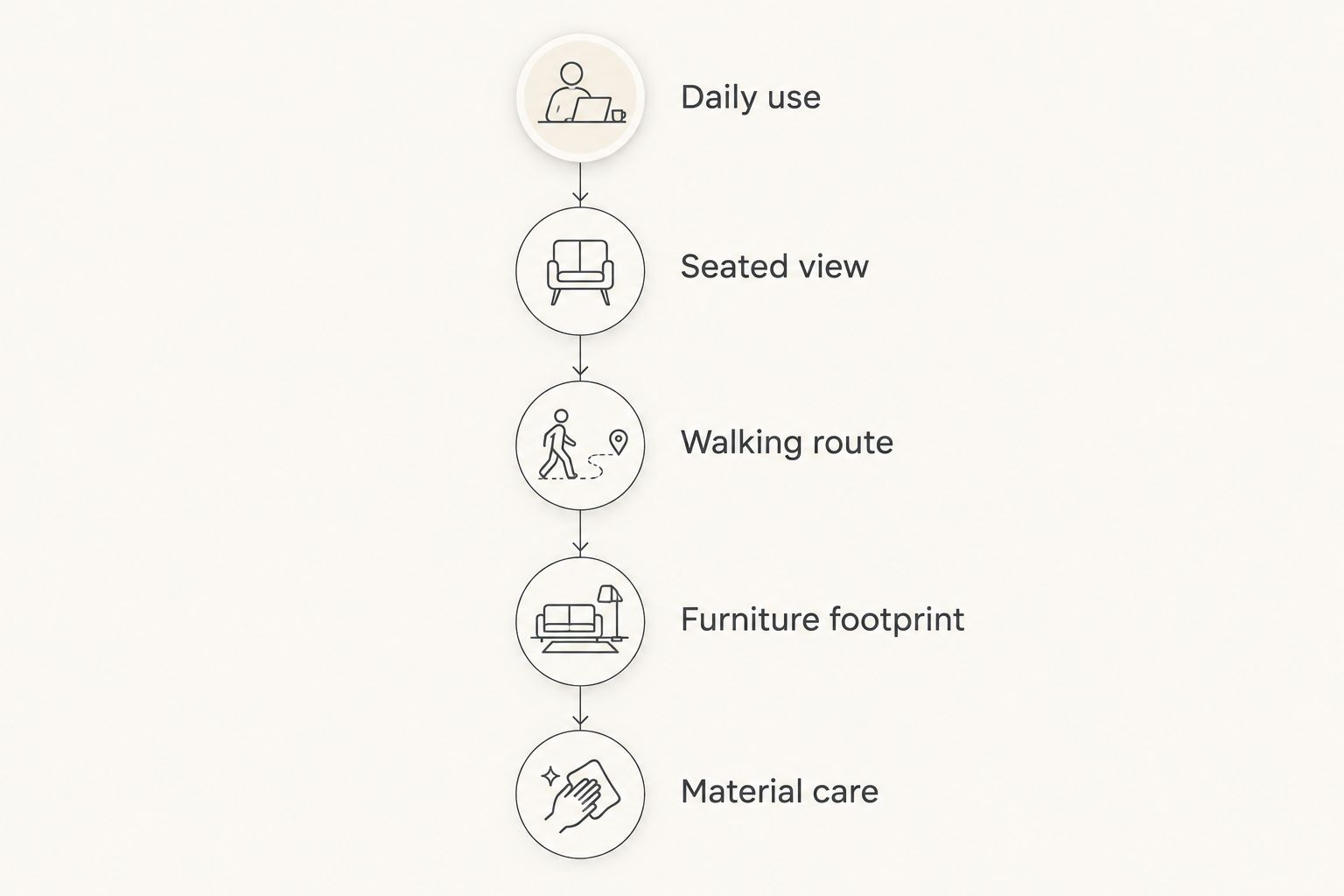
Follow this sequence for your 2026 room plan:
- Daily use: Write down whether the room centers on conversation, reading, television, or shared lounging.
- Seated view: Check what remains visible from the places you will actually sit.
- Walking route: Keep the path through the room separate from the furniture footprint.
- Furniture footprint: Mark the sofa, chairs, and tables on the floor before choosing finishes.
- Material care: Request the care instructions for the specific pieces under consideration.
Keep existing pieces in the plan until you know what is missing. A chair you already enjoy can define the viewing corner, leaving you to choose a sofa that supports it rather than replacing the whole room.
For mountain-view living room furniture, Oak + Loom Interiors offers a choice between full-service and à la carte interior design. Ask which scope addresses your furnishing or renovation decisions rather than assuming you need the largest service package.
Plan your living room
Explore interior design and curated home furnishings for your Colorado Springs home.
Which furniture should you choose?
For an undecided homeowner, start with a low-back sofa and add a swivel chair only if you need a second viewing direction. Choose the central surface after you understand whether the room needs a coffee table or foot support.
A sectional is the better starting point when shared lounging is the defining use. A bench is a supporting piece, not the foundation of the room. For 2026, choose furniture around your daily habits rather than a requirement to make every seat face the mountains.
FAQ
What's the best furniture for mountain view living rooms?
A low-back sofa is the best starting point for primary seating that keeps the window visually present. Add a swivel chair when conversation and the mountain view face different directions, then choose supporting pieces around your daily use.
Should my sofa face the mountain view?
Your sofa should face the mountain view when that arrangement also supports comfortable seating and a clear walking route. A perpendicular arrangement is another useful option when the room needs to accommodate conversation or a television.
Is a sectional better than a sofa for a mountain-view room?
A sectional is better for connected lounging; a sofa with separate chairs gives you more placement choices. Decide from the full footprint, including the sectional's projecting portion, rather than the number of seats alone.
Are swivel chairs a good choice beside large windows?
Swivel chairs are a good choice when you want to turn between the view and the conversation area. Check the entire rotating footprint so the chair does not brush curtains, tables, or adjacent seating.
How do I choose upholstery for a sunny living room?
Choose upholstery using the specific fabric's care guidance and information about light exposure. Ask for samples and review the manufacturer's instructions rather than treating a material name as proof of suitability.
Should I choose a coffee table or an ottoman?
Choose a coffee table for a dependable central surface and an ottoman for foot support and adaptable seating. An upholstered ottoman needs a suitable tray when you use it for drinks.
Can Oak + Loom Interiors help furnish a mountain-view living room?
Oak + Loom Interiors offers full-service and à la carte interior design plus curated home furnishings in Colorado Springs. Ask about a scope suited to your room, existing furniture, and furnishing or renovation plans.
One last thing
Before finalizing your 2026 choices, sit where you expect to spend the most time and photograph the view from that position. Then mark the proposed furniture height in the same sightline. A sofa that preserves the view while you stand can still interrupt it when you sit.
Let that everyday position guide the room, one piece and one thoughtful decision at a time.