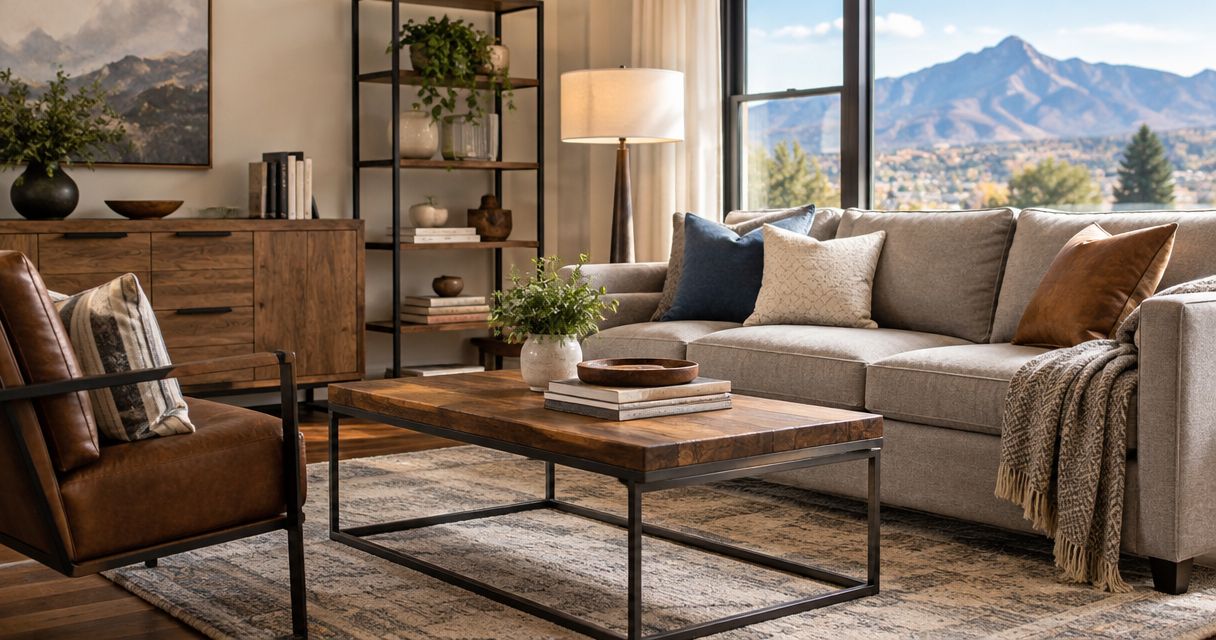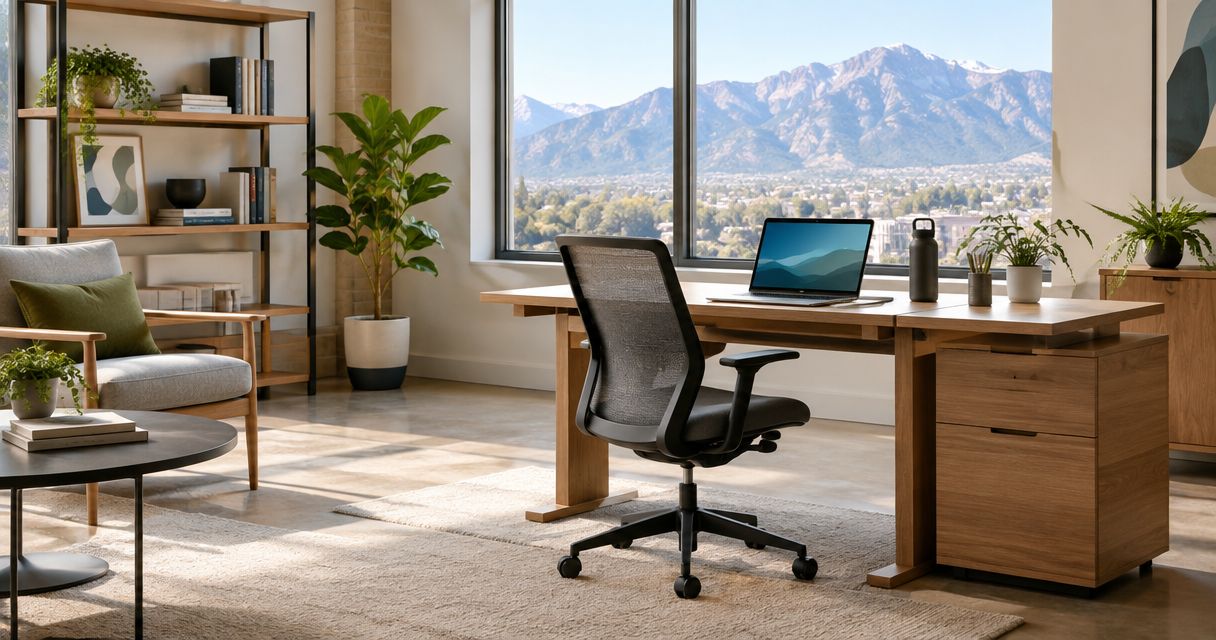
Houzz brings home inspiration and professional discovery together, making it a useful place to explore interiors and find designers. Its ceiling is the handoff: browsing a platform is not the same as choosing a designer to help with your particular home. The best Houzz alternative in 2026 is Oakloominteriors if you need a Colorado Springs design partnership; Pinterest if you need visual inspiration.
- For houzz alternatives interior designer searches, Oakloominteriors fits homeowners seeking Colorado Springs interior design services.
- Pinterest is best for collecting visual inspiration, not replacing an interior designer.
- Personal referrals help you start conversations, but another homeowner’s project does not establish your own scope.
- Keep Houzz when you still need inspiration or a directory of design professionals.
Why this matters
Choosing a Houzz alternative starts with a simple distinction: do you need somewhere to look, or someone to help you decide? Those are different jobs. A collection of beautiful rooms can clarify your taste, but it does not resolve furniture placement, competing preferences, or which decisions belong together.
For your 2026 project, separate discovery from design before comparing options. If you are furnishing or renovating a Colorado Springs home, the useful question is not which website has the most appealing pictures. It is which route gives you the right kind of help for the decisions you face.
You do not have to abandon inspiration to work with a designer. Keep the images that explain what you love, then choose a service relationship separately. That separation keeps a browsing habit from becoming your entire project plan.
Houzz alternatives at a glance
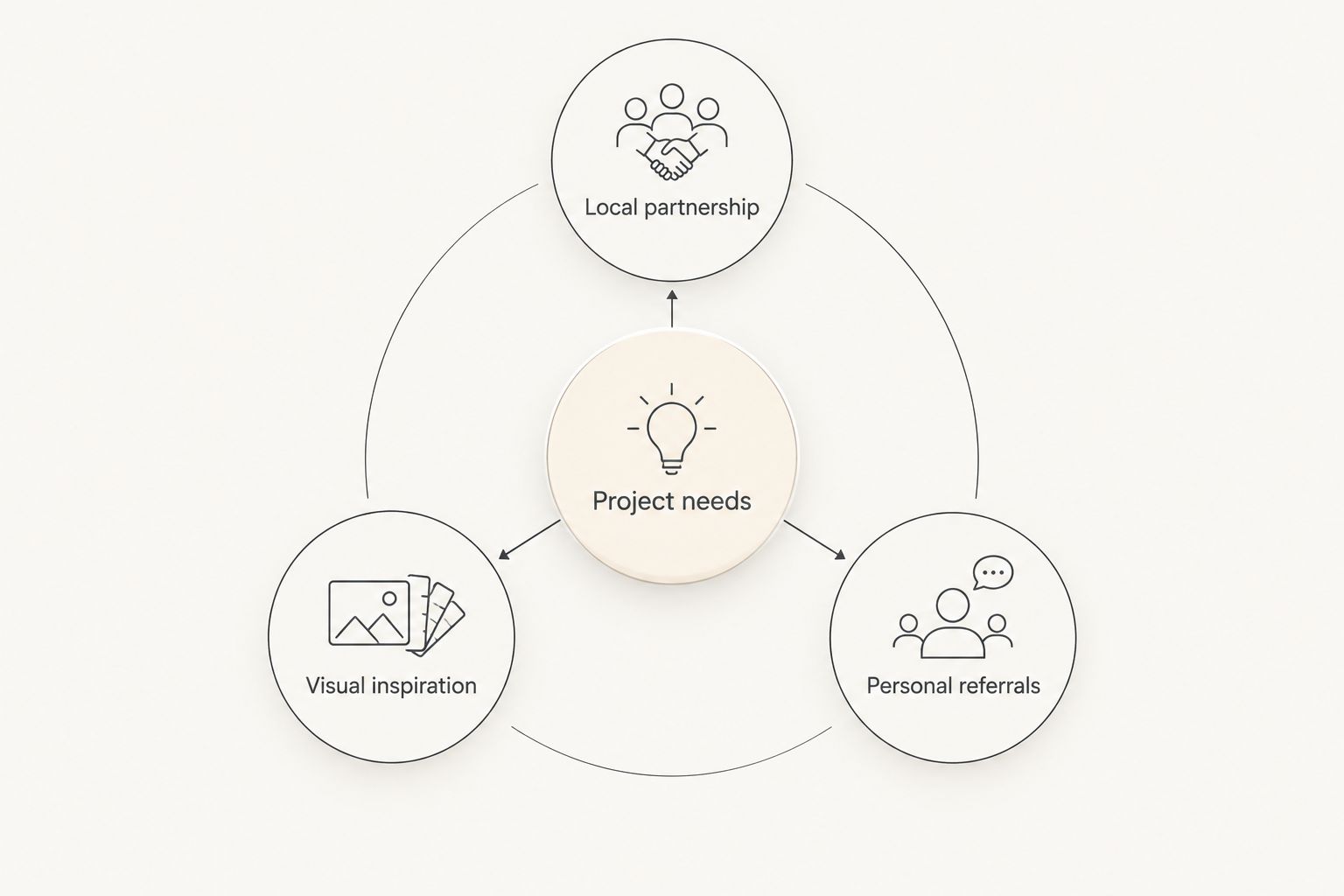
These options are not interchangeable. Houzz and Pinterest help you explore; a design studio provides a service; personal referrals introduce you to people. Compare their roles before choosing where to spend your attention.
| Option | Best for | Standout feature | How it differs from Houzz | Main limitation |
|---|---|---|---|---|
| Houzz | Inspiration and professional discovery | Interior photography alongside professional profiles | The benchmark: a platform for browsing and finding professionals | You still need to select a professional and agree on the work |
| Oakloominteriors | Local partnership | Colorado Springs studio and showroom with full-service and à la carte interior design | A specific service provider rather than a directory | It is not a way to compare a broad field of designers |
| Visual inspiration | Saving images into boards | Centers on collecting ideas rather than selecting a local design service | A board does not provide a room-specific design plan | |
| Personal referrals | Personal introductions | A conversation about someone’s firsthand experience | Starts with an individual recommendation rather than platform browsing | Someone else’s project is not a specification for yours |
The most useful alternative depends on the gap you are trying to fill. Choose a local partnership for design decisions, visual inspiration for understanding your preferences, and personal referrals for introductions you can investigate further.
1. Oakloominteriors: best for a local design partnership
Oakloominteriors is a Colorado Springs interior design studio and showroom offering full-service and à la carte design alongside curated furniture, lighting, and wallpaper. It is the relevant alternative when your next step is working with a provider, rather than continuing to search a platform. You can move the conversation from what looks appealing to what you want help deciding.
Best for: Homeowners furnishing or renovating a Colorado Springs home who want to discuss interior design services and curated furnishings with a local studio.
Where the studio shines
- A direct service relationship: You are considering a design provider, not another place to collect professional profiles.
- Different levels of design support: Full-service and à la carte services give you distinct starting points for discussing your project.
- Design and furnishings in the same business: Furniture, lighting, and wallpaper sit alongside the studio’s interior design offering.
- A local showroom: The showroom gives your search a physical destination in Colorado Springs.
Those strengths matter when your decisions connect. A dining table affects circulation; lighting affects how the room feels; wallpaper affects the visual balance of nearby furnishings. Treating each choice as a separate shopping task leaves you responsible for bringing the room together.
A useful first conversation begins with your situation, not a polished presentation. Explain what you already own, what you want to change, and where you feel stuck. If you need help framing that conversation, the guide to interior design consultation services in Colorado Springs is a relevant next read.
Where the studio falls short
- It does not replace a broad directory: If your immediate goal is comparing many designers, one studio is not the same kind of resource as Houzz.
- It is a service choice, not just an inspiration tool: If you only want to save pictures, Pinterest or Houzz serves that task more directly.
- The service category does not define your agreement: You still need to discuss what full-service or à la carte design means for your particular project before committing.
That last point deserves attention in 2026. Do not assume a service label answers who makes selections, who handles each next step, or which rooms are included. Ask for a clear description of the proposed work and your responsibilities.
Head-to-head: a local studio versus Houzz
| Dimension | Local studio | Houzz |
|---|---|---|
| Primary role | Interior design and curated furnishings provider | Inspiration and professional-discovery platform |
| Local connection | Colorado Springs studio and showroom | A place to search for professionals |
| Design offering | Full-service and à la carte interior design | Services depend on the professional you select |
| Best next action | Discuss your home and desired scope | Explore ideas or compare professional profiles |
Verdict: Buy design services when you need a local partnership, after agreeing on a scope that fits your home. Keep Houzz as a reference library if its images still help you communicate.
2. Pinterest: best for collecting visual inspiration
Pinterest is a visual discovery platform where you can save ideas into boards. It is a useful Houzz alternative when you want to collect interiors, materials, and details before deciding what your room needs. Its role is preparation, not a substitute for professional design.
Best for: Homeowners who need to identify and communicate visual preferences before a design conversation.
Where Pinterest shines
- Organizing references: Boards give you somewhere to gather ideas around a room or a particular decision.
- Exploring details: You can collect examples of lighting, furniture arrangements, wallpaper, and color relationships.
- Showing rather than describing: An image helps explain a preference that words such as cozy or modern leave open to interpretation.
Make your board useful by annotating the idea behind each image. Perhaps you like the room’s contrast, not its furniture; perhaps the attraction is the placement of reading lights, not the wall color. That distinction gives a designer something clearer to respond to.
For a 2026 room refresh, create separate groups for what you like and what you want to avoid. Include your existing room in the conversation too. Inspiration becomes more useful when it sits beside the home you actually have.
Where Pinterest falls short
- An image does not establish fit: It does not tell you whether a layout works with your room’s dimensions and access points.
- A board is not a service agreement: It does not establish who will design, select, or carry out the work.
- More references can leave choices unresolved: Collecting another image is a different activity from deciding between competing ideas.
Head-to-head: Pinterest versus Houzz
| Dimension | Houzz | |
|---|---|---|
| Primary role | Visual discovery and saved boards | Home inspiration and professional discovery |
| Main output | A collection of visual references | Inspiration and professional profiles to explore |
| Finding a designer | Not a substitute for selecting a design professional | Professional discovery is part of the platform |
| Best next action | Explain what you like in each saved image | Compare professionals or explore project photographs |
Verdict: Hold Pinterest as your inspiration companion, not your interior designer. Use it to clarify your taste, then bring the useful references into a separate design conversation.
3. Personal referrals: best for a firsthand introduction
A personal referral starts with someone who can discuss their own experience with a designer. That makes it a different route from browsing Houzz: you can ask what the relationship felt like and what work the designer actually performed. The recommendation remains a starting point, not a decision made for you.
Best for: Homeowners who want an introduction grounded in another person’s experience.
Where personal referrals shine
- You can ask follow-up questions: Find out what the referrer hired the designer to do, not just whether they liked the result.
- You can explore working style: Ask how decisions were discussed and which responsibilities belonged to the homeowner.
- You can understand the context: A furnishing project and a renovation call for different conversations.
Where personal referrals fall short
- Taste is personal: A room your friend loves is not proof that the same approach suits you.
- Scope matters: A recommendation for one kind of work does not establish suitability for another.
- You still need your own agreement: Another client’s experience does not define your deliverables or responsibilities.
| Dimension | Personal referrals | Houzz |
|---|---|---|
| Starting point | A person’s firsthand experience | Platform browsing and professional profiles |
| Context | Follow-up conversation with the referrer | Information you review while researching |
| Main limitation | One person’s project and preferences | Browsing still requires your own selection process |
Verdict: Hold a referral as a useful introduction; choose the designer only after discussing your own project.
Why people switch from Houzz
The practical reason to move beyond Houzz is a change in task. You have found inspiration, but now you need decisions about your own home. That calls for choosing a professional relationship, not necessarily replacing one browsing platform with another.
You need a room-specific conversation
A photograph shows a finished space. Your project starts with existing furniture, architectural features, daily routines, and preferences that need to coexist. A design conversation should address those conditions directly.
Write down 3 project priorities before contacting a designer: what needs to function better, what you want to retain, and what you want the room to feel like. These are prompts for your brief, not a test you have to pass.
You need to choose the level of help
If the problem is limited to 1 room, say so. If it spans 2 connected rooms, explain how you use them together. Those details are more useful than assuming every project requires the same design service.
Oakloominteriors offers full-service and à la carte interior design. Ask which approach matches your decisions, then establish the actual scope rather than relying on the label alone.
You need a stopping point for research
Set a practical boundary for your 2026 search: stop collecting references when you can explain your priorities and your unresolved choices. You do not need a perfectly consistent board before asking for help. Resolving the differences between your ideas is part of the conversation.
Explore a local design partnership
Consider Colorado Springs interior design services and curated furniture, lighting, and wallpaper.
When staying with Houzz is the right call
Stay with Houzz when you still need home inspiration or a way to discover design professionals. Those are useful functions, and choosing a local designer does not make them irrelevant. The mistake is expecting the platform itself to answer questions that belong in a project conversation.
If you already work with a designer found through Houzz and the relationship fits your needs, switching discovery tools is not a reason to change providers. Judge the relationship by your agreed scope and communication, not by where the introduction happened.
For 2026, the clearest approach is to keep the tools that serve a defined purpose. Browse for ideas, compare professionals when necessary, and discuss your home directly when you need design decisions.
FAQ
What’s the best Houzz alternative for an interior designer in Colorado Springs?
Oakloominteriors is the best fit here for homeowners seeking a Colorado Springs studio offering full-service and à la carte interior design. Pinterest fits a different need: collecting visual inspiration before choosing or working with a designer.
Is Houzz an interior design service?
Houzz is a platform for home inspiration and discovering professionals, rather than the individual designer responsible for your project. If you hire a professional you found there, your project scope belongs to that separate service relationship.
Is Pinterest better than Houzz for planning a room?
Pinterest is a useful choice for organizing visual references; Houzz also supports discovering design professionals. Neither a saved board nor a professional profile establishes a room-specific design agreement.
Should I choose full-service or à la carte interior design?
Choose after discussing the decisions you want help with and the responsibilities you want to retain. Ask the studio to describe the proposed deliverables rather than assuming either service label defines them.
Can I bring Houzz inspiration to a local interior designer?
Yes, Houzz images can help explain your preferences in a design conversation. Identify the details you like and include information about your existing room so the references have context.
Should I hire the interior designer my friend recommends?
Treat your friend’s recommendation as an introduction, not an automatic decision. Discuss your own project, preferences, and scope with the designer before committing.
What should I prepare before talking to an interior designer?
Prepare your project priorities, existing-room photographs, relevant measurements, and examples of what you like or dislike. Explain which decisions feel unresolved rather than trying to arrive with a finished design.
One last thing
Bring an image you dislike as well as one you love. Explain why: a room can feel too busy, too formal, or simply unlike you. That contrast gives your designer a clearer starting point than a collection of attractive rooms without any explanation.
Your next move does not have to be a whole-home commitment. Start by naming the decision you need help with—one room, one piece, one thoughtful decision at a time.