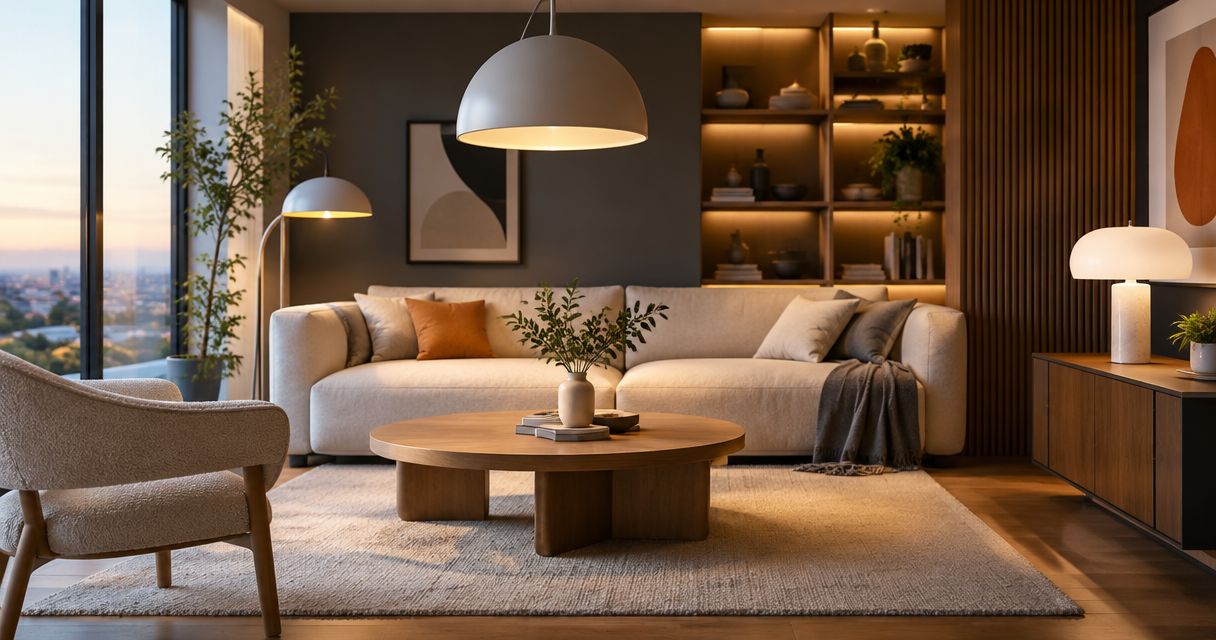
Best overall: a bed frame and mattress that fit your room and sleeping needs. Best for small dining spaces: a drop-leaf table. Best budget-minded option: the serviceable furniture you already own. The best furniture for first time homeowners in 2026 supports daily life before it fills every corner; this guide ranks the pieces to consider, what to check, and what to leave for later.
- The best furniture for first time homeowners starts with a suitable bed, comfortable seating, and practical storage.
- Choose a drop-leaf dining table when you need flexible seating in a small room.
- Keep serviceable existing furniture while you learn how your new home works.
- Oak + Loom Interiors offers interior design and curated home furnishings for homeowners seeking help with furniture decisions.
Why this matters
A new home does not need to look finished immediately. It needs to work for sleeping, eating, relaxing, and whatever else your household does every day.
Buying an entire room at once ties decisions together before you know whether the layout suits you. A sofa affects the walking route; a dining table affects chair clearance; a bed affects access to closets. Start with the activity, then choose the furniture.
Oak + Loom Interiors is best for homeowners who want design guidance alongside curated home furnishings. The Colorado Springs studio offers full-service and à la carte interior design. Explore Oak + Loom Interiors if you want help turning individual purchases into a considered room rather than a collection of unrelated pieces.
For your 2026 furnishing plan, separate essentials from finishing touches. A missing bed belongs on the essentials list. A second accent chair belongs there only if someone needs that seat.
What makes the best furniture for first-time homeowners
Use these criteria before choosing a style or collection:
- Daily usefulness: Prioritize furniture that supports something you do regularly, not an imagined entertaining routine.
- Room fit: Check the furniture footprint with doors, drawers, and chairs in use, not just closed and tucked away.
- Delivery access: Measure the route through entrances, stairs, turns, and interior doorways before committing to a large piece.
- Care needs: Read cleaning instructions and consider pets, spills, sunlight, and how much upkeep you want.
- Layout flexibility: Favor pieces that can move or serve another purpose when you are still learning the home.
- Personal comfort: Sit, lie down, or work at the furniture when possible. Appearance cannot tell you how a seat feels.
A piece can satisfy one criterion and fail another. A compact chair can fit the floor plan but feel uncomfortable; a large sofa can feel wonderful but block the route to the kitchen. Fit and usefulness come before matching.
Furniture priorities at a glance for 2026
These are furniture types, not specific models. Compare the actual dimensions, materials, care instructions, and construction of any piece you consider.
| Rank | Furniture | Best for | Standout feature | Key limitation |
|---|---|---|---|---|
| 1 | Bed frame and mattress | Establishing a functional bedroom | Creates your everyday sleeping setup | Mattress suitability and frame compatibility need separate checks |
| 2 | Appropriately sized sofa | Everyday living-room seating | Anchors the main sitting area | A large footprint restricts layout changes |
| 3 | Drop-leaf dining table | Flexible dining in a small room | Expands when the leaves are raised | Support hardware and chair clearance need checking |
| 4 | Dresser or closed cabinet | Managing everyday storage | Gives belongings a defined home | Drawers and doors need opening space |
| 5 | Dedicated desk | Working from home | Separates work from eating and relaxing | Requires space and a suitable chair |
| 6 | Movable accent chair | Adding a separate reading seat | Can shift between suitable locations | Does not replace shared sofa seating |
| 7 | Serviceable existing furniture | Avoiding unnecessary replacement | Lets you furnish in stages | Existing dimensions or condition might not suit the new home |
1. Bed frame and mattress: best furniture for a functional bedroom
A suitable bed setup gives you a usable bedroom before you tackle decoration. Choose the mattress around your sleeping preferences, then confirm that the frame supports that mattress according to its manufacturer's requirements.
Size names are not enough. Standard U.S. queen mattresses measure 60 inches wide by 80 inches long; standard king mattresses measure 76 inches wide by 80 inches long. A standard twin measures 38 inches wide by 75 inches long. Frames add their own dimensions, so check the complete footprint rather than relying on mattress measurements alone.
Bed setup pros:
- Supports an essential daily activity.
- Establishes the bedroom layout.
- Gives you a clear starting point for bedside storage.
Bed setup cons:
- A larger bed leaves less room for circulation and storage.
- Frame support requirements differ between mattresses.
Best for: Homeowners without a suitable sleeping setup.
Open the closet door in your planned layout and leave access to both sides where your household needs it. Verdict: Buy if your current bed is missing, unsuitable, or does not fit the room.
2. Appropriately sized sofa: best furniture for everyday living-room seating
A sofa earns its place when it supports how you actually relax. Choose the seat depth, back support, and arrangement around reading, conversation, or watching television—not around the largest piece the room can hold.
A separate sofa generally offers more placement choices than a configuration built around a particular corner. A sectional serves a different need: connected seating arranged across adjoining sides. Neither shape wins without a floor plan and a clear seating requirement.
Sofa pros:
- Provides shared seating in the main living area.
- Helps define where conversation or relaxation happens.
- Creates a starting point for lighting and side tables.
Sofa cons:
- A large piece limits alternative arrangements.
- Upholstery introduces cleaning and care requirements.
Best for: Homeowners who use the living room as their main shared sitting space.
Mark the proposed footprint on the floor and walk around it. Test the seat in person when possible. Verdict: Buy once the layout, access route, and comfort checks agree.
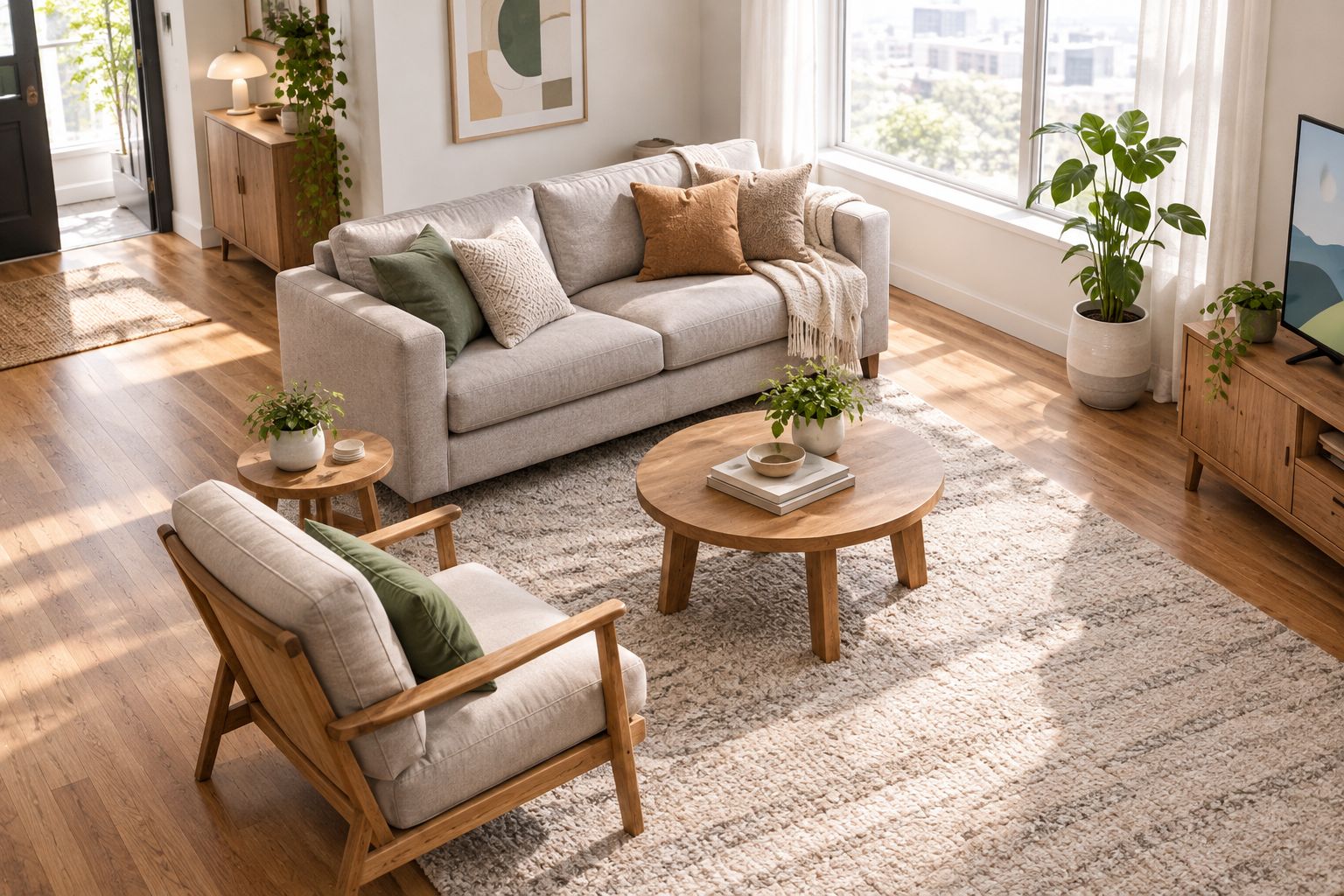
3. Drop-leaf dining table: best furniture for flexible small-room dining
A drop-leaf table changes its usable tabletop area through hinged leaves. That makes it a useful option when everyday meals need less space than occasional shared meals.
Check how each leaf is supported and whether the base leaves room for seated legs. A folded table's compact footprint does not tell you whether the expanded arrangement works with your chairs.
Drop-leaf table pros:
- Offers different tabletop configurations.
- Reduces its footprint when leaves are lowered.
- Supports a dedicated dining area without a permanently large surface.
Drop-leaf table cons:
- Hinges and supports require inspection.
- Some configurations restrict chair placement or legroom.
Best for: Homeowners with limited dining space and changing seating needs.
Plan the room with the leaves both lowered and raised. Pull the chairs out in each arrangement. Verdict: Buy when both configurations work; skip if the expanded table blocks essential movement.
4. Dresser or closed cabinet: best furniture for everyday storage
A dresser stores folded clothing; a closed cabinet suits belongings that need shelves or a less bedroom-specific home. Choose between them by naming what you need to put away.
Storage furniture should solve an actual overflow problem. Deep drawers are not automatically useful for small items, and a tall cabinet is not helpful if its shelves do not suit the contents.
Closed storage pros:
- Gives belongings a defined location.
- Keeps stored items out of view.
- Can reduce reliance on temporary boxes in daily-use rooms.
Closed storage cons:
- Drawers and doors need clearance beyond the furniture footprint.
- Tall or top-heavy furniture requires careful safety planning.
Best for: Homeowners whose existing closets do not organize their everyday belongings.
Follow the manufacturer's anchoring instructions, including for furniture in homes without children. Check access to outlets and nearby doors. Verdict: Buy for a named storage need, not simply to fill an empty wall.
5. Dedicated desk: best furniture for regular work from home
A dedicated desk gives work equipment a consistent place and keeps the dining table available for meals. Choose its surface and storage around the tasks you perform, including writing, computer use, and paperwork.
The desk and chair need to work together. Measure usable knee space, consider screen placement, and check where power cables will run before selecting the desk.
Desk pros:
- Separates work equipment from shared surfaces.
- Provides a consistent place to begin and end work.
- Can organize the tools used in your routine.
Desk cons:
- Takes space even when work is finished.
- A compact desktop can restrict equipment placement.
Best for: Homeowners who work at home regularly and need a permanent setup.
A dedicated desk is not automatically essential for occasional paperwork. Verdict: Buy for a recurring work routine; wait if a suitable existing surface already serves the task.
6. Movable accent chair: best furniture for a separate reading seat
An accent chair creates an individual sitting spot without extending the sofa. Its value comes from how you use it: reading beside a lamp, joining a conversation, or sitting near a view.
Check the chair's seat, arms, and back rather than treating it as decoration. A chair you can reposition also needs a practical destination; mobility alone does not make a piece useful.
Accent chair pros:
- Adds a separate seat to a shared room.
- Supports a reading or quiet sitting area.
- Can move between locations where its dimensions fit.
Accent chair cons:
- Adds less shared seating than a sofa.
- A sculptural shape does not guarantee comfortable support.
Best for: Homeowners who need an individual seat after the main layout is established.
Pair the intended location with suitable light and a place for a book or drink. Verdict: Wait until the main seating works, then buy for a specific use.
7. Serviceable existing furniture: best option for staged furnishing
Furniture you already own deserves a place in the plan if it remains safe, useful, and comfortable. A new address does not require replacing every piece.
Keep an existing table, chair, or cabinet while you learn the room's routines. Separate a cosmetic mismatch from a functional problem: an unfamiliar finish is different from an unstable frame or a blocked doorway.
Existing furniture pros:
- Avoids replacing a piece that still performs its job.
- Lets you test arrangements before choosing replacements.
- Gives the home continuity while other decisions settle.
Existing furniture cons:
- Its dimensions might not suit the new layout.
- Damage or instability can make continued use inappropriate.
Best for: Homeowners who want to make deliberate replacement decisions.
Do not retain unsafe furniture merely to postpone a purchase. Verdict: Hold onto serviceable pieces; replace those that fail safety, fit, or daily usefulness.
How we ranked these furniture choices
This 2026 ranking follows daily usefulness, room fit, delivery access, care needs, layout flexibility, and comfort. Essential activities come before additional seating or decorative completion. It is a priority guide, not a tested comparison of specific furniture models.
Move a category higher when your household needs it sooner. Regular home-based work can put a desk ahead of a dining-table replacement; an adequate existing bed can remove the bedroom purchase entirely.
Which furniture should you choose first?
Choose the piece that fixes your most important daily problem. For an undecided homeowner, that means a suitable bed first if one is missing, then the main seating area, followed by dining or storage according to actual use.
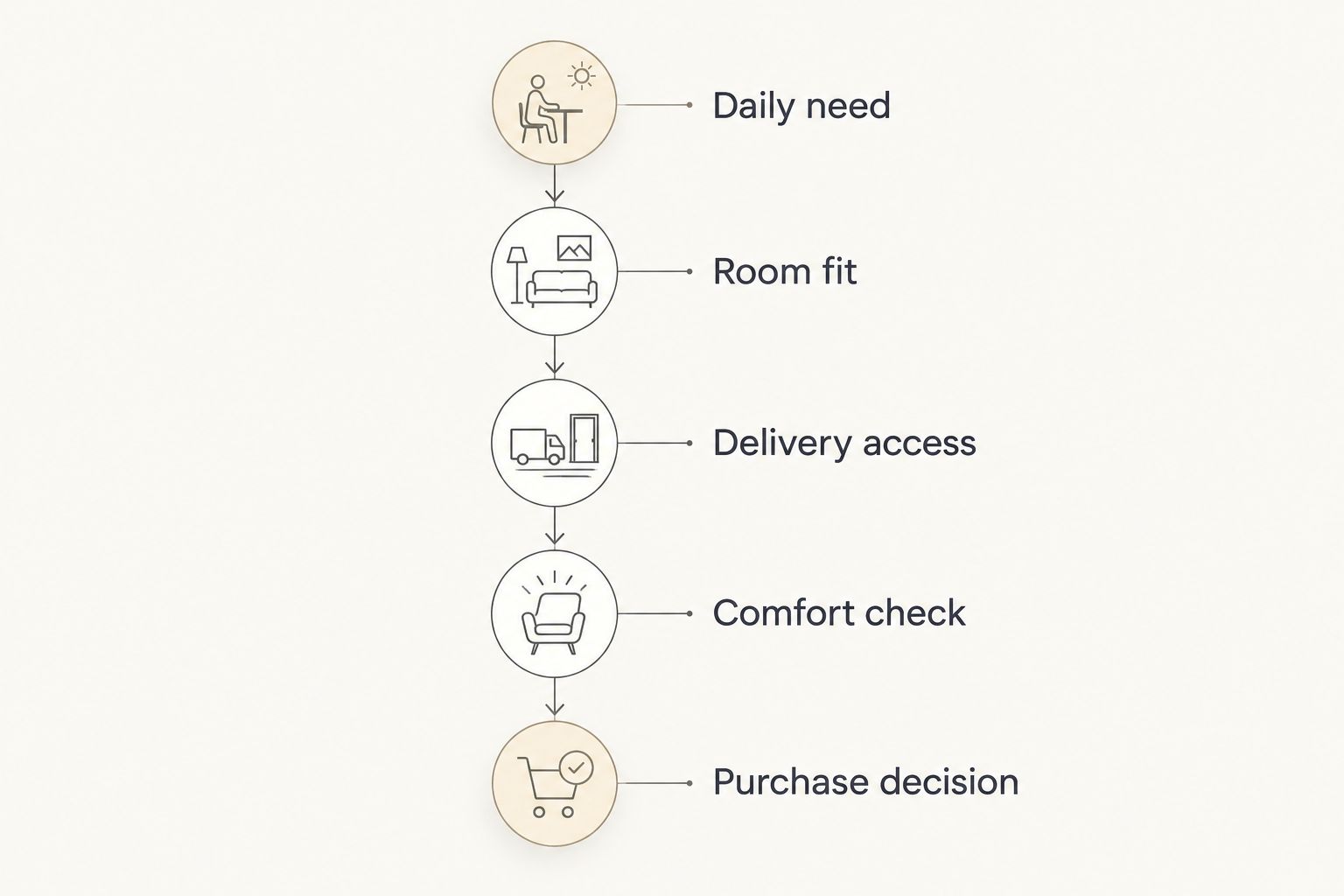
Use this sequence for each purchase:
- Daily need: Name the activity or storage problem.
- Room fit: Mark the footprint and opening clearances.
- Delivery access: Check the entire route into the room.
- Comfort check: Try the piece where possible and read its care requirements.
- Purchase decision: Buy only after those checks support the choice.
If coordinating the room feels harder than choosing an individual piece, design support addresses a different need than shopping alone. Oak + Loom Interiors offers both full-service and à la carte interior design, so you can consider assistance around the scope of your project.
Plan your furnishing priorities
Explore interior design and curated home furnishings for your next room decision.
FAQ
What's the best furniture for first time homeowners?
The best furniture for first time homeowners is furniture that meets an immediate daily need and fits the home. Start with a suitable bed and main seating, then address dining, storage, or home working according to your routine.
Should I buy all my furniture before moving in?
Buy the essentials you need immediately and leave nonessential pieces until you understand the layout. Time in the home helps you identify walking routes, storage problems, and the seats you actually use.
Is a sofa better than a sectional for a first home?
A sofa is the better choice when you want more placement flexibility; a sectional suits a layout that needs connected seating across adjoining sides. Compare both footprints with doorways and walking routes before deciding.
What dining table works best in a small home?
A drop-leaf dining table is a useful choice when you need different tabletop sizes for everyday use and shared meals. Check chair clearance, legroom, and leaf supports in each configuration.
Should first-time homeowners buy matching furniture sets?
Choose a matching set only when every included piece meets a real need and fits the room. Buying pieces individually lets you select dimensions and functions without accepting unnecessary items.
Should I keep furniture from my previous home?
Keep existing furniture that remains safe, comfortable, and useful in the new layout. Replace pieces that are unstable, unsuitable for your routine, or too large for essential circulation.
Can an interior designer help me furnish just one room?
Oak + Loom Interiors offers à la carte interior design as well as full-service design. Discuss your room and intended scope with the studio to determine the appropriate service.
One last thing
An empty corner is not a furnishing problem unless you need it to do something. In your 2026 plan, leave room for the routines you have not discovered yet. One useful piece, chosen with care, is a better next step than a roomful of decisions made only to make the space look finished.