Best overall: organic modern. Best for a home with exposed timber: modern rustic. Best for compact rooms: Scandinavian. These are the best interior design styles for mountain modern homes in 2026 because each offers a different way to balance natural materials, comfortable furnishings, and clean architectural lines.
- Organic modern leads the best interior design styles for mountain modern homes: warm materials, simple shapes, and restrained decoration.
- Modern rustic suits exposed beams and stone; Scandinavian suits compact rooms that need visual breathing room.
- Japandi favors quiet interiors; contemporary alpine favors architectural spaces; mid-century modern favors collected furniture and sculptural shapes.
- Oak + Loom Interiors offers interior design services and curated furnishings for homeowners furnishing or renovating mountain modern spaces.
Why this matters
A mountain modern room needs more than a stone fireplace and a neutral sofa. Your furniture, lighting, and finishes should respond to the architecture without repeating every feature already built into the house.
For your 2026 project, start with what stays: the windows, ceiling, floor, fireplace, and any furniture you genuinely enjoy. A style should help those elements belong together, not create a shopping list that ignores them.
Oak + Loom Interiors is a fit for homeowners who want mountain modern interior design support alongside curated furnishings. The Colorado Springs studio offers full-service and à la carte design; explore Oak + Loom Interiors when you want help turning a preferred style into decisions for your home.
What makes the best mountain modern interior design style?
Use these criteria before choosing a look. The strongest choice fits your room and your routines, not just your saved photographs.
- Architectural fit: The style should work with your existing beams, stone, windows, and ceiling proportions.
- Visual breathing room: Furniture and decoration should leave the room readable rather than crowding every surface.
- Material balance: Wood, stone, textiles, and metal need different roles instead of competing for attention.
- Everyday comfort: Choose seating, lighting, and surfaces around how you actually use the space.
- Continuity: Connected rooms should share a recognizable material or color relationship without matching everything.
- Personal fit: Keep room for inherited furniture, artwork, books, and objects that matter to you.
A useful starting exercise is to name 3 material families you want to repeat, such as wood, woven textiles, and metal. This is a planning constraint, not a rule that every room must follow.
Mountain modern styles at a glance
| Rank and style | Best for | Standout design feature | Key limitation |
|---|---|---|---|
| 1. Organic modern | A warm, adaptable starting point | Rounded forms with natural textures | Similar tones can make the room feel flat |
| 2. Modern rustic | Exposed timber and substantial stonework | Rustic materials paired with simpler furnishings | Too many distressed finishes create a cabin theme |
| 3. Scandinavian | Compact rooms and restrained furnishing plans | Light-looking furniture and practical simplicity | Pale finishes alone do not create warmth |
| 4. Japandi | Quiet bedrooms and uncluttered retreats | Few objects, tactile materials, deliberate placement | Sparse arrangements need careful attention to comfort |
| 5. Contemporary alpine | Architectural rooms with strong focal points | Clear silhouettes and controlled contrast | Overscaled statement pieces can compete with views |
| 6. Mid-century modern | Collected homes and sculptural furniture | Distinctive furniture forms and selective color | Too many period references make the room feel themed |
These rankings describe design suitability, not measured product performance. Your home's fixed features can move a lower-ranked style to the top of your personal shortlist.
1. Organic modern: best for a warm, adaptable mountain home
Organic modern pairs simple furniture shapes with materials that have visible texture. Think wood grain, woven upholstery, stone, and softly rounded forms rather than a collection of mountain-themed accessories.
It is the strongest default for a 2026 mountain modern interior because you can adjust its warmth and contrast without changing the entire direction. Keep larger pieces calm, then let an individual chair, artwork, or textured lamp add character.
Organic modern pros
- Gives wood and stone a clear place without requiring rustic furniture.
- Leaves room for both straight architectural lines and softer furnishings.
- Provides a common thread between living, dining, and sleeping spaces.
Organic modern cons
- A narrow range of similar neutrals can leave the room without a focal point.
- Repeating curved shapes everywhere weakens their impact.
Best for: Homeowners who want a comfortable starting point rather than a strongly themed interior.
Try it in 1 room first. Pair a straightforward sofa with a tactile rug and a contrasting chair; avoid choosing every piece in the same fabric or wood tone.
Verdict: Buy into organic modern when you want warmth without a cabin look.
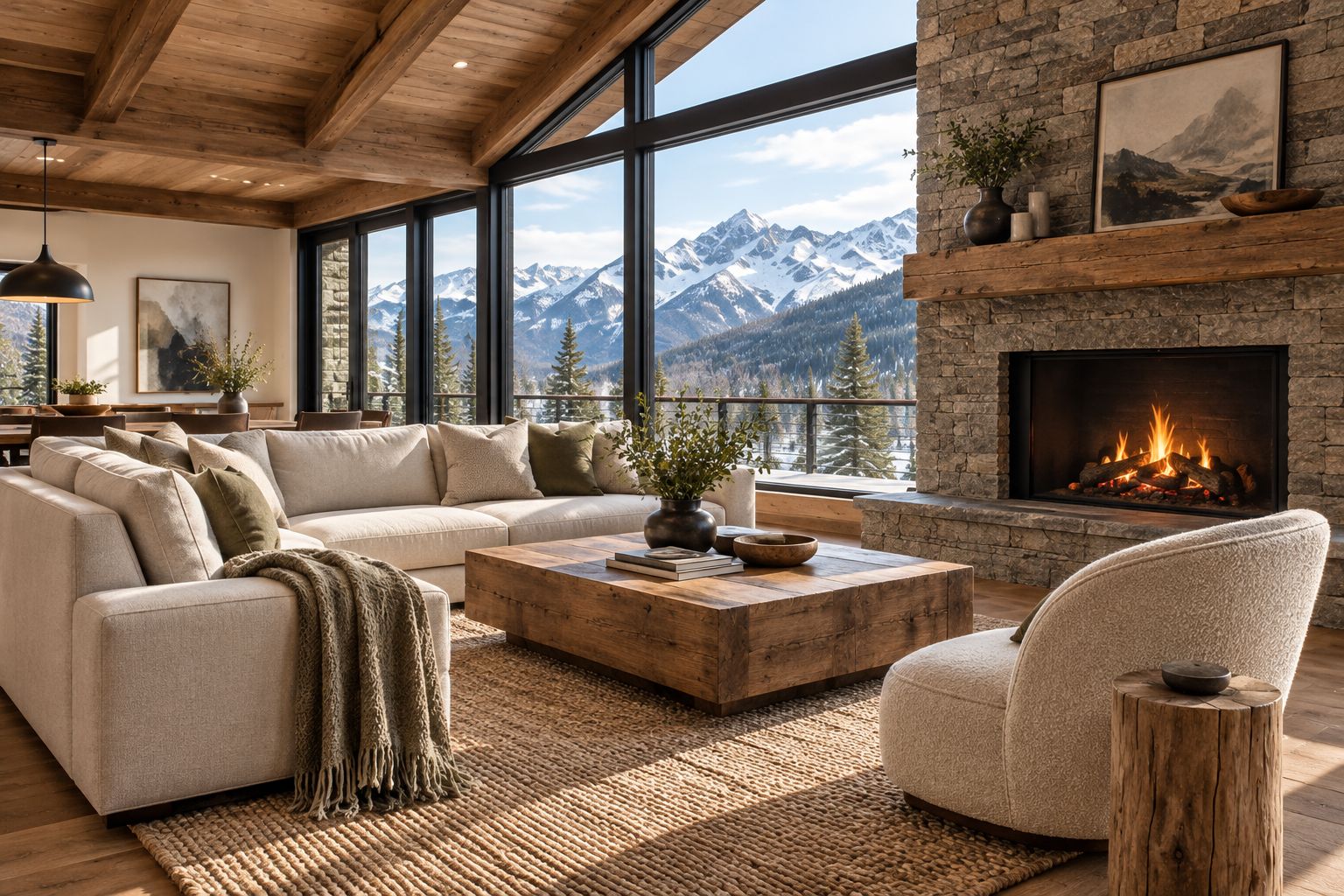
2. Modern rustic: best for exposed timber and stone
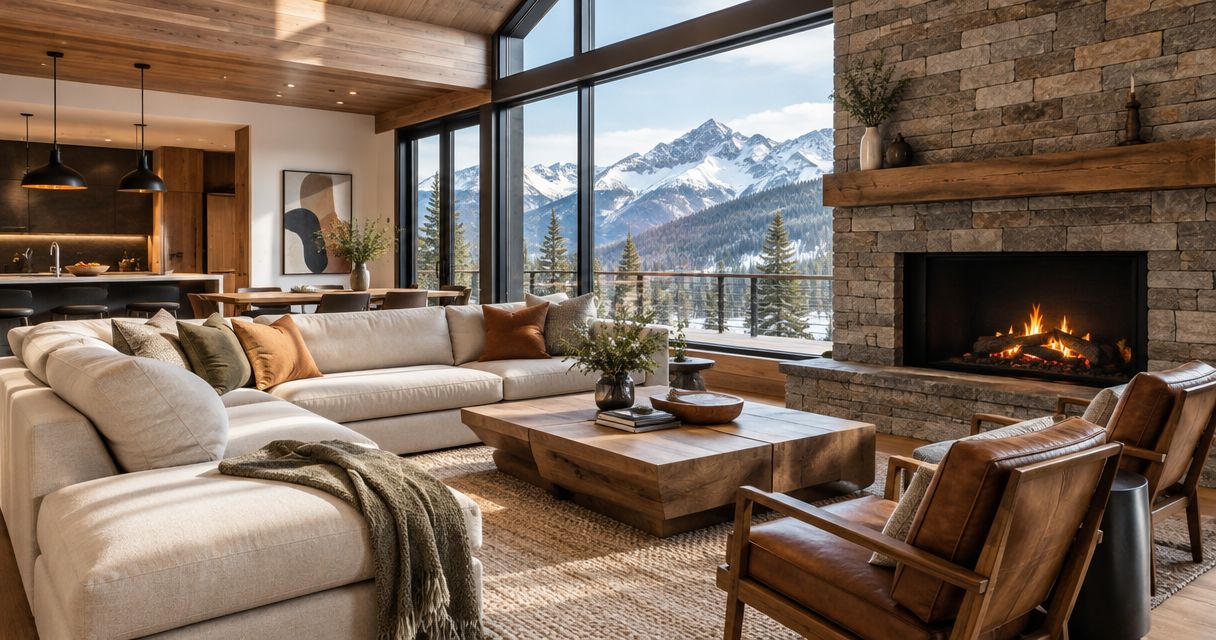
Modern rustic keeps the weight and texture of traditional mountain materials but edits the furnishings around them. A substantial timber ceiling does not need a heavy timber dining table, distressed cabinet, and antler-shaped light fixture beneath it.
Start by identifying the room's strongest rustic feature. Let that feature lead, then choose quieter furniture lines so the space feels intentional rather than densely decorated.
Modern rustic pros
- Works with existing beams, stone fireplaces, and visibly textured wood.
- Gives retained rustic furniture a place in a cleaner room plan.
- Makes contrast between old and new part of the design.
Modern rustic cons
- Repeated distressed finishes can turn a modern home into a themed cabin.
- Heavy furniture silhouettes can crowd rooms with substantial architecture.
Best for: Homeowners whose fixed finishes already carry strong mountain character.
Keep 1 dominant rustic feature as the starting point. If the fireplace is visually busy, choose a simpler mantel arrangement and avoid introducing another competing stone pattern nearby.
Modern rustic is also useful when you want to retain a beloved wood piece. Surround it with clearer shapes instead of trying to make every new purchase look equally aged.
Verdict: Buy into modern rustic when the architecture already supplies the rustic layer.
3. Scandinavian: best for compact mountain modern rooms
Scandinavian interiors emphasize practical furniture, restrained decoration, and an uncluttered arrangement. For a mountain home, translate that approach through wood, comfortable textiles, and furniture that does not visually occupy every corner.
The goal is not an all-white room. Use contrast where it helps you read the space, and choose pieces around actual seating, storage, and movement needs.
Scandinavian pros
- Encourages you to prioritize useful furniture over decorative filler.
- Suits rooms where visible floor area matters to the overall composition.
- Gives wood and textiles room to add warmth without elaborate decoration.
Scandinavian cons
- Pale walls and pale upholstery alone can produce a washed-out arrangement.
- An overly edited room can lack storage or the seating your household needs.
Best for: Smaller living rooms, guest rooms, and homes where you want fewer competing elements.
For a 2026 refresh, remove unnecessary pieces before replacing useful ones. Then examine whether the remaining furniture supports your routines: reading, conversation, hosting, or simply putting things away.
Use a darker frame, artwork, or accent textile to give a pale room definition. Choose that contrast deliberately instead of scattering unrelated dark accessories throughout the space.
Verdict: Buy into Scandinavian design when practical simplicity is your priority.
4. Japandi: best for quiet bedrooms and retreats
Japandi combines Japanese-inspired restraint with Scandinavian-inspired simplicity. In a mountain modern home, its most useful contribution is a deliberate relationship between furniture, empty space, and tactile materials.
Treat the style as an editing approach, not a requirement to remove everything personal. A room can be quiet while still containing books, art, and furnishings with a history.
Japandi pros
- Encourages careful placement instead of filling every open area.
- Gives subtle material differences a meaningful role.
- Suits bedrooms and sitting areas where you want a restrained composition.
Japandi cons
- Very sparse arrangements expose unresolved details rather than hiding them.
- Low-looking furniture needs to fit your comfort and mobility preferences.
Best for: Homeowners who prefer a calm visual environment and deliberate furnishing choices.
Begin with the functions the room must support. In a bedroom, that means planning the bed, bedside surfaces, reading light, and storage before adding decorative objects.
Choose texture with a purpose: a woven shade, wood surface, or tactile bed covering can provide interest without a large pattern. Keep essential objects accessible rather than sacrificing convenience to achieve an empty photograph.
Verdict: Buy into Japandi when restraint supports the way you live; skip it if sparse rooms feel unwelcoming.
5. Contemporary alpine: best for architecture-led spaces
Contemporary alpine puts mountain architecture at the center of the room. Clear furniture silhouettes, controlled contrast, and a limited set of focal points keep the interior connected to its setting.
This direction suits a home where windows, ceiling geometry, or a sculptural fireplace already provide the visual interest. For 2026, make each new piece answer a specific need rather than compete for attention.
Contemporary alpine pros
- Gives strong architectural features room to lead.
- Supports a deliberate contrast between softer furnishings and harder surfaces.
- Creates a clear hierarchy among the fireplace, view, seating, and lighting.
Contemporary alpine cons
- An oversized light fixture can compete with a view or ceiling feature.
- Too many hard, smooth finishes leave the furnishings doing little to soften the composition.
Best for: Open rooms with pronounced architectural features and a clear focal point.
Before choosing furniture, decide whether the room should face the fireplace, the view, or a conversation area. The answer changes the seating arrangement; style alone cannot resolve that choice.
The guide to furniture for mountain-view living rooms provides a related starting point when the windows are central to your plan.
Verdict: Buy into contemporary alpine when the room's architecture deserves the lead role.
6. Mid-century modern: best for a collected mountain home
Mid-century modern introduces recognizable furniture forms, visible legs, and selective color. In a mountain modern room, use those qualities to create contrast with timber and stone rather than recreating a period interior.
A sculptural chair or a clearly proportioned cabinet can establish the direction. You do not need every furnishing to reference the same design era.
Mid-century modern pros
- Gives a neutral mountain room distinctive furniture shapes.
- Makes room for artwork and individual color choices.
- Supports a collected mix instead of a fully matching furniture suite.
Mid-century modern cons
- Repeating period references across every piece can feel staged.
- Angular silhouettes do not replace the need to check seating comfort.
Best for: Homeowners who enjoy individual furniture pieces and a more expressive room.
Start with 1 characterful piece you want to keep or introduce. Relate its wood tone, upholstery, or shape to another element without repeating all its features.
Balance sculptural furniture with quieter companions. A distinctive chair has more presence beside a simple sofa than beside several equally attention-seeking pieces.
Verdict: Buy into mid-century modern selectively; skip a room-wide period theme.
How we ranked these styles
The order follows architectural fit, material balance, everyday comfort, continuity, and personal fit. Organic modern leads because it offers a flexible starting point; the other styles become stronger choices when your room has a particular constraint or preference.
This is a design decision framework, not a claim that every mountain home should look alike. Exposed timber favors modern rustic, compact rooms favor Scandinavian restraint, and strongly architectural rooms favor contemporary alpine.
Turn your preferred style into a room plan
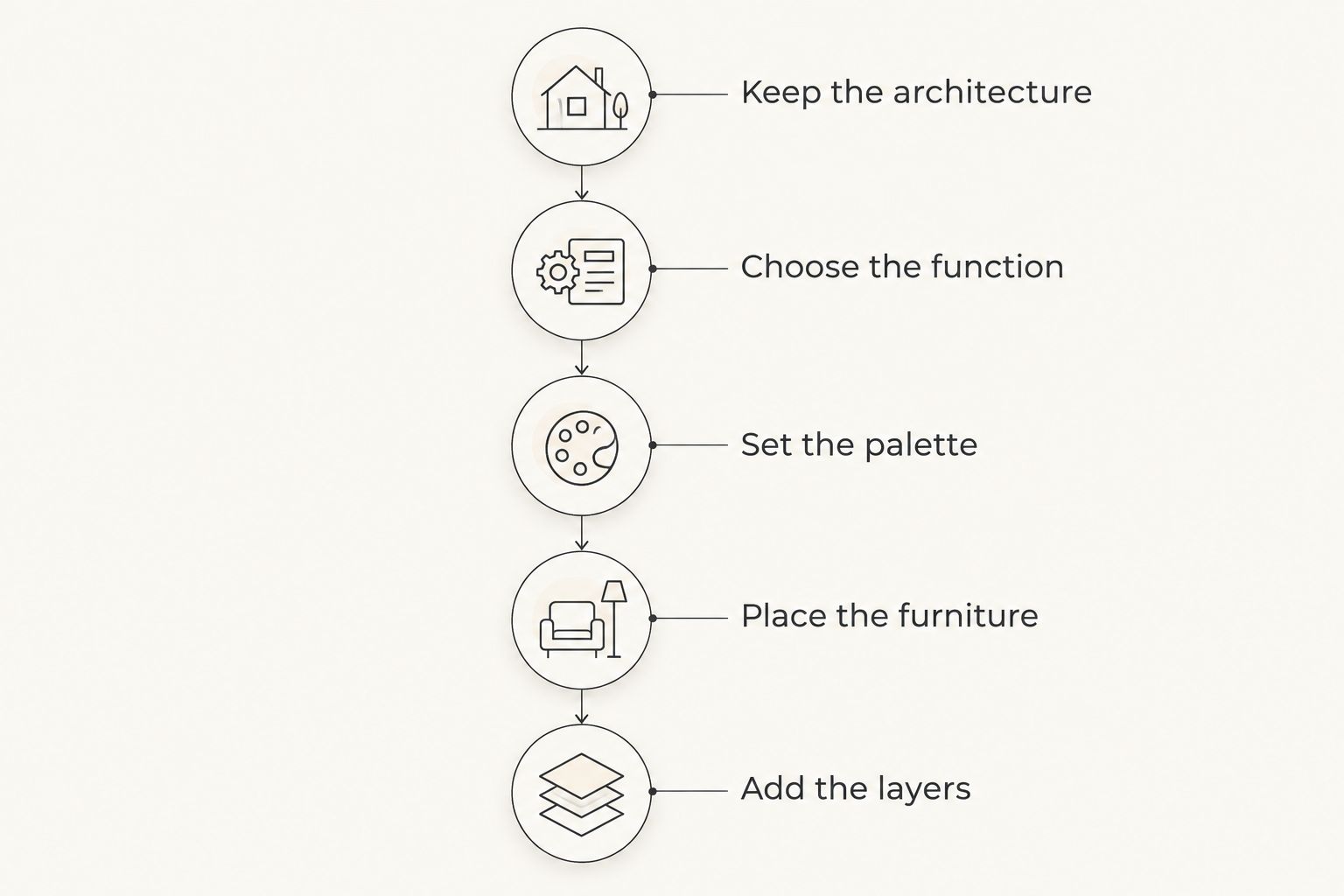
Use this sequence before selecting furnishings. It helps separate what the room already provides from what you need to add.
Keep the architecture
List the fixed elements you are working around: flooring, windows, beams, fireplace, and built-in cabinetry. Decide which feature should lead rather than trying to emphasize all of them equally.
Choose the function
Write down the room's main use and the objects that use requires. A reading room needs a different arrangement from a room centered on conversation or television.
Set the palette
Choose 3 material families as a starting exercise, then check them against the existing finishes. You can add variety later without asking every surface to introduce something new.
Place the furniture
Plan the largest pieces before selecting accents. Confirm the arrangement with measurements and a scaled drawing, especially where doorways, windows, and circulation share the same area.
Add the layers
Choose lighting, textiles, artwork, and decoration after the main arrangement is clear. Oak + Loom Interiors offers mountain modern interior design support through its broader full-service and à la carte design offerings, alongside curated furniture, lighting, and wallpaper.
Which mountain modern style should you choose?
Choose organic modern if you are undecided. It gives you a clear starting point without requiring a strongly themed room; shift toward modern rustic, Scandinavian, Japandi, contemporary alpine, or mid-century modern when your architecture or preferences call for it.
For a 2026 project, finish a coherent plan for 1 room before extending it through the house. Repeat a few material relationships across connected spaces, but let each room answer its own purpose.
FAQ
What's the best interior design style for a mountain modern home?
Organic modern is the strongest starting point for a mountain modern home. Its simple furniture shapes and natural textures work with wood and stone without requiring a cabin theme.
Is mountain modern the same as modern rustic?
No. Mountain modern describes a broader approach to mountain-home interiors, while modern rustic is one way to furnish them using rustic materials and simpler contemporary shapes.
Can I use Scandinavian design in a mountain home?
Yes. Scandinavian design suits mountain rooms where practical furniture and a restrained arrangement are priorities; add texture and deliberate contrast rather than relying on pale finishes alone.
Is Japandi better than organic modern for a bedroom?
Choose Japandi when you want a more edited bedroom, and organic modern when you prefer a softer mix of forms and textures. Both still need useful bedside surfaces, lighting, and storage.
How do I keep a mountain modern room from looking like a cabin?
Let the existing timber or stone provide the rustic character, then simplify the furnishings around it. Avoid repeating distressed finishes and mountain-themed objects across every surface.
Can I keep my existing furniture in a mountain modern design?
Yes. Start with pieces you enjoy using, then connect them through material, color, or shape rather than replacing everything to match a style label.
Does Oak + Loom Interiors offer help beyond furnishing a whole house?
Yes. Oak + Loom Interiors offers both full-service and à la carte interior design, plus curated home furnishings including furniture, lighting, and wallpaper.
One last thing
The next addition is not always the next decision. Before choosing another accent piece, temporarily remove the objects around your strongest feature and look at the room again.
For your 2026 mountain modern home, begin with that edit. You might prefer the architecture with less around it—and have a clearer reason for whatever you choose next.