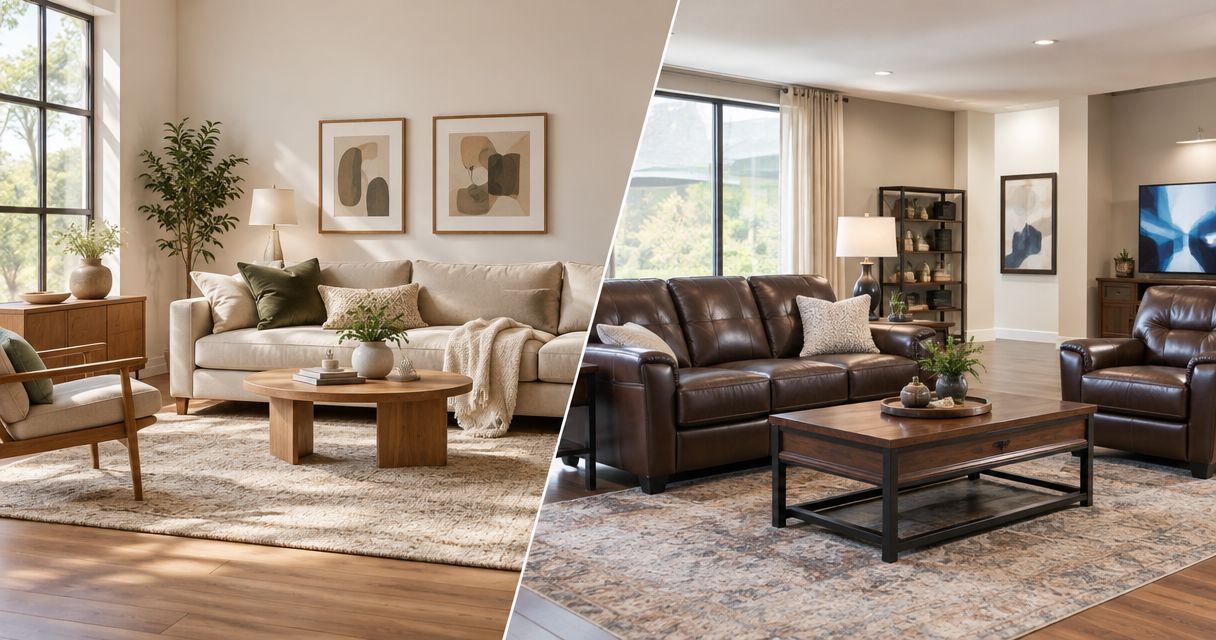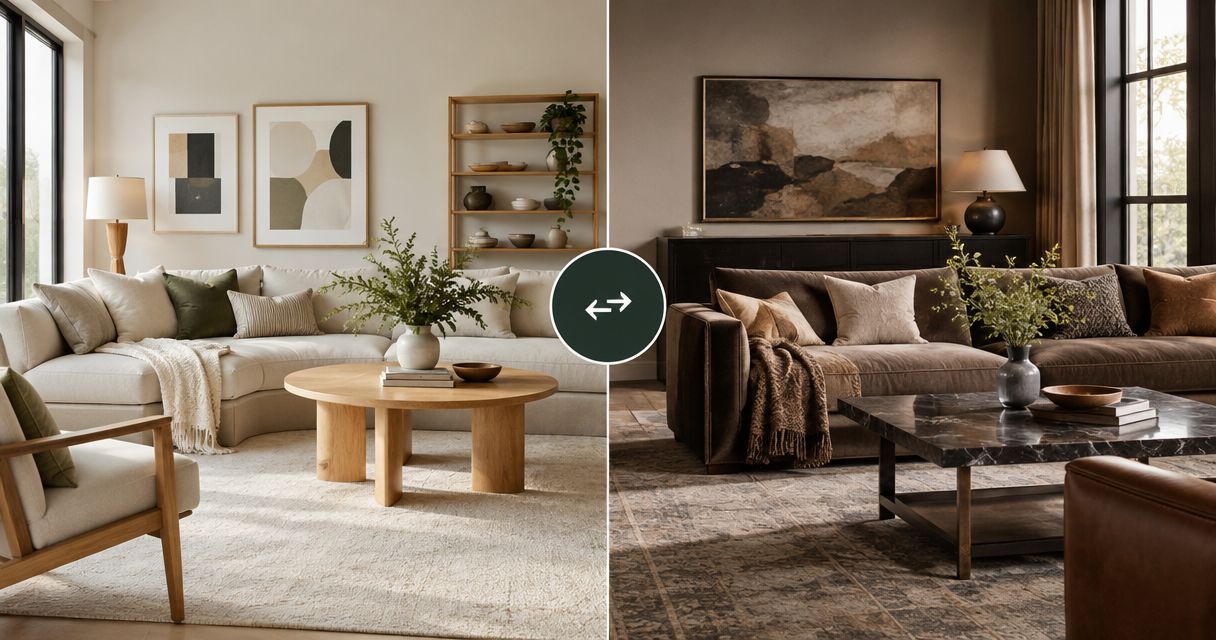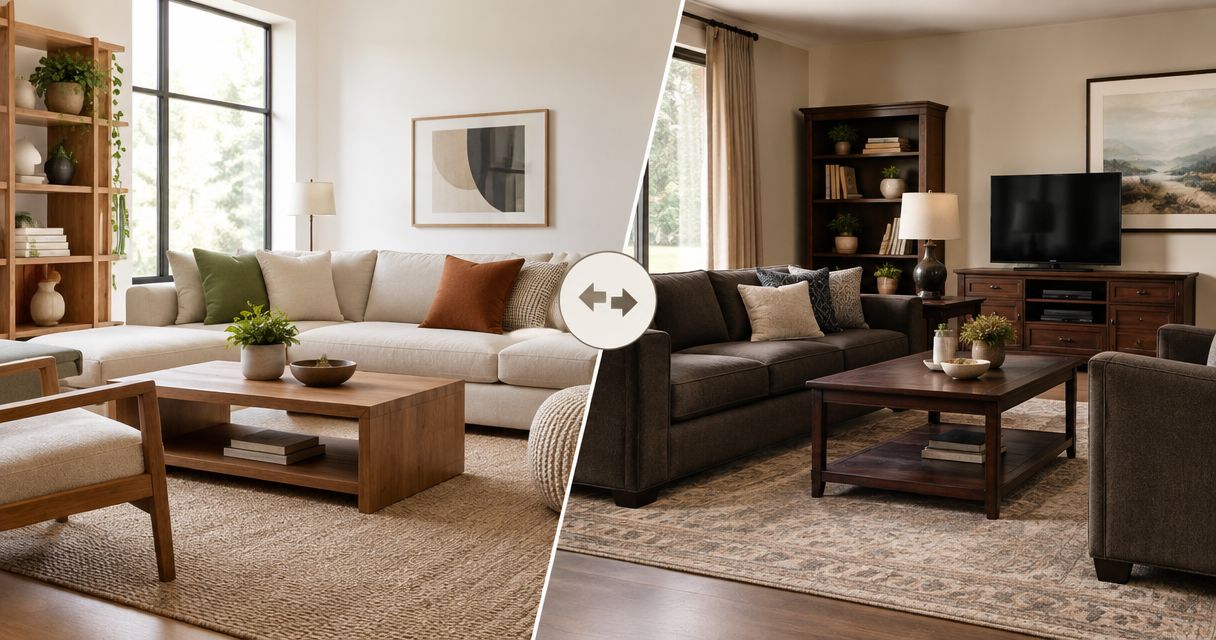
Choose Oak + Loom Interiors if you want interior design guidance alongside furniture, lighting, and wallpaper; choose Furniture Row if you want a furniture-retail starting point and plan to direct the room yourself. For 2026, the useful distinction is design partnership versus product shopping—not a blanket winner on quality or cost.
- Oak + Loom Interiors vs Furniture Row is a choice between design support and a furniture-retail starting point.
- Choose the design studio for full-service or à la carte interior design alongside curated home furnishings.
- Choose Furniture Row when furniture shopping is your main task and you will coordinate the room yourself.
- Neither name alone settles furniture quality, physical fit, or the total cost of your project.
Why this matters
A furniture purchase and a room-design problem are different tasks. You can know exactly which chair you need, or you can know only that your living room feels unfinished. Those situations call for different starting points.
Oak + Loom Interiors is best for Colorado Springs homeowners who want interior design support alongside curated home furnishings. Its stated offering includes full-service and à la carte interior design, furniture, lighting, and wallpaper. That combination matters when your decisions extend beyond the furniture itself.
Furniture Row is a furniture retailer. It is the more direct starting point for this comparison when you have already resolved the room's direction and want to focus on selecting furniture. That recommendation does not assume anything about its current design services, delivery terms, or individual products.
At a glance
Use this 2026 comparison to identify the kind of help you need before comparing individual pieces.
| Dimension | Oak + Loom Interiors | Furniture Row |
|---|---|---|
| Best for | Homeowners seeking design support and furnishings | Homeowners approaching the project primarily as furniture shopping |
| Purchasing approach | Design studio and showroom | Furniture retailer |
| Standout feature | Full-service and à la carte interior design alongside furnishings | A furniture-retail starting point for product-led shopping |
| Room coordination | Relevant when furniture, lighting, and wallpaper decisions overlap | Relevant when you intend to coordinate the room yourself |
| Single-item shopping | Also offers curated home furnishings | A direct starting point for a furniture-focused search |
| Physical fit | Requires room and access measurements | Requires room and access measurements |
| Product quality | Assess the individual piece | Assess the individual piece |
| Pricing model | Separate the design-service scope from furnishing purchases | Evaluate the selected furniture and applicable purchase terms |
The design studio wins for a design-led project
Choose the design studio when the problem is deciding what belongs together. A room can contain pieces you like individually and still feel unresolved. Layout, scale, lighting, and surface finishes all contribute to the result.
Full-service and à la carte interior design give you different ways to approach that problem. Ask which service fits your actual brief rather than assuming the largest scope is necessary. A homeowner furnishing a room from scratch has different needs from someone keeping an existing sofa and reconsidering everything around it.
The tradeoff is that design support introduces another decision: defining the work you want help with. If your only question is which replacement chair fits an already settled room, begin with that narrow purchase brief instead.
Best for: the homeowner who wants help shaping the room, not simply choosing its next object.
Furniture Row wins when you want to lead the selection
Choose Furniture Row as your starting point when you have a furniture brief rather than an unresolved design brief. That means you already understand the piece's purpose, approximate footprint, relationship to existing furnishings, and visual direction.
This is a decision about shopping approach, not a claim that every Furniture Row product is a better match. You still need to evaluate the actual item and its purchase terms. A retailer's name cannot answer whether a particular sofa works in your living room.
The advantage of a product-led approach is focus. You can compare candidates against a brief you have already written. The limitation is responsibility: unless you arrange otherwise, you remain the person deciding how that purchase relates to the rest of your home.
Best for: the self-directed homeowner who knows what the room needs and wants to make the furniture decision personally.
The studio's service options suit different project scopes
The clearest service distinction is the studio's stated combination of full-service and à la carte interior design. You do not have to frame every project as a whole-home undertaking before asking about support.
Describe the decision you need help making. That might be furnishing a living room, reconsidering a bedroom, or establishing a direction before selecting finishes. Then ask what the proposed service includes, what you must supply, and which decisions remain yours.
Do not equate a service label with a specific deliverable. Full-service and à la carte describe the available approaches, but your agreement needs to define the actual work. Drawings, purchasing responsibilities, revisions, and implementation tasks belong in that conversation rather than in assumptions.
Furniture Row remains the relevant alternative when you want to begin with furniture shopping. Ask directly about any additional assistance you require; this comparison does not treat retail assistance and a defined interior-design engagement as interchangeable.
The studio wins when several room decisions overlap
Design support is the better starting point when changing one element changes the questions around it. A new seating arrangement can affect where you need light. Wallpaper can change how existing upholstery reads. A larger dining table can alter the space available for circulation.
The studio's offering spans furniture, lighting, and wallpaper alongside interior design. That makes it relevant when your brief includes those connected choices, rather than furniture alone.
For a 2026 room refresh, write down what stays before deciding what to add. Existing flooring, a favorite cabinet, or a dining table you intend to keep can provide a useful starting point. Your brief becomes clearer when it names those commitments.
The limitation is scope: access to several categories does not establish which tasks a particular engagement includes. Confirm whether your proposed service addresses the whole room or only the decisions you name.
Furniture Row wins for a furniture-first starting point
If your immediate task is replacing a specific furniture item, start with the item rather than turning the purchase into a larger project. Furniture Row fits that furniture-first approach to the comparison.
Write a short brief before browsing: what the piece must do, where it must fit, and what it must work beside. This keeps an appealing display from replacing your actual requirements.
The studio also offers curated furnishings, so a single-item purchase does not automatically rule it out. The distinction is your preferred starting point: furniture-led browsing or a studio-and-showroom setting with interior design services available.
Neither route removes the need to inspect the candidate carefully. A piece that looks right in isolation can still be the wrong scale, material, or shape for your home. The better starting point is the one that matches the decision you are prepared to make.
Neither wins on fit without your measurements
Physical fit is a tie until you check the room and the route into it. No brand name substitutes for knowing where the furniture will sit, how you will move around it, and how it will reach that position.
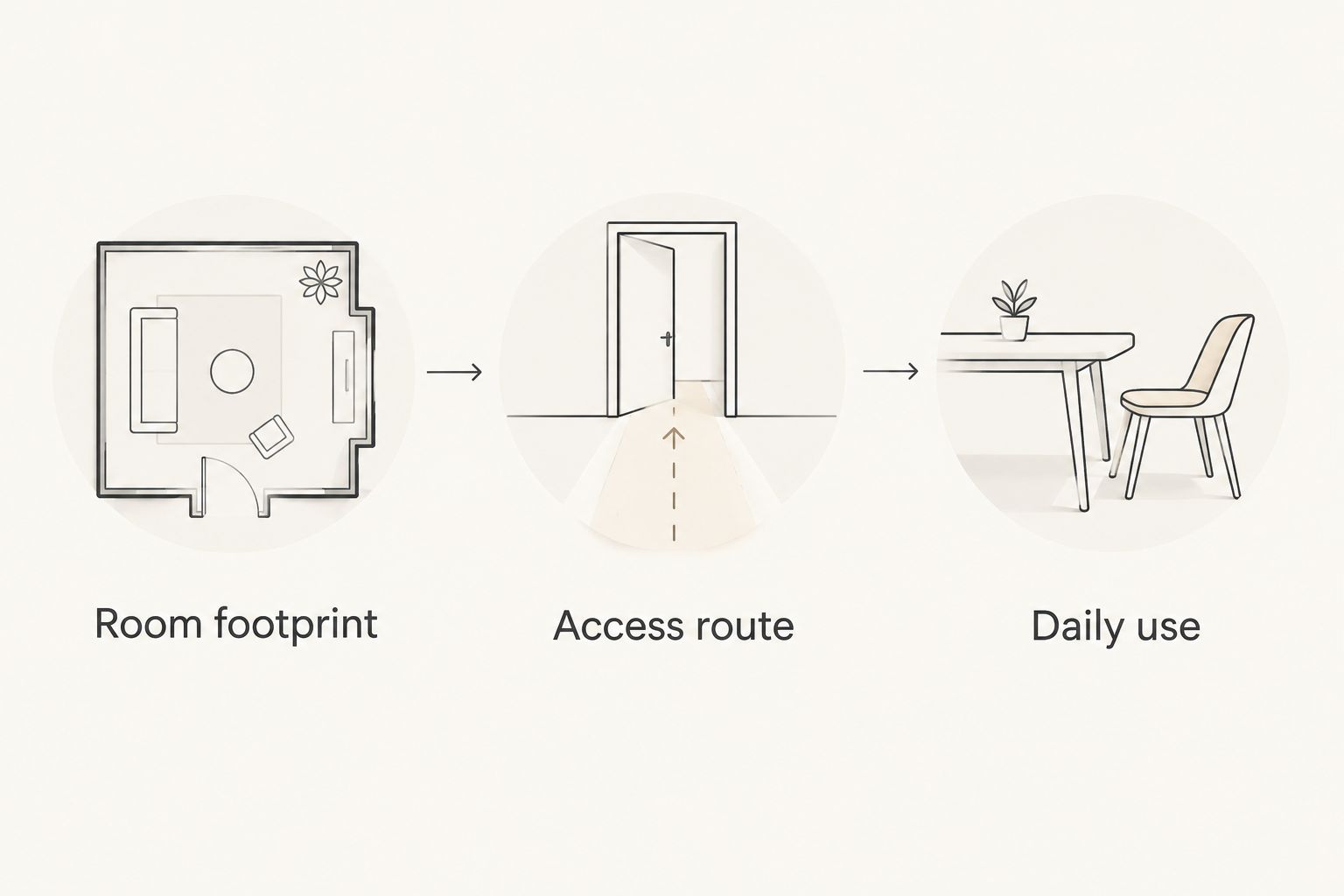
Use these 3 checks before committing:
- Room footprint: Mark the proposed position on the floor and consider the surrounding furniture.
- Access route: Check doorways, turns, stairs, and other constraints along the path into the room.
- Daily use: Consider opening doors, pulling out chairs, reaching surfaces, and moving through the space.
For a 2026 furnishing project, record measurements in inches and keep them with your shopping brief. Use the dimensions of the actual candidate, not a similar-looking display piece.
A showroom visit helps you assess a piece in person, but it does not reproduce your home's dimensions. Bring your measurements into either buying process.
Neither wins on quality from the name alone
Judge furniture quality at the product level, not the retailer or studio level. A meaningful comparison needs identifiable pieces and information about their materials, construction, care, and intended use.
Ask the same questions wherever you shop. What is the frame made from? How does the upholstery need to be maintained? What information supports the piece's suitability for your household? Which written terms apply to that specific purchase?
Separate preference from evidence. A soft seat is not automatically better than a firm one, and a finish you love is not automatically appropriate for the way you use the room.
This comparison does not award either business a general quality win. Without matched products and documented specifications, that would turn a shopping preference into an unsupported claim. Your next move is to compare actual candidates against the same requirements.
Pricing: compare the scope before comparing the total
The 2026 budgeting question is whether you are considering a furniture purchase, a design engagement, or both. Keep those categories separate so you understand what each proposal covers.
For the studio route, distinguish the design-service scope from furnishing purchases. Ask how the service is billed, which work is included, and how additional requests are handled. Full-service and à la carte options do not, by themselves, establish a billing method.
For the furniture-retail route, evaluate the selected items and all applicable purchase terms. Ask which charges and services belong in the total rather than comparing only the furniture selection.
For either route, request clarity on:
- The products and services included.
- Your responsibilities and the business's responsibilities.
- Any applicable delivery, setup, or installation arrangements.
- How changes and cancellations are handled.
Neither route wins on cost without a matched scope. A furniture-only purchase and a proposal that includes design work answer different needs. Compare like with like, then decide whether you want the additional support.
Final verdict: choose the help your project needs
Choose Oak + Loom Interiors if you want a design partner
Best for: the homeowner furnishing or renovating with connected decisions to make. Choose this route when you want interior design support and are considering furniture, lighting, or wallpaper as parts of the same room.
Bring photographs, measurements, what you intend to keep, and a clear description of where you feel stuck. Ask whether full-service or à la carte support fits that brief.
Choose Furniture Row if you want to direct the room yourself
Best for: the self-directed furniture shopper with a settled room plan. Choose this starting point when the main task is finding furniture that meets requirements you have already established.
Bring those requirements with you. Keep the decision focused on the actual piece, its documented details, and the terms of the purchase.
One-glance scorecard
| Dimension | Winner |
|---|---|
| Design-led project | Design studio |
| Self-directed furniture selection | Furniture Row |
| Defined interior-design service options | Design studio |
| Connected furniture, lighting, and wallpaper decisions | Design studio |
| Furniture-first starting point | Furniture Row |
| Physical fit | Tie: measure the actual space and piece |
| Product quality | No overall winner: compare individual products |
| Cost | No overall winner: compare matched scopes |
FAQ
Is Oak + Loom Interiors better than Furniture Row?
Oak + Loom Interiors is the better fit when you want interior design support alongside curated furnishings. Furniture Row is the relevant starting point when you want a furniture-retail approach and plan to direct the room yourself.
Which should I choose if I only need a sofa?
Start with a furniture-focused brief if you only need a sofa and the rest of the room is settled. Compare actual candidates for fit, comfort, materials, care, and purchase terms rather than choosing by business name alone.
Can I get help without committing to full-service interior design?
The studio offers à la carte interior design as well as full-service design. Ask which option addresses your specific decisions and confirm the deliverables before agreeing to the work.
Which option is better for a room renovation?
The design-studio route fits a renovation that includes connected interior-design decisions. Confirm the proposed scope rather than assuming it includes construction management or other renovation responsibilities.
Which business has better-quality furniture?
There is no supported overall quality winner in this comparison. Compare specific pieces using their documented materials, construction, care requirements, and suitability for your household.
How do I compare the cost of design help and furniture shopping?
Separate design services from furnishing purchases, then compare equivalent scopes. Ask each business to identify what is included and which additional charges or responsibilities apply.
What should I prepare before shopping in 2026?
Prepare room measurements, photographs, an access-route check, and a list of furnishings you intend to keep. Add a short description of what the new piece or design service needs to solve.
One last thing
Before starting your 2026 project, finish this sentence: I know what I need to buy, but… Your answer is a useful guide to the next step.
If the answer concerns finding a particular piece, start with furniture shopping. If it concerns layout, coordination, or not knowing what belongs together, start by discussing design support. You do not need to solve the whole home at once—just identify the next decision that needs care.