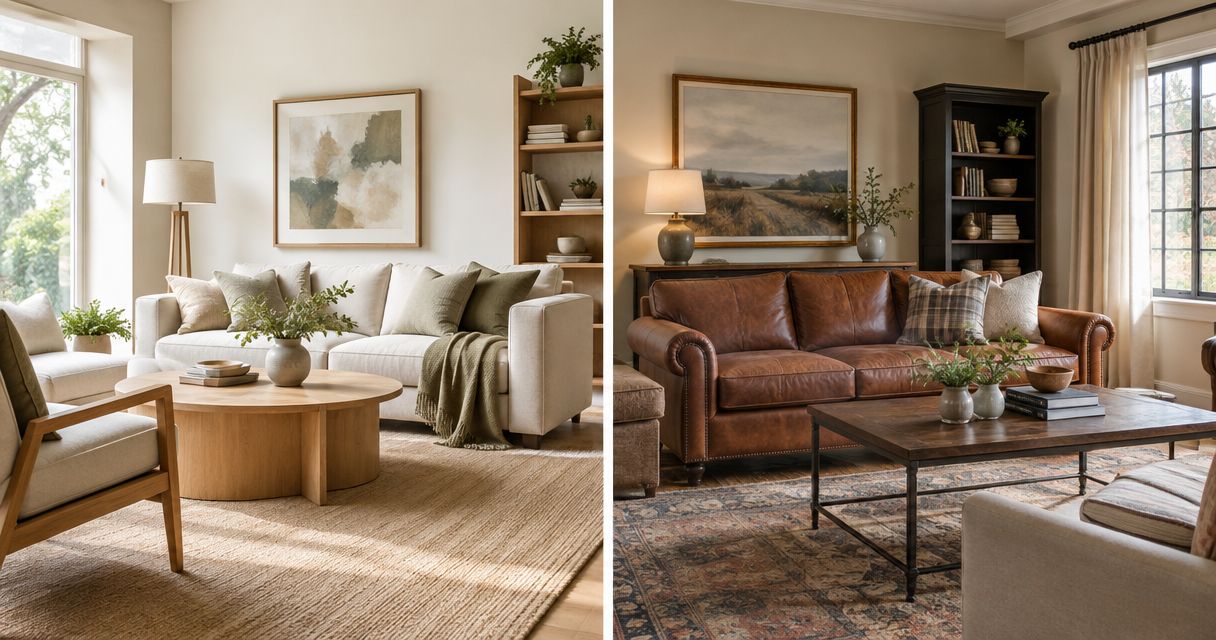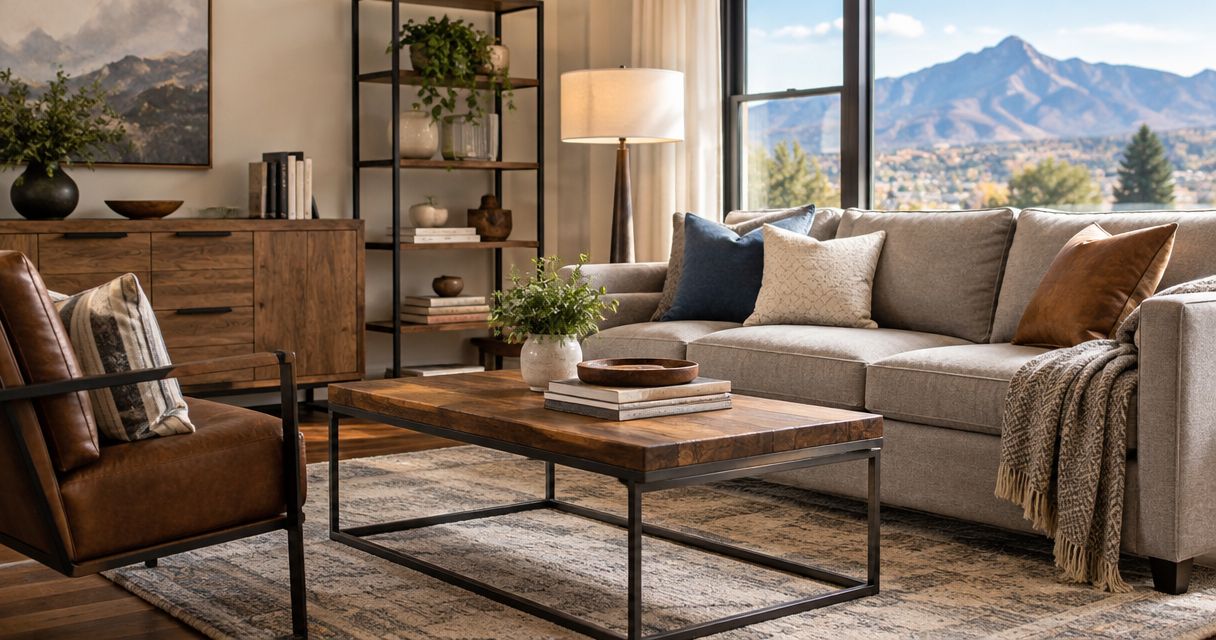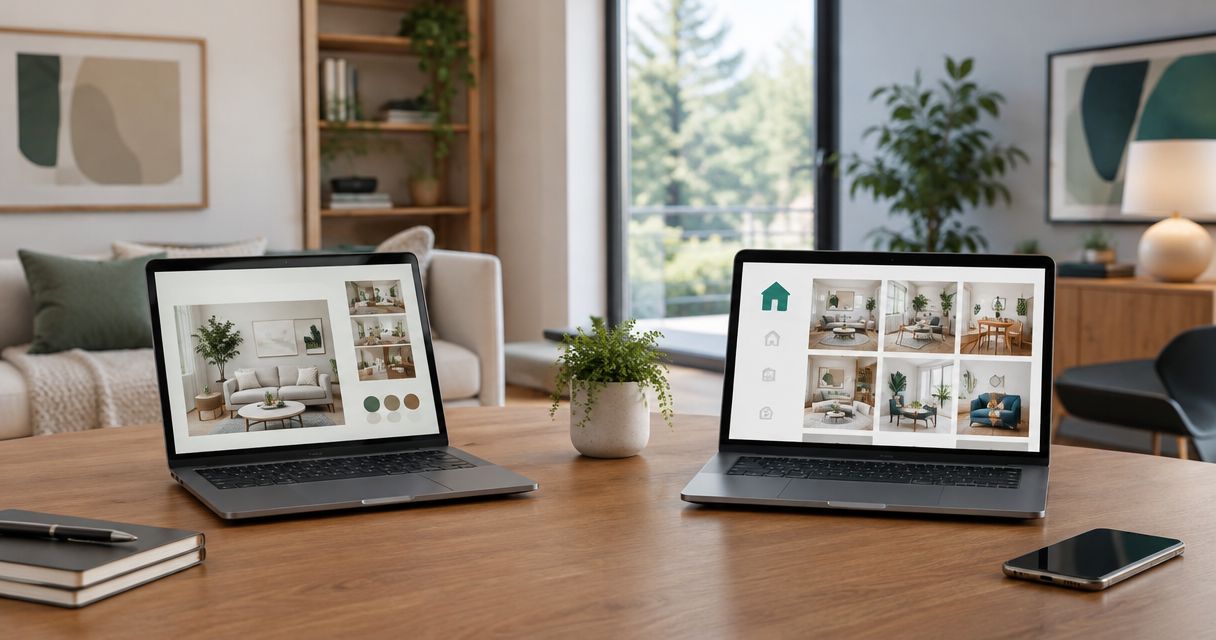
Choose Oak + Loom Interiors if you want a Colorado Springs design studio to help furnish or renovate your home; choose Houzz if you want to explore ideas and find professionals yourself. This 2026 comparison separates a personal design service from a research platform so you can choose the kind of help your project needs.
- Oak + Loom Interiors vs Houzz is a choice between local interior design support and independent research.
- Choose the Colorado Springs studio for full-service or à la carte design and curated home furnishings.
- Choose Houzz for browsing room ideas and discovering professionals before selecting whom to hire.
- Use inspiration to explain your preferences, then define responsibilities before committing to design work.
Why this matters
A design studio and a home-design platform solve different problems. One offers a professional relationship; the other helps you research possibilities and discover people who offer services.
That distinction matters when you are furnishing a room or planning a renovation in 2026. Collecting examples of rooms you love is useful, but it does not settle which furniture fits, which finishes belong together, or what work your designer will provide.
Choose the service when you want help making decisions. Choose the platform when you want to lead the search. Neither choice removes the need to explain your priorities and agree on a clear scope.
At a glance
| Dimension | Oak + Loom Interiors | Houzz |
|---|---|---|
| Best for | Homeowners seeking a Colorado Springs design partnership | Homeowners leading their own research |
| Inspiration | Discussing preferences within a design engagement | Browsing room photography and saving ideas |
| Local design support | A Colorado Springs studio and showroom | Discovering professionals to contact separately |
| Furnishings | Curated furniture, lighting, and wallpaper | Researching styles and identifying possibilities |
| Professional choice | Considering one studio's services and fit | Exploring multiple professional profiles |
| Homeowner involvement | Defining priorities and agreeing on design responsibilities | Directing research and choosing whom to approach |
| Standout feature | Full-service and à la carte design alongside home furnishings | Inspiration and professional discovery in one platform |
| Pricing model | A design-service agreement with the studio | Separate agreements with professionals you select |
The studio wins for a design partnership; Houzz wins for research
The clearest dividing line is the task you want to hand over. If you want someone to help translate preferences into decisions for your home, a design engagement matches that need. If you enjoy investigating styles and comparing professionals, a research platform matches that stage.
For a homeowner renovating in Colorado Springs, the studio offers a specific local business to consider. Houzz gives an independent researcher a starting point without first choosing a design firm.
Both routes require judgment. A studio still needs to understand your household, preferences, and project boundaries; a platform still requires you to evaluate the professionals you discover.
- Best for personal guidance: a homeowner ready to discuss a defined design need with a studio.
- Best for independent research: a homeowner still deciding what kind of professional or aesthetic fits.
The limitation runs both ways: a single studio is not a broad directory, and a directory is not your appointed designer.
Houzz wins for browsing inspiration before you commit
Houzz is the stronger starting point when your immediate task is looking at room photography, collecting references, and exploring different design directions. You can use its inspiration features to identify recurring preferences before approaching a professional.
A local studio serves a different purpose. Rather than treating every appealing image as a possible purchase list, you can discuss what attracts you and ask how those preferences relate to your own space.
Use Houzz to gather references, not to treat a photographed room as a ready-made plan. A photograph does not explain your room dimensions, the furniture you intend to keep, or the way your household moves through the space.
When saving examples, add a short explanation. “I like the contrast between the wood and upholstery” gives a designer more direction than “I want this room.” You retain the useful idea without assuming the entire arrangement belongs in your home.
The Colorado Springs studio wins for direct local design support
Oak + Loom Interiors is best for Colorado Springs homeowners seeking interior design support and curated home furnishings. Its stated offering includes full-service and à la carte interior design, plus a showroom.
That makes the studio a direct option when you are ready to discuss a furnishing or renovation project. Houzz supports an earlier task: finding professionals whom you can then contact and assess individually.
The showroom is also a meaningful distinction for a homeowner who wants a local place to begin a conversation. It does not replace checking which materials or furnishings are relevant to your project, so ask what you can review during a visit.
The tradeoff is choice. Working with one studio means evaluating that studio's fit, while a directory supports a broader search. Choose direct local support when you want a design conversation; choose professional discovery when you have not yet decided whom to approach.
The studio wins for furnishings within a design conversation
The studio's stated furnishings categories include furniture, lighting, and wallpaper. Those categories matter together: a room is not only a collection of individually appealing pieces, but an arrangement that needs to serve your household.
For a furnishing project in 2026, a useful conversation starts with what stays. An existing sofa, a favorite dining table, or a wall finish you intend to retain gives the discussion a practical boundary.
Houzz is useful for exploring how different pieces and finishes look in photographed rooms. Its limitation is the gap between seeing a combination and deciding whether it works in your own space.
The studio's limitation is different: its curated offering is not a promise to represent every possible furnishing option. Ask about the selection approach and the boundaries of any sourcing service before you commission work.
Choose curated guidance when you want help relating the pieces to each other. Choose visual research when you are still establishing what you like.
Houzz wins when you want to compare professionals
A directory is the better tool when your main question is whom to interview. Houzz lets you explore professional profiles and project imagery rather than beginning with a commitment to one studio.
Use that breadth deliberately. Look for work relevant to the kind of home and project you are planning, then ask each professional about services and responsibilities directly.
A portfolio is evidence of presented work, not a substitute for a project agreement. It does not establish what a professional will include in your engagement, how decisions will be documented, or who will handle each task.
The local studio is a more focused option. You can evaluate its full-service or à la carte offering without searching a directory first, but that is a direct-fit decision rather than a broad comparison exercise.
Both routes need homeowner input
Neither route eliminates your role. A designer needs a clear picture of your priorities, while a research platform needs you to decide which ideas and professionals deserve attention.
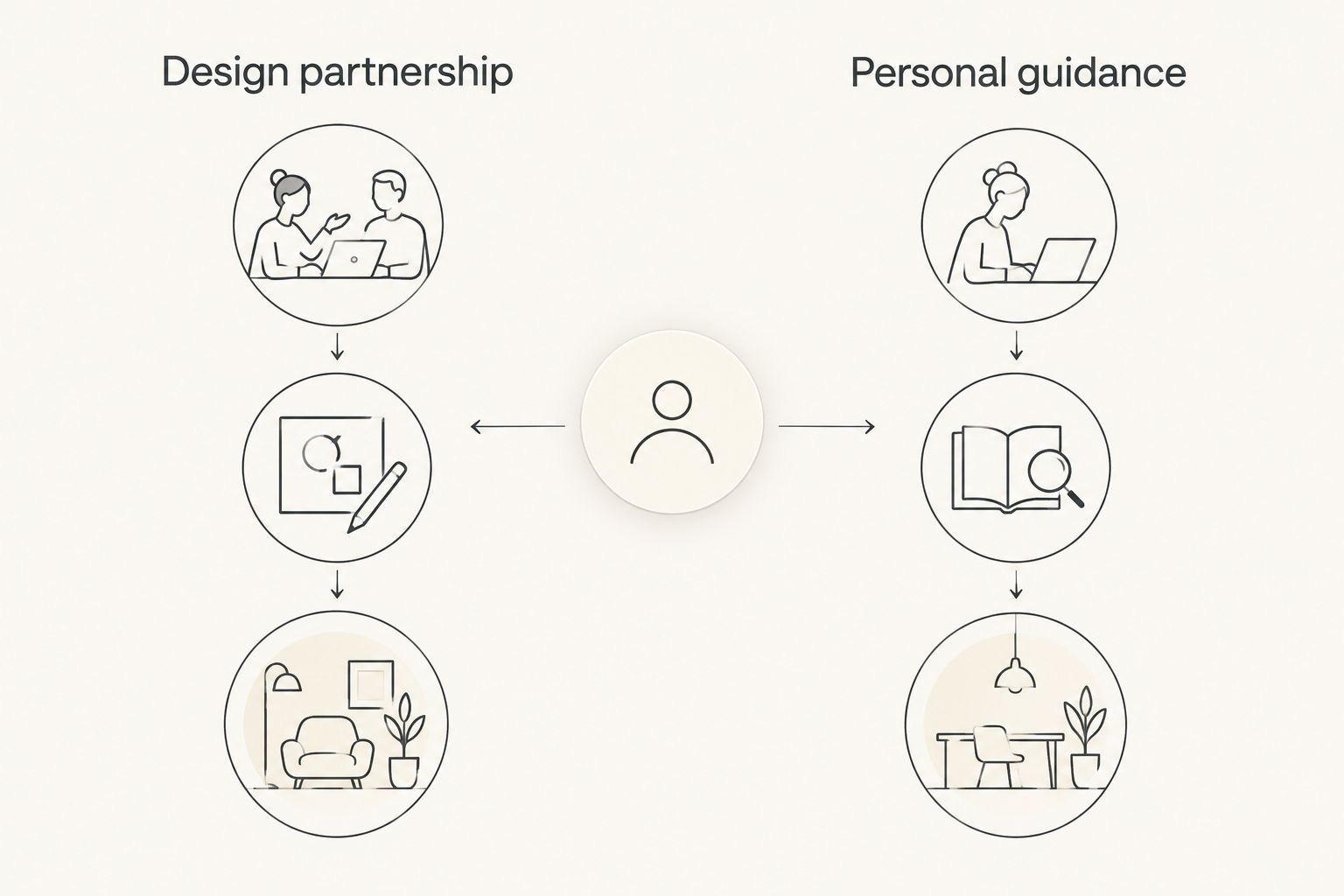
The difference is where you want to spend your effort. Design partnership emphasizes discussing decisions with a selected professional; independent research emphasizes gathering ideas and evaluating whom to hire. The first centers on personal guidance, while the second begins with professional discovery.
Before starting either route, prepare a small project brief:
- 3 room photos: show the space from different positions, including what you want to keep.
- 2 room dimensions: record length and width as a starting point, not a complete installation survey.
- 1 priority list: separate essential changes from ideas you are willing to reconsider.
This brief gives you a consistent starting point for conversations in 2026. It also helps you notice when a beautiful reference does not address the problem you actually need to solve.
Both help define a direction, but neither replaces a clear scope
The studio's standout offering combines design services with curated home furnishings. Houzz's standout role combines visual inspiration with professional discovery. Both can support the process of identifying a direction, but they do so through different kinds of interaction.
Treat this as an honest tie on getting started, not an equivalence in service. Browsing can help you articulate preferences; a design engagement creates a professional relationship with its own agreed responsibilities.
Before appointing anyone, ask:
- What decisions will the professional help you make?
- What information must you provide?
- What deliverables belong to the engagement?
- Which tasks remain yours?
- How will changes to the agreed scope be handled?
A clear division of responsibilities is more useful than assuming “full-service” includes every task. Ask the same questions whether you contact a studio directly or discover a professional through Houzz.
Pricing: compare agreements, not a studio against a platform
For a 2026 project, compare the proposed design-service agreements rather than treating a studio and a discovery platform as equivalent purchases. Hiring the studio creates an agreement with that business; hiring a professional discovered through Houzz creates an agreement with that professional.
Full-service and à la carte describe different approaches to scope. An à la carte engagement suits a defined need; a full-service discussion suits a project requiring broader design support. Confirm the actual deliverables and fee structure rather than assuming either label establishes the terms.
The practical tradeoff is defined scope versus room to change direction. A tightly described assignment makes responsibilities easier to compare, while an evolving project needs a clear process for approving additional work.
Ask how design work, furnishings, revisions, and any other proposed services are treated in the agreement. The guide to interior designer costs in Colorado Springs provides a related starting point for framing that conversation.
Final verdict: choose the help your project needs
Choose Oak + Loom Interiors if you want a local design partner
Named winner for the Colorado Springs homeowner ready for design support: the studio. Its full-service and à la carte interior design, showroom, and curated furnishings align with a homeowner who wants to discuss a real furnishing or renovation project.
Bring your priorities and ask which engagement fits. The reason to choose this route is the professional relationship, not an expectation that you can avoid every decision.
Choose Houzz if you want to direct the search yourself
Named winner for the independent researcher: Houzz. It fits the homeowner who wants to explore room ideas, examine professional profiles, and decide whom to contact.
Keep the boundary clear: finding a professional and hiring that professional are separate steps. Confirm the scope directly before treating any service as part of your project.
| Dimension | Winner |
|---|---|
| Best for | Studio for partnership; Houzz for research |
| Inspiration | Houzz |
| Local design support | Studio |
| Furnishings within a design conversation | Studio |
| Professional choice | Houzz |
| Homeowner involvement | Tie: both need your input |
| Defining an initial direction | Tie: different starting methods |
| Pricing model | No universal winner; compare agreements |
FAQ
Is Oak + Loom Interiors better than Houzz?
Oak + Loom Interiors is the better fit for Colorado Springs homeowners seeking local interior design support; Houzz is better for independent inspiration and professional discovery. The choice is between engaging a studio and using a research platform.
Can Houzz design my living room?
Browsing Houzz is not a living-room design engagement. You can discover professionals through the platform, then contact one directly to discuss a design service.
Does the Colorado Springs studio offer smaller design projects?
The studio offers à la carte interior design as well as full-service design. Discuss your specific need to establish which service and deliverables fit.
Which option is better when I only need furniture and lighting?
The studio is a direct option for discussing curated furniture and lighting. Houzz is useful when you first want to explore visual references and identify your preferences.
How should I compare design costs in 2026?
Compare written scopes and fee structures from the professionals you are considering. Check which design tasks, furnishings, revisions, and other services each agreement addresses.
Can I bring Houzz inspiration to a designer?
Yes, use saved references to explain the materials, colors, or arrangements you like. Add notes about your own room and priorities so the images support a conversation rather than stand in for a plan.
One last thing
Before adding another inspiration image, write down what you would change about the room you already have. “The seating makes conversation awkward” is a clearer starting point than a folder of attractive living rooms.
For your 2026 project, pair each reference with a practical need. That gives either a designer or your own research a useful direction—one room, one piece, one thoughtful decision at a time.