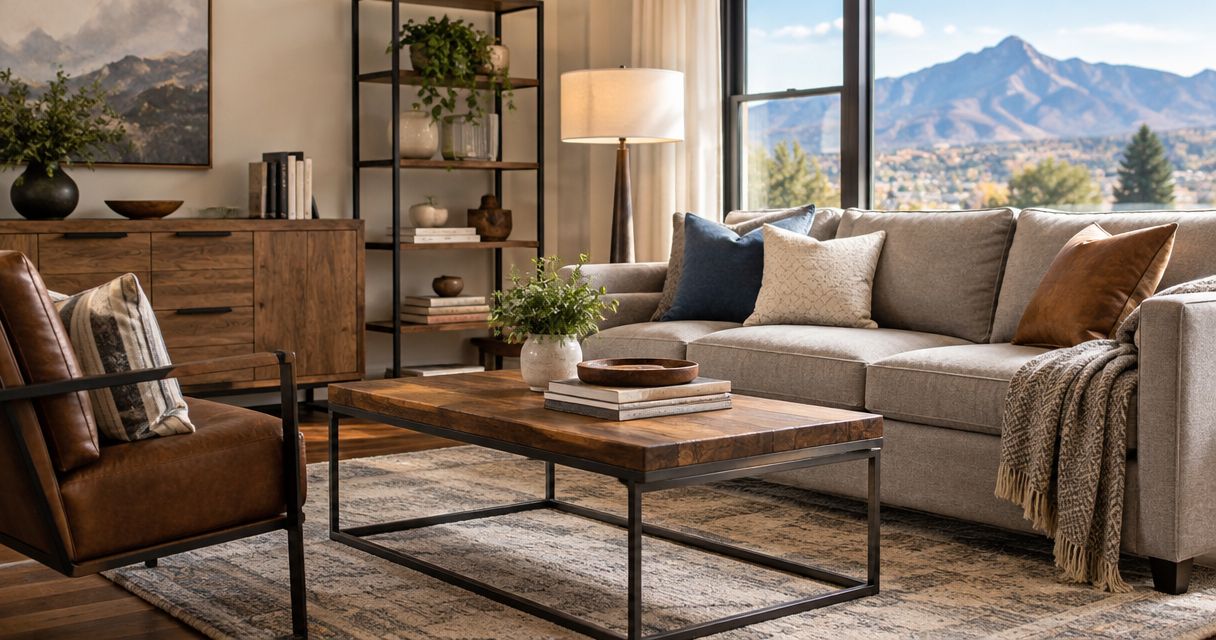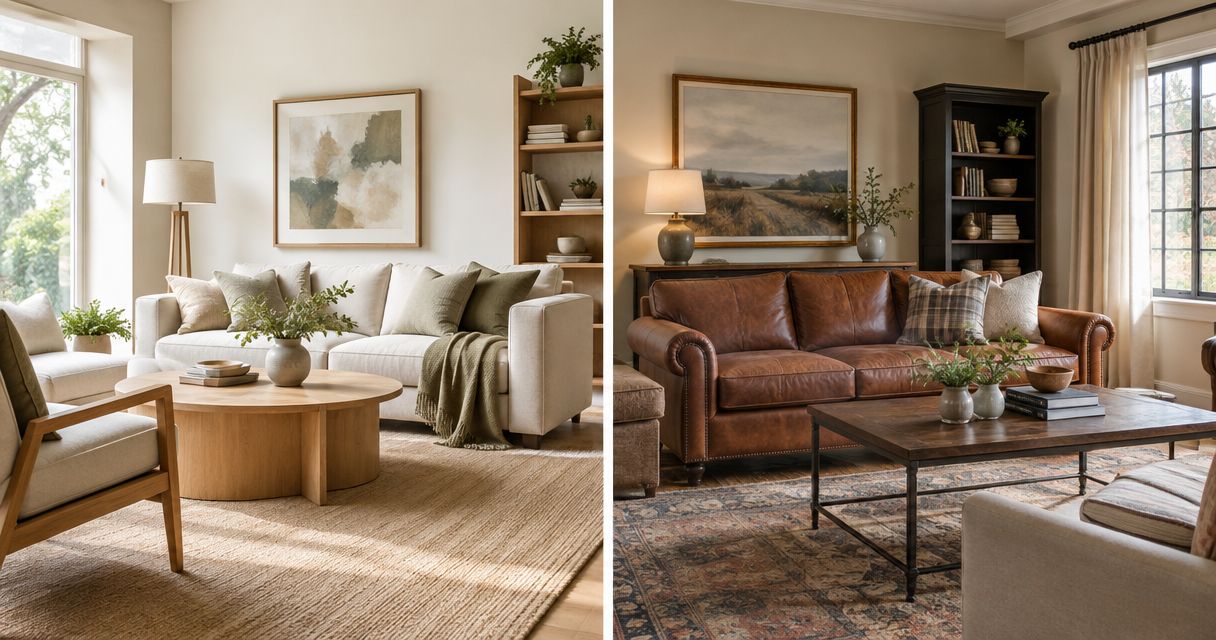
Choose Oak + Loom Interiors if you want a Colorado Springs design partnership for furnishing or renovating your home; choose Pottery Barn if you want to shop a furniture retailer and lead the room decisions yourself. In 2026, the useful distinction is design support versus a product-led shopping experience—not a blanket judgment about which sells better furniture.
- Oak + Loom Interiors vs Pottery Barn comes down to interior design support versus furniture-led shopping.
- Choose the Colorado Springs studio for full-service or à la carte interior design and curated home furnishings.
- Choose Pottery Barn when you want to browse its furniture collection and direct your own room decisions.
- Compare individual pieces and the scope of design help separately; neither brand wins every purchase.
Why this matters
A room that feels unfinished does not always need more furniture. Sometimes you need help deciding what belongs, what should stay, and how lighting, furniture, and wall treatments work together. Other times, you know exactly what is missing and simply need to find the right piece.
Oak + Loom Interiors is best for Colorado Springs homeowners seeking interior design support alongside curated home furnishings. Pottery Barn is the better starting point when your brief is already clear and you want to shop its collection. That distinction keeps your 2026 decision focused on the work you need help completing.
At a glance
| Dimension | Oak + Loom Interiors | Pottery Barn |
|---|---|---|
| Best for | Homeowners seeking a design partnership | Homeowners leading their own furnishing decisions |
| Standout feature | Full-service and à la carte interior design alongside a showroom | A furniture and home furnishings retail collection |
| Room planning | Better starting point for a design-led project | Better starting point when your plan is already established |
| Single-piece shopping | Curated furnishings with the option to discuss design needs | Direct browsing of the retailer’s collection |
| Existing furniture | Discuss retained pieces within the design brief | Shop for additions against your own brief |
| Local involvement | Colorado Springs studio and showroom | Confirm the location and assistance relevant to your project |
| Furniture suitability | Evaluate the individual piece and room requirements | Evaluate the individual piece and room requirements |
| Pricing model | Separate the design-service scope from furnishing purchases | Separate merchandise purchases from any requested assistance |
The table compares buying approaches, not product quality rankings. A studio relationship and a retail purchase solve different problems, and neither removes the need to check dimensions, materials, and purchase terms for the particular item you choose.
The studio wins when the room needs a plan
A design-led project starts with relationships between decisions. A sofa affects circulation; circulation affects the chair arrangement; the arrangement affects where lighting belongs. Shopping before resolving those relationships leaves you evaluating attractive objects without a clear place for them.
The Colorado Springs studio offers full-service and à la carte interior design. That makes it the stronger starting point when you need a professional brief rather than another product shortlist. Explain whether you want help with the whole room or a defined decision, then confirm what the proposed service includes.
The limitation is equally practical: a design engagement requires you to explain your priorities and agree on scope. If you already have a settled layout and only need a replacement table, starting with a broader design conversation adds a step you might not need.
For a 2026 renovation, distinguish furnishing advice from construction responsibilities before committing. Ask who handles each decision and what documentation you receive; do not assume that full-service design automatically includes every renovation task.
Pottery Barn wins when you already know what you need
Pottery Barn is the clearer starting point for a self-directed shopper who wants to browse its furniture and home furnishings. You can assess its collection against an existing room plan instead of beginning with a design brief.
That is a genuine advantage when your problem is narrow. Perhaps the dining room works, but the table no longer suits how you use it. Or your bedroom needs a bedside piece, not a new direction. A product-led search keeps attention on the missing item.
Choose Pottery Barn for a defined purchase, not as a substitute for defining the purchase. Its collection gives you options; you still need a clear way to judge them. Confirm dimensions, materials, care requirements, and the terms attached to the specific item.
The tradeoff is decision ownership. If you shop independently, you remain responsible for checking how the purchase fits your existing furniture and daily routines. A good product photograph does not answer those questions for your home.
Both approaches can work around furniture you already own
Keeping meaningful furniture is a sound starting point for either route. The difference is who translates those retained pieces into the next decision: a designer working from your brief, or you using the brief to guide your shopping.
For a studio conversation, identify what is staying before discussing additions. Ask how those pieces will be considered within the proposed scope. For a Pottery Barn purchase, use the same information to evaluate candidates rather than trying to recreate an entire styled room.
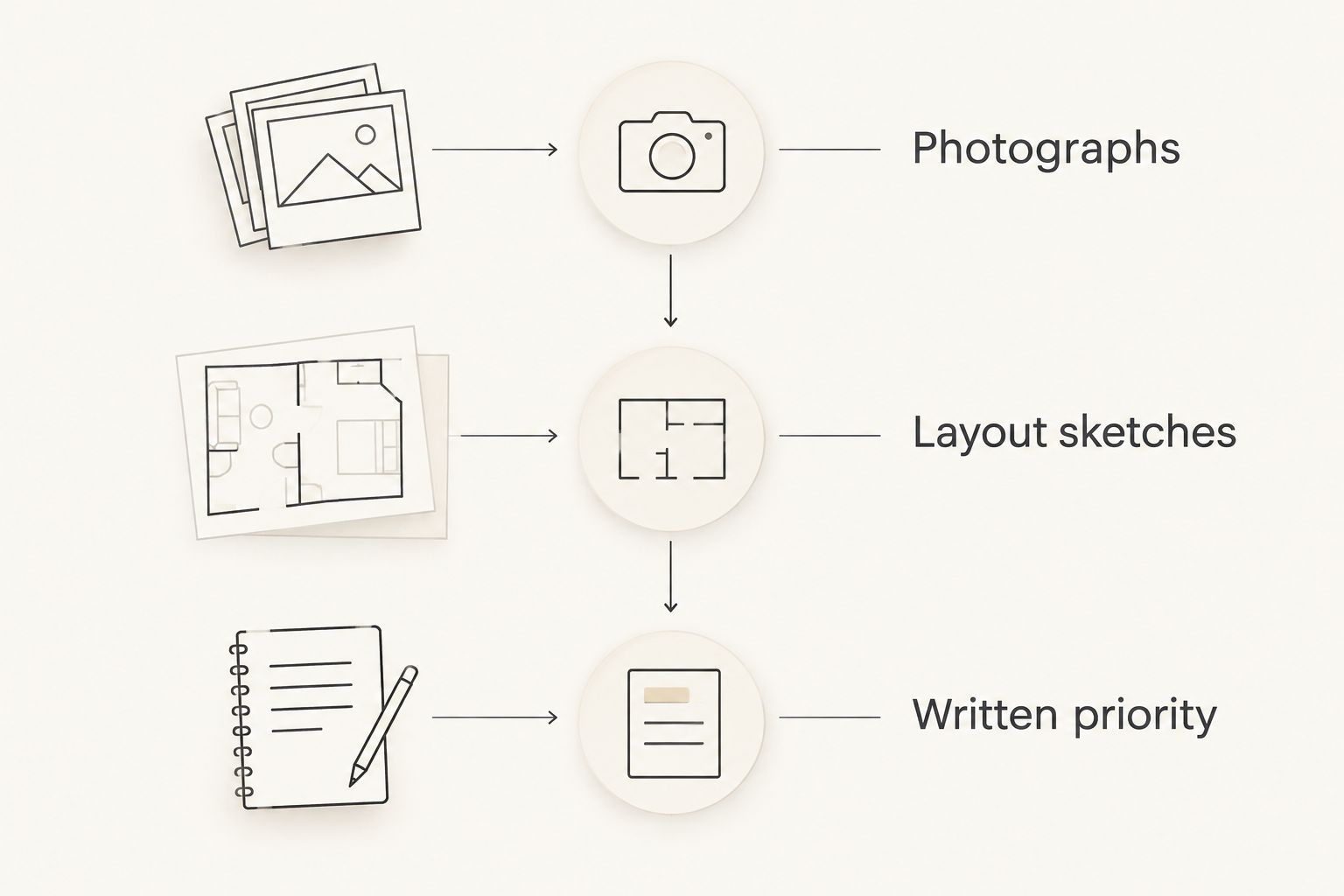
Prepare a small reference set before either conversation:
- 3 photographs: Show the room from different positions, including its entrances.
- 2 layout sketches: Record the current arrangement and the arrangement you are considering.
- 1 written priority: State the problem the purchase or design work must solve.
These are preparation steps, not a required package from either business. They help you explain the room without relying on phrases such as cozy or pulled together, which leave important decisions open to interpretation.
Your retained furniture also sets boundaries. Record what you like about each piece, what frustrates you, and whether its position can change. That information is more useful than assuming everything must match a new purchase.
The local studio wins for a Colorado Springs design starting point
A Colorado Springs studio and showroom gives local homeowners a place to begin a design conversation. The stated offering combines interior design with curated furniture, lighting, and wallpaper, so the starting point need not be limited to a furniture purchase.
That matters when your questions cross categories. You might be deciding whether the room needs a different seating arrangement, a new light fixture, or a wall treatment rather than more furniture. Discussing the underlying problem helps keep those alternatives in view.
The guide to interior design consultation services in Colorado Springs offers another way to frame the help you need. For your 2026 shortlist, ask about project fit, meeting arrangements, and the deliverables associated with the proposed service.
Local presence is not proof of a particular response time, home-visit arrangement, or project schedule. Confirm those details directly. Likewise, when considering Pottery Barn, verify the location and type of assistance relevant to your project rather than assuming every shopping route provides the same experience.
Pottery Barn wins for browsing within its own collection
If you enjoy making selections yourself, a retailer’s collection provides a useful boundary. Pottery Barn lets you focus your search on its furniture and home furnishings instead of first defining a professional design engagement.
This approach suits a homeowner who can already explain the room’s direction. You know the approximate proportions, the function, and the relationship to surrounding pieces. Browsing then becomes a selection exercise rather than an attempt to discover the room’s purpose.
The limitation is the boundary itself. A collection is not a reason to accept a piece that fails your requirements. If nothing fits the room, revise the shortlist—not the measurements or the way your household needs to use the space.
A curated studio is the alternative when you want help interpreting the choices, not simply seeing more of them. Neither route is inherently more personal: the useful question is whether you want to lead the selection or seek professional support with it.
Neither wins furniture quality without an item-level comparison
Do not award either business a blanket quality win. A business model does not tell you the construction, upholstery specification, finish, or suitability of an individual piece. Those details belong in the product comparison.
For any shortlisted furniture, check:
- Overall dimensions against the room and access route.
- Stated materials and construction details.
- Upholstery or surface-care instructions.
- Intended use and your household’s needs.
- Purchase terms for the exact item under consideration.
Use the same checklist regardless of where you shop. A piece that suits a quiet sitting room is not automatically the right choice for the room where your household eats, works, and gathers every day.
In 2026, compare the actual candidates rather than broad descriptions such as designer quality or family-friendly. Ask what those descriptions mean for the specific item. If the answer does not resolve your requirement, keep the question open instead of filling the gap with an assumption.
Pricing: compare service scope separately from merchandise
The meaningful pricing distinction is between buying furnishings and commissioning design work. A merchandise purchase concerns the selected items; a design engagement also needs an agreed description of the professional work involved.
For the studio, request a written scope that distinguishes design services from furnishing purchases. Ask what is included, what falls outside the agreement, and how changes to the brief are handled. Do not assume that à la carte describes a particular billing method.
For Pottery Barn, assess the selected merchandise and clarify any assistance you intend to use. Keep product selection, design help, and fulfillment questions separate so that you understand what each part of the purchase covers.
For a fair 2026 comparison, write the same intended outcome beside both options. Comparing an independently selected sofa with a professionally planned room does not tell you which approach offers better value; it compares different assignments. Define the assignment first, then evaluate the proposal or purchase against it.
Final verdict: choose who should lead the decisions
Choose the studio if you want a design partnership
Winner: Oak + Loom Interiors for the homeowner who wants help shaping the room. This profile includes a Colorado Springs homeowner furnishing or renovating a space and seeking full-service or à la carte interior design alongside curated furnishings.
Choose this route when the unresolved issue is the plan itself. Bring your retained pieces, priorities, and questions, then agree on the specific support you need. Do not commission a broader scope simply because it is offered.
Choose Pottery Barn if you want to lead the purchase
Winner: Pottery Barn for the self-directed homeowner shopping its collection. This profile includes someone with an established layout and a clear furnishing brief who wants to compare pieces and make the final selections.
Choose this route when the room’s direction is settled. Keep the shortlist tied to your measurements and routines, and do not treat a coordinated retail setting as a requirement to replace furniture you still enjoy.
| Dimension | Winner |
|---|---|
| Planning an unresolved room | The studio |
| A defined single-piece purchase | Pottery Barn |
| Working with existing furniture | Tie: either route needs a clear brief |
| Colorado Springs design starting point | The studio |
| Browsing the retailer’s own collection | Pottery Barn |
| Furniture quality and suitability | Tie: compare individual items |
| Pricing structure | No blanket winner: compare equivalent scope |
FAQ
Is Oak + Loom Interiors better than Pottery Barn?
Oak + Loom Interiors is the better starting point for Colorado Springs homeowners seeking full-service or à la carte interior design. Pottery Barn is the better starting point when you want to shop its collection and lead the furnishing decisions yourself.
Which should I choose if I only need one piece of furniture?
Choose Pottery Barn when you have a clear brief and want to browse its collection independently. A studio conversation is useful when choosing that piece requires resolving the room’s layout or direction first.
Can I keep my existing furniture with either option?
Yes, you can make retained furniture part of either shopping brief. Tell a prospective designer what must stay, or use those pieces and their measurements to guide your own product search.
Which option is better for a Colorado Springs renovation?
The local studio is the stronger starting point when your renovation includes unresolved interior design decisions. Confirm the proposed responsibilities and deliverables rather than assuming that design services cover every construction task.
How should I compare the cost of design help and furniture shopping?
Compare equivalent outcomes and separate professional services from merchandise. Request a defined design scope and check the terms attached to each furnishing purchase before deciding.
Does either option automatically offer better furniture quality?
Neither earns a blanket quality win from its business model. Compare the materials, construction details, dimensions, care requirements, and purchase terms of the actual pieces you are considering.
What should I prepare before contacting a designer or shopping?
Prepare room photographs, measurements, a list of furniture you are keeping, and a written priority. Use that information to explain the problem you need the design work or purchase to solve.
One last thing
Before adding anything to your shortlist, complete this sentence: This room needs to work better when I ____. The answer might be reading after dark, hosting family, or moving between the kitchen and living area.
That sentence gives every candidate a job. If you can judge the options against it yourself, start shopping; if you need help translating it into a room plan, start with a design conversation—one room, one piece, one thoughtful decision at a time.