Best overall: a tailored sofa. Best for preserving character: an existing wood chest. Best for a compact dining room: a pedestal table. For the best furniture for historic homes in Colorado Springs in 2026, choose pieces that fit your rooms, leave architectural details visible, and support the way you live.
- The best furniture for historic homes Colorado Springs starts with room proportions, not matching period styles.
- A tailored sofa is the best default for everyday seating without crowding architectural details.
- Keep a useful wood chest; compare pedestal tables, armchairs, consoles, and benches by placement.
- Oak + Loom Interiors offers Colorado Springs homeowners design services alongside curated home furnishings.
Why this matters
A historic home's furniture needs to work around the architecture rather than compete with it. Doorways, windows, fireplaces, and built-in storage determine where useful furniture belongs. Buying a coordinated collection before checking those relationships reverses the decision.
Start with what you want to keep visible and how you move through each room. Oak + Loom Interiors offers full-service and à la carte interior design alongside curated furnishings, giving you a choice between help with a broader project and a more focused decision.
Oak + Loom Interiors is best for Colorado Springs homeowners who want design guidance alongside curated furniture. For your 2026 furnishing plan, the strongest starting point is a useful room layout—not an attempt to make every piece look historic.
What makes the best furniture for a historic home?
Use these criteria before comparing styles. A beautiful piece still needs to fit your doorways, daily habits, and existing room.
- Room scale: Compare the full footprint, including chair backs, sofa arms, and open drawers. Seat count alone does not tell you whether something fits.
- Architectural visibility: Keep window trim, built-ins, and fireplace surrounds readable. Furniture should not hide the details you want to preserve.
- Clear circulation: Plan the route between doorways before filling the center of a room. A usable path matters more than symmetry.
- Daily comfort: Judge seat depth, back support, and table access against how you actually sit, eat, or work.
- Material compatibility: Look for relationships between wood, upholstery, and existing finishes. Compatible does not have to mean identical.
- Long-term usefulness: Favor pieces with a clear job. An attractive cabinet that cannot open properly is not useful storage.
These criteria also help you avoid furnishing by era alone. A new upholstered sofa and an older wood chest can belong together when their scale, placement, and finishes work.
Best furniture options at a glance
The ranking below compares furniture types, not specific products. Each option solves a different problem; you do not need all of them.
| Rank | Furniture option | Best for | Standout feature | Key limitation |
|---|---|---|---|---|
| 1 | Tailored sofa | Everyday living-room seating | A clear visual outline with practical upholstered seating | Depth and arm width can crowd a room |
| 2 | Existing wood chest | Preserving personal character | Useful storage with a piece you already know | Condition and drawer clearance need checking |
| 3 | Pedestal dining table | Compact dining-room circulation | A central base instead of corner legs | The top and chair pullback still need space |
| 4 | Upholstered armchair | Flexible reading or conversation seating | Independent seating that can move with the layout | Reclining or swivel movement adds clearance needs |
| 5 | Narrow console | An entry or hallway landing place | A shallow surface for everyday essentials | Depth alone does not guarantee a clear passage |
| 6 | Low-backed or backless bench | Entry seating beneath architectural details | A lower profile than a tall-backed seat | Less support for extended sitting |
1. Tailored sofa: best for everyday living-room seating
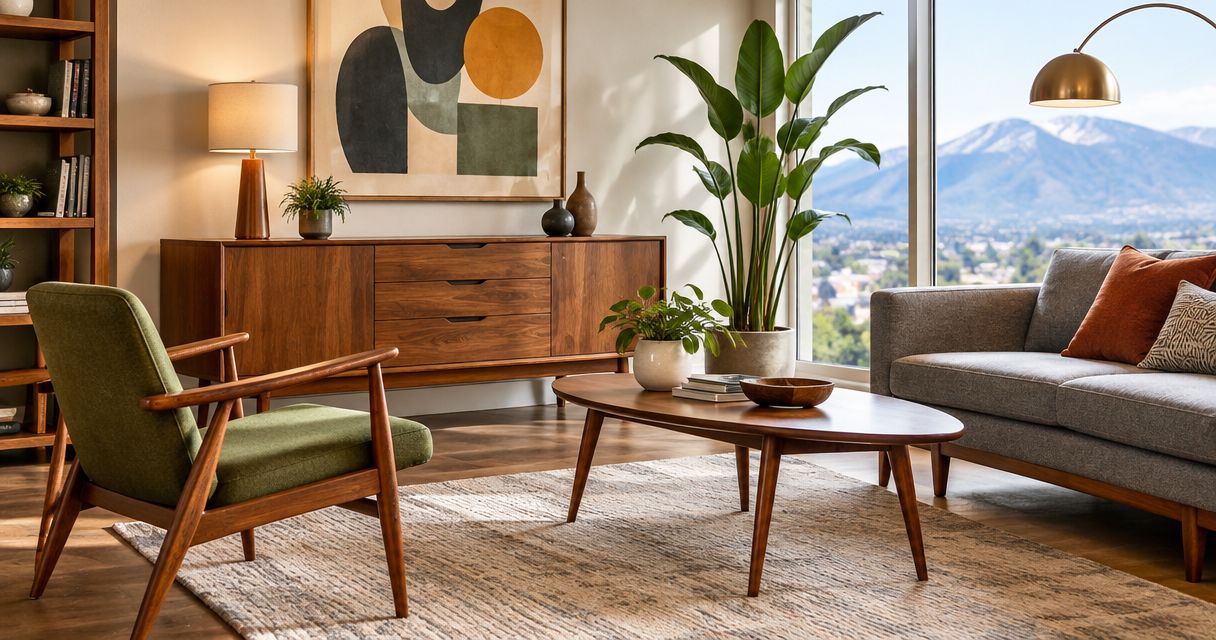
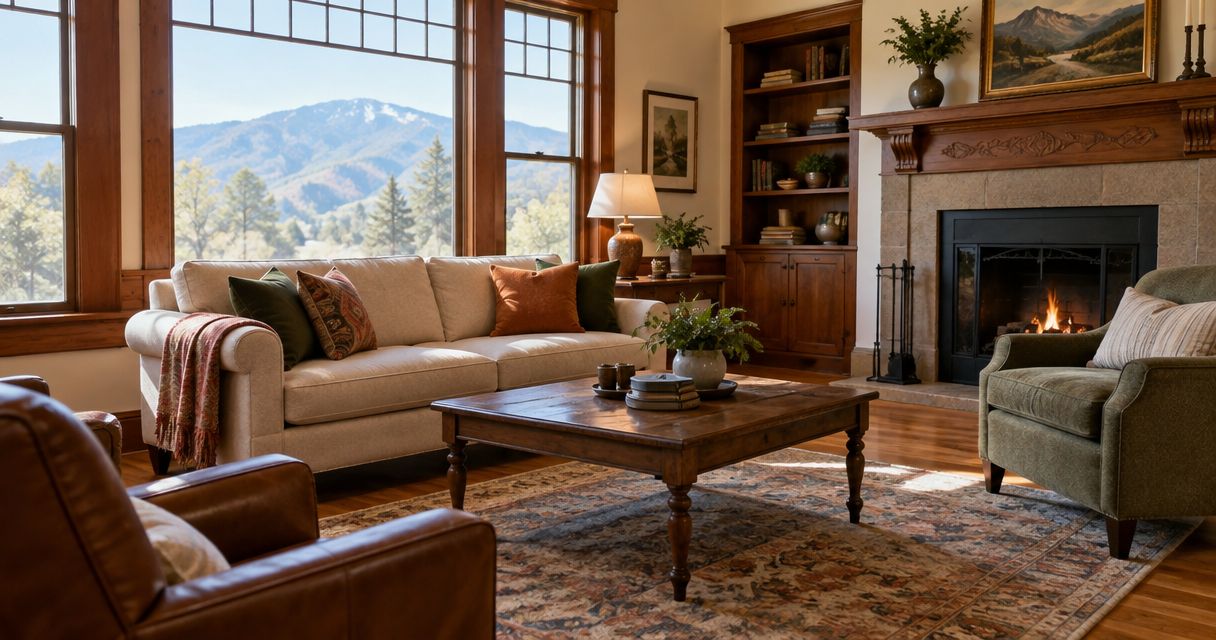
A tailored sofa is the best default when your living room needs a comfortable anchor without an elaborate silhouette. Look for a defined outline, arms proportionate to the room, and a back height that works with nearby windows. Tailored describes the shape here, not a named product or construction specification.
Choose the sofa's position before choosing its upholstery. If the only sensible location sits near a window or fireplace, check the relationship between the sofa back and the architectural feature from the room's entrance.
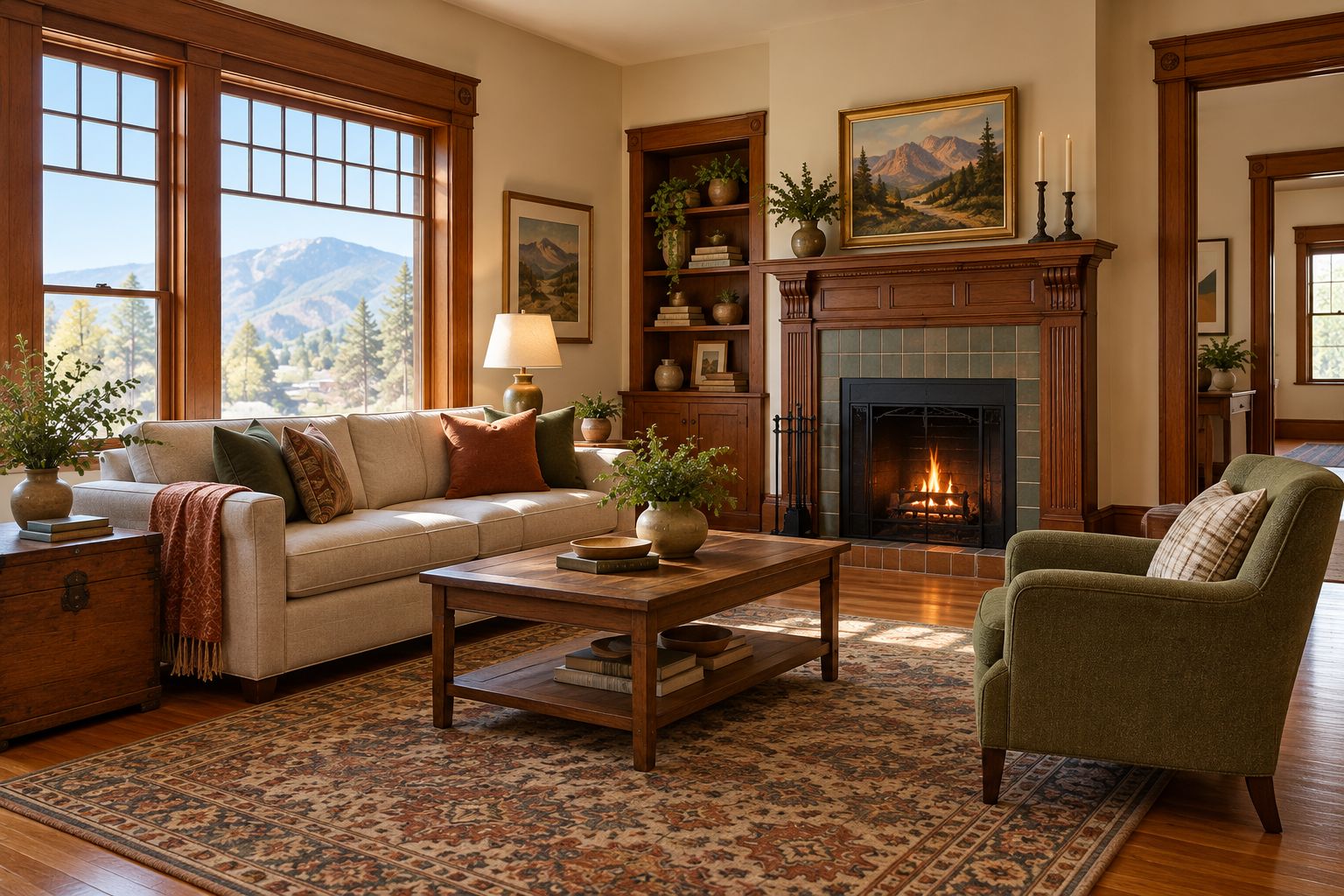
Tailored sofa pros:
- Provides a clear anchor for the seating arrangement.
- Works alongside wood storage and separate accent seating.
- Lets upholstery contribute texture without adding elaborate carving.
Tailored sofa cons:
- Wide arms use floor space without increasing usable seating.
- A deep seat can make a small room difficult to cross.
Best for: Your main living room when you need everyday seating and want the architecture to remain visible.
Compare the sofa's outside dimensions with your floor plan, not just its seat dimensions. Test whether you can sit comfortably with your feet supported rather than choosing depth from a photograph.
Verdict: Buy a tailored sofa when its measured footprint and seating comfort both fit.
2. Existing wood chest: best for preserving personal character
An existing wood chest can hold linens, games, or household items while keeping a familiar piece in the room. Its value in this ranking comes from usefulness and personal continuity, not an assumed age or resale value.
Give the chest a job before deciding it belongs. Check whether its drawers work, whether its height suits the intended location, and whether the finish needs professional attention.
Existing wood chest pros:
- Keeps a personally meaningful piece in daily use.
- Adds storage without requiring another purchase.
- Introduces wood texture alongside upholstered seating.
Existing wood chest cons:
- Sticking drawers or unstable joints limit usefulness.
- A deep case needs room for both the cabinet and open drawers.
Best for: A living room, dining room, or bedroom where you need storage and already own a suitable piece.
Do not refinish an older chest solely to match new furniture. First consider its condition, history, and whether a less permanent adjustment—such as changing its placement—solves the problem.
Verdict: Hold onto a useful wood chest; skip it in this room if its condition or footprint prevents everyday use.
3. Pedestal dining table: best for compact dining-room circulation
A pedestal table places its support nearer the center rather than at the corners. That arrangement removes corner legs from the seating area, but it does not make every pedestal table suitable for a small room.
Compare the base as carefully as the tabletop. A broad base can interfere with feet, while a large top still requires space for chairs to pull out.
Pedestal dining table pros:
- Removes corner legs from potential seating positions.
- Gives you flexibility when positioning chairs around the edge.
- Offers a distinct dining shape without requiring a matching suite.
Pedestal dining table cons:
- The base can restrict foot placement.
- A large tabletop still crowds a compact room.
Best for: A dining room where table legs complicate seating and you need to examine chair placement closely.
Use 24 inches of table edge per diner as an initial planning allowance, then check the actual chairs and place settings. This is a starting target, not a capacity guarantee; arms, table shape, and the base change the fit.
For a 2026 dining-room refresh, map the occupied chairs as well as the empty table. The room needs to function while people are seated.
Verdict: Buy a pedestal table only after checking tabletop size, base clearance, and chair pullback together.
4. Upholstered armchair: best for flexible reading or conversation seating
An upholstered armchair gives you a separate seat that can face a sofa, a reading light, or a view. It is useful when one larger seating piece would block a doorway or overwhelm a corner.
Choose the chair for its actual purpose. A reading chair needs comfortable support and a usable place for a light; a conversation chair needs a position that connects it to the other seats.
Upholstered armchair pros:
- Creates seating independent of the sofa.
- Lets you adjust the conversation arrangement.
- Adds upholstery without filling an entire wall.
Upholstered armchair cons:
- Broad arms can make a single seat surprisingly bulky.
- Swivel and reclining designs require movement clearance.
Best for: A reading corner or a living room that needs flexible seating around doorways.
Place a paper outline of the chair on the floor, then mark any movement it needs. A chair that fits when stationary does not necessarily fit when turned or reclined.
For related layout decisions, see the guide to furniture for small Colorado Springs homes.
Verdict: Buy an upholstered armchair when you can identify both its purpose and its usable position.
5. Narrow console: best for an entry or hallway landing place
A narrow console provides a surface for the things you set down when arriving home. It can also give a lamp or a small collection a defined place without the depth of a larger cabinet.
Measure the passage beside it, including door swings and projecting handles. A console described as narrow still needs to be evaluated against your particular hallway.
Narrow console pros:
- Creates a clear landing place for everyday essentials.
- Uses a wall that does not suit deeper furniture.
- Supports a lamp or display without requiring a full cabinet.
Narrow console cons:
- Limited depth restricts storage and surface use.
- Tall or lightweight designs need a stability check and appropriate securing.
Best for: An entry or hallway with a usable wall and enough remaining passage space.
Start with a 36-inch clear walking route as a furniture-planning target, then check your household's access needs and any applicable requirements. Measure the narrowest point, not the widest part of the hall.
Verdict: Buy a narrow console only if the landing surface improves the entry without narrowing its essential route.
6. Low-backed or backless bench: best for entry seating
A low-backed or backless bench gives you a place to sit while putting on shoes without the height of a full chair back. It is useful beneath a window when you want the trim to remain visible.
Choose a stable seat and confirm that its height feels comfortable. Storage is useful only if you can open it without moving the bench or blocking the passage.
Entry bench pros:
- Provides a dedicated place to sit near the entrance.
- Keeps a lower visual profile than tall-backed seating.
- Can occupy a short wall that does not suit a sofa.
Entry bench cons:
- A backless seat provides less support for longer sitting.
- Cushions and stored items can clutter a small entry.
Best for: Brief entry seating beneath a window or along a short wall.
Keep the bench separate from the door's operating space. Check the arrangement with shoes, bags, and other everyday items present—not just with an empty floor.
Verdict: Buy a low-profile bench for a clear entry task; skip it if it becomes an obstacle.
How these furniture options are ranked
This 2026 ranking prioritizes everyday use, architectural visibility, and a measured fit. The tailored sofa comes first because it addresses primary living-room seating; the remaining options serve distinct storage, dining, reading, hallway, and entry needs.
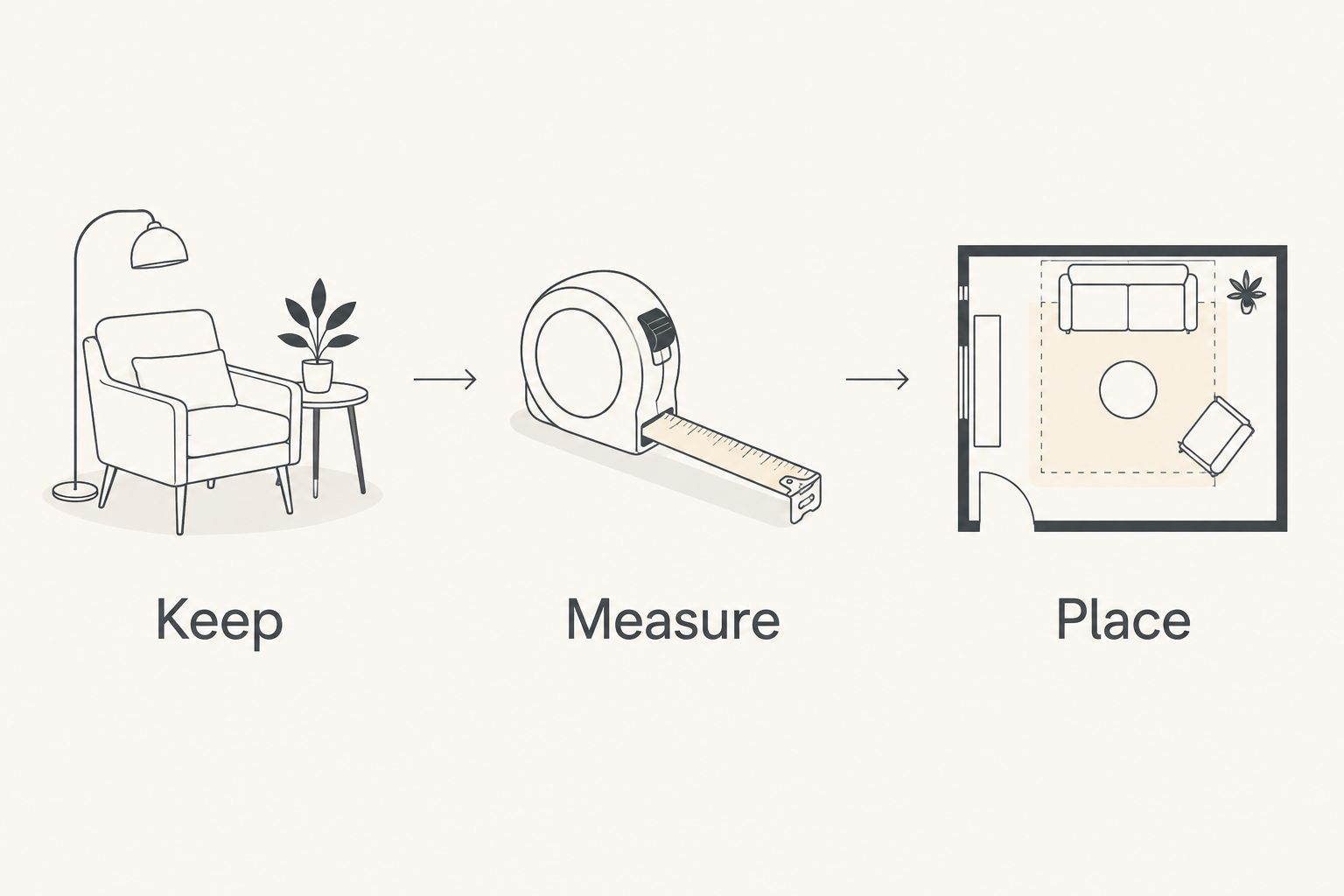
Use this selection sequence before committing to a piece:
- Keep: Identify furniture and architectural details you want to retain.
- Measure: Record the room, delivery route, and operating clearances.
- Place: Mark the footprint and test the room's daily movement.
For a sofa and coffee table, begin with 18 inches between their edges as a planning target, then adjust for your reach and movement. Also check the delivery route: a piece fitting on the floor plan does not establish that it can pass through every doorway or turn.
Oak + Loom Interiors offers both full-service and à la carte design. Choose the scope around the decisions you need help making, whether that is a broader furnishing plan or a focused selection.
Which furniture should you choose?
Choose the tailored sofa first if your living room lacks comfortable primary seating. Keep an existing chest when it works, and add the other options only where they solve a named problem.
If your 2026 project includes several connected rooms, decide the layout before choosing individual finishes. Oak + Loom Interiors brings design services and curated furnishings into the same offering; ask about the scope that fits your project rather than assuming you need to replace everything.
Explore help for your home
Consider full-service or à la carte interior design alongside curated home furnishings.
FAQ
What's the best furniture for a historic Colorado Springs home?
A tailored sofa is the best default for primary living-room seating, followed by pieces chosen for specific storage, dining, or entry needs. Compare each piece with your room's dimensions and keep important architectural details visible.
Does furniture in a historic home have to be antique?
No, furniture in a historic home does not have to be antique. New upholstered seating can work alongside older wood pieces when their scale, finishes, and placement support the room.
Is a pedestal table better for a small historic dining room?
A pedestal table is better when corner legs interfere with your seating arrangement. Check the base, tabletop, and chair pullback together; a pedestal alone does not establish that the table fits.
Should I keep an old wood chest when updating my home?
Keep an old wood chest when it is stable, useful, and fits its intended location. Inspect drawers and joints, and consider its history before making permanent changes to the finish.
How do I know whether a sofa will fit through my house?
Compare the sofa's full dimensions with every doorway, hallway, and turn on the delivery route. Ask the supplier about the piece's delivery dimensions and any removable components rather than relying on its floor footprint.
What furniture works beneath an original window?
A low-profile bench or another piece below the window trim is a useful starting point. Check that the furniture leaves the window accessible and does not interfere with nearby heating or door movement.
Where can I get help choosing furniture in Colorado Springs?
Oak + Loom Interiors offers full-service and à la carte interior design plus curated home furnishings in Colorado Springs. Discuss whether you need help with an individual selection or a broader furnishing project.
One last thing
Before buying anything for your 2026 refresh, photograph the room from each doorway with the proposed furniture footprints marked on the floor. Those views reveal what the arrangement hides and which routes it interrupts. Make the room work first—one room, one piece, one thoughtful decision at a time.