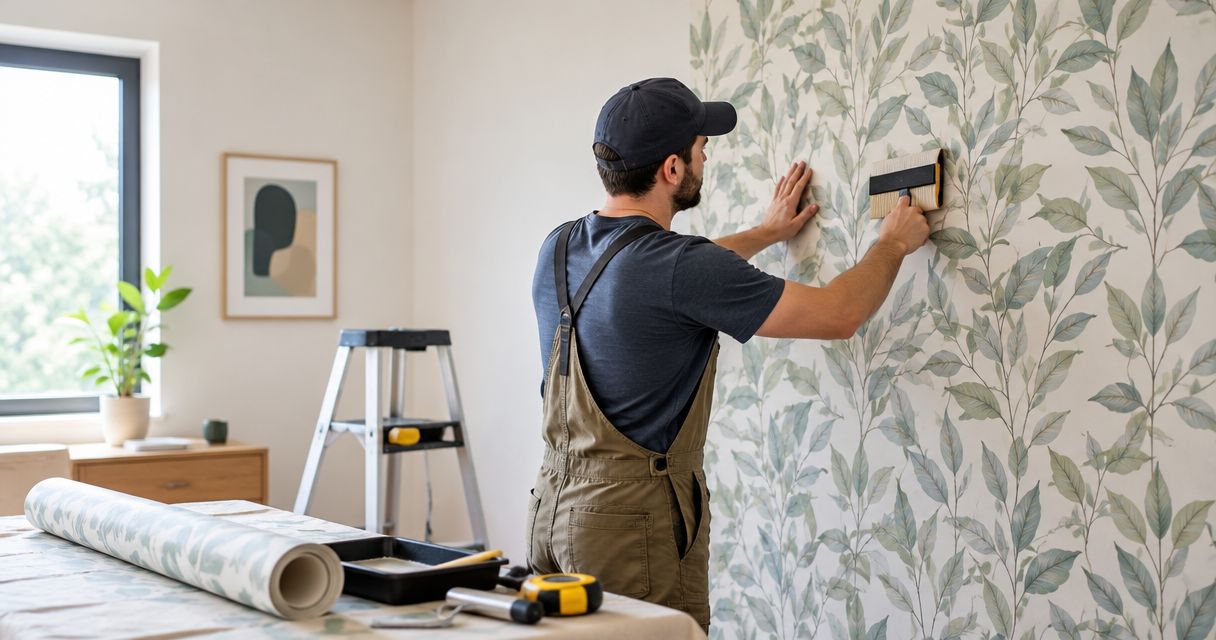
Yes, you can hire an interior designer for just one room; you do not need to redesign your entire home. Ask whether the designer accepts single-room projects and whether the work covers advice, selected decisions, or a finished-room plan. The important caveat is that design advice does not automatically include purchasing, delivery coordination, or installation, so agree on those responsibilities before you begin.
- Can I hire an interior designer for one room? Yes—confirm the designer’s single-room scope before committing.
- Oak + Loom Interiors offers full-service and à la carte interior design for homeowners furnishing or renovating.
- Choose consultation-style help for direction, selected services for specific decisions, or full-service support for a connected plan.
- Define what stays, what changes, and who handles purchasing before approving the project.
Can I hire an interior designer for just one room?
Yes. The right question is how much help you want within that room, not whether your home is large enough for design services. A bedroom refresh, a living-room furniture plan, and a dining room with new lighting call for different work, even though each involves a single room.
Start your 2026 project by describing the problem you want solved. Perhaps your furniture interrupts the walkway, your bedroom feels unfinished, or you cannot connect the pieces you already own. If you need help choosing an engagement format, explore interior design consultation services in Colorado Springs.
Ask for a written scope that connects those problems to specific deliverables. A room name alone does not explain what the designer is being asked to do.
Why this matters
Hiring for one room lets you set a clear boundary without treating every decision as an isolated purchase. The sofa affects the layout; the layout affects where you read; that reading spot affects the lighting. Those decisions belong together.
A limited project still needs a complete brief. If you ask only for furniture recommendations but also expect paint selections, window treatments, and ordering assistance, you and the designer are describing different jobs.
Choose the smallest scope that solves the actual problem—not simply the shortest list of tasks. That keeps your project focused while leaving room for the decisions that genuinely depend on one another.
Which level of single-room design help fits your needs?
The following formats describe ways to organize a project, not standardized packages. Ask each designer what their agreement includes; service names alone do not establish responsibilities.
| Engagement format | Best for | Main advantage | Main limitation |
|---|---|---|---|
| Consultation-style help | Homeowners seeking direction before doing the work themselves | Focuses the conversation on your most pressing decisions | Advice is not the same as a detailed plan or implementation |
| Selected design services | Homeowners with a defined gap, such as layout or finish selection | Keeps professional help concentrated on a specific need | Decisions outside the agreed scope remain yours |
| Full-service room design | Homeowners seeking connected design decisions and more project support | Gives the room a coordinated design brief | Requires a broader agreement and clear implementation responsibilities |
Keep your own involvement in mind when comparing these approaches. A plan you love is only useful if you understand what you must do next and have the capacity to do it.
Consultation-style help: best for getting unstuck
Choose consultation-style help when you can carry out the work but need a clearer direction. Bring the decision that is holding you up: a furniture arrangement, a color relationship, or uncertainty about what to keep.
Ask what you will receive afterward. A conversation, written recommendations, and a measured drawing are different deliverables; do not assume that booking advice includes all of them.
The strength of this format is focus. Its limitation is the handoff: you still need to turn recommendations into decisions and actions unless your agreement says otherwise. Choose direction-only support when you want to remain responsible for execution.
Selected design services: best for a clearly defined gap
Selected services fit a room that already has a direction but needs help with a particular part. You might want a furniture layout while keeping your finishes, or help connecting wallpaper with existing furnishings.
Name both the task and its boundaries. For example, distinguish selecting a light fixture from planning electrical changes or coordinating its installation.
This approach keeps the brief intentional, but adjacent decisions still need attention. A new furniture arrangement can reveal that your existing lamps no longer sit where you need them. Choose selected services when you can clearly describe what is missing and what is already settled.
Full-service room design: best for connected decisions
Full-service room design fits a project where furniture, lighting, finishes, and the overall layout need to be considered together. It is a level of involvement, not a requirement to include the entire house.
Clarify what “full-service” means in the proposed agreement. Ask about selections, revisions, purchasing responsibilities, delivery coordination, and the final placement of furnishings rather than assuming those tasks are included.
The advantage is a connected brief. The trade-off is that you must make more decisions about responsibilities at the outset. Choose fuller support when you want help managing the relationship between the room’s parts, not just choosing individual pieces.
Why the scope of one-room design varies
Room count is a starting point, not a description of the workload. When comparing proposals in 2026, make sure each designer is responding to the same brief.
- Existing furniture: Keeping a sofa or dining table creates a starting point, but the new plan must accommodate its dimensions and condition.
- Physical changes: Rearranging furnishings is different from changing built-ins, electrical locations, or architectural finishes.
- Room functions: A living room used for conversation and occasional work needs a brief that accounts for both activities.
- Deliverables: Verbal guidance, drawings, finish selections, and a purchasing list are distinct outputs. Specify which you need.
- Implementation: Decide whether you want recommendations only or help carrying the design through to completion.
- Adjacent spaces: An open room needs consideration of neighboring sightlines, even when those neighboring spaces are outside the project.
Do not expand the project merely because another room is visible. Ask the designer to distinguish between considering an adjacent space and redesigning it.
How do I prepare for a single-room design project?
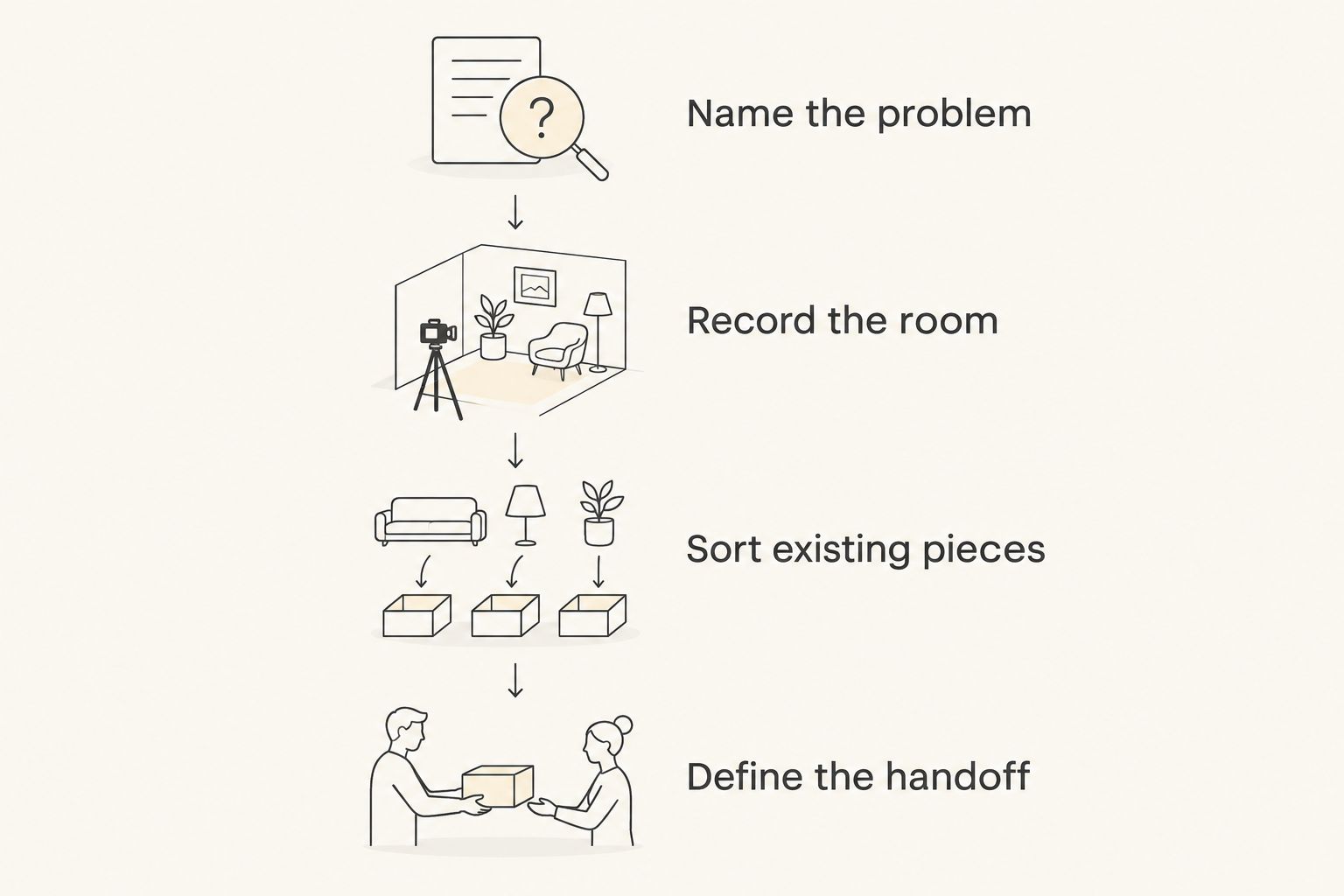
A useful brief describes your everyday life before it describes a style. Prepare the following information before requesting a proposal so the conversation stays centered on what your room needs to do.
1. Name the problem
Write a short explanation of what is not working. “We need somewhere comfortable to read without blocking the doorway” gives a designer more direction than “the room needs something.”
Choose 2 priorities to lead the conversation. Treat that as an organizing exercise, not a limit on everything the finished room should accomplish. If more concerns emerge, distinguish essential needs from preferences.
2. Record the room
Gather the measurements you have and photograph the room from its corners. Include doors, windows, fixed features, and the routes you use to move through the space.
Ask who will verify dimensions before selections or orders are finalized. Your preliminary notes help explain the room; they should not silently become the basis for every purchasing decision.
3. Sort existing pieces
Make 3 lists: keep, reconsider, and remove. Include practical reasons alongside emotional ones—a chair might be meaningful, comfortable, or simply the wrong fit for its current position.
Do not discard a piece just to make the room easier to describe. Tell the designer which items are nonnegotiable and which you are open to moving elsewhere.
4. Define the handoff
Write down what you want in your hands when the design work ends. That might be a layout, coordinated selections, or a room whose implementation is also covered by the agreement.
Then identify who handles each next action. This is where a promising design conversation becomes a workable partnership: both sides understand what happens after approval.
What should I ask before hiring a designer?
Ask questions that reveal the working relationship, not just the designer’s preferred style. You are choosing how decisions will be made and how much of the project you will carry yourself.
For a 2026 single-room project, put these questions into your initial inquiry:
- Do you accept projects limited to this room and these tasks?
- Which deliverables are included, and which require a separate agreement?
- How will you account for furniture I want to keep?
- How are feedback and revisions handled?
- Who is responsible for measurements, purchasing, and installation arrangements?
- What happens if I want to add work after the scope is approved?
Read the proposal against your brief rather than against a service label. If a responsibility is important to you, ask for it to be addressed explicitly before signing.
Where does Oak + Loom Interiors fit?
Oak + Loom Interiors is best for Colorado Springs homeowners seeking interior design support alongside curated home furnishings. The studio and showroom offers full-service and à la carte interior design, plus furniture, lighting, and wallpaper.
That combination gives you a relevant starting point for discussing a room that needs design direction, furnishings, or both. Explore Oak + Loom Interiors and describe the room, the pieces you want to keep, and the decisions you want help making.
Do not treat the service menu as confirmation of a particular single-room package. Ask the studio to match your brief to an agreed scope, including what you will handle yourself.
Can I keep my existing furniture when hiring a designer?
Yes—make the furniture you want to keep part of the brief from the beginning. Share dimensions, photographs, and any practical or sentimental reasons the pieces matter to you.
A retained piece creates a design constraint, not an automatic problem. Ask the designer to assess its placement and relationship to proposed additions before you commit to replacing it.
Do I need to finish the room all at once?
No—you can ask for a room plan that you implement in stages. Separate the design decisions from the purchasing sequence, and ask which decisions need to happen together.
If you are beginning in 2026 and expect to continue later, request guidance on what to establish first. Avoid treating an early selection as a permanent promise that every later option will remain unchanged.
Can a designer help with one room in an open-plan home?
Yes—define the project by its functional area and physical boundaries. A living area can be the focus while the dining area and kitchen remain outside the redesign.
Ask the designer to consider the shared sightlines, circulation, and finishes. Considering the surrounding space does not have to mean adding it to the scope.
FAQ
Can I hire an interior designer for one room in 2026?
Yes, you can hire an interior designer for one room in 2026. Confirm that the designer accepts the project and agrees to the specific tasks and deliverables you need.
Is a consultation enough to redesign my living room?
A consultation fits when you need direction and want to handle the remaining work yourself. Ask whether it includes written recommendations, drawings, or follow-up before treating it as a complete room plan.
Can I get help choosing furniture without renovating?
Yes, you can ask for a furnishings-focused brief without requesting renovation work. Confirm whether the scope includes layout, selections, purchasing support, or only some of those tasks.
Should I hire a designer before buying a sofa?
Hire the designer before buying the sofa if its size or placement is part of the problem you want solved. That lets the room plan inform the purchase rather than requiring the plan to work around it.
Does full-service interior design mean the whole house?
No, full-service describes the agreed level of support rather than the number of rooms. Ask the designer to define both the project boundaries and the implementation responsibilities.
Does Oak + Loom Interiors offer different levels of design support?
Oak + Loom Interiors offers full-service and à la carte interior design. Describe your single-room goals and ask which scope fits the help you want.
One last thing
Before hiring anyone, describe an ordinary evening in the room: where you sit, what you reach for, where the light falls, and what gets in your way. That account gives your designer something more useful than a collection of attractive images alone.
For your 2026 brief, keep this sentence visible: “The room will work better when…” Finish it in your own words. You do not need a whole-house project to deserve thoughtful design—just a clear starting point, one room at a time.