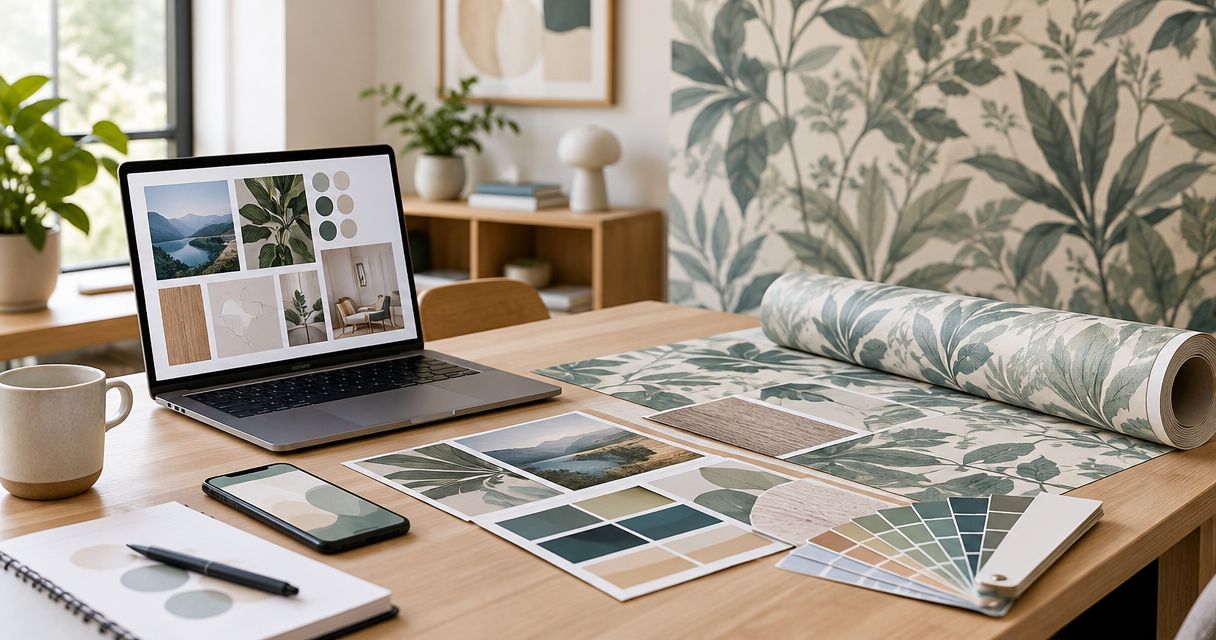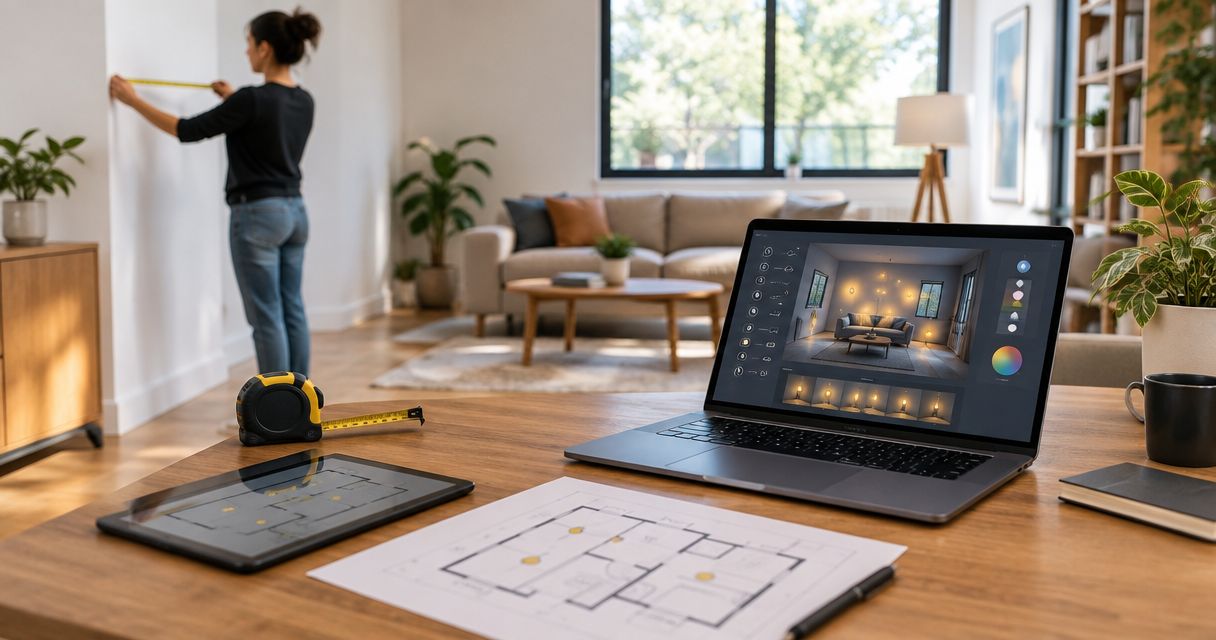
Hiring an interior designer is worth it when you need help connecting layout, furnishings, and finishes into a plan you can confidently follow. For a 2026 project, choose professional help when decisions depend on one another, but keep straightforward purchases DIY if you already know what fits, what you like, and how you will put it together.
- Is hiring an interior designer worth it? Yes, when connected decisions need a clear plan—not just more inspiration.
- Full-service interior design fits homeowners seeking broader support; à la carte design fits a defined problem.
- DIY fits a clear brief, confident measurements, and a homeowner who wants to manage the details.
- Oak + Loom Interiors offers Colorado Springs homeowners design services and curated home furnishings.
Is hiring an interior designer worth it in 2026?
Hire a designer when you need judgment across several decisions, not simply permission to buy something you already love. A room can contain beautiful individual pieces and still feel difficult to use. Furniture placement, lighting, proportions, and existing finishes need to work together.
The right level of help depends on what you want to keep doing yourself. Oak + Loom Interiors offers full-service and à la carte interior design alongside curated furnishings, giving Colorado Springs homeowners different starting points for that conversation.
| Approach | Best for | Main advantage | Main limitation |
|---|---|---|---|
| Full-service interior design | Homeowners seeking broader support across a furnishing or renovation project | Creates an opportunity to address connected decisions together | Requires a clearly agreed scope and ongoing homeowner input |
| À la carte interior design | Homeowners with a specific design question or defined part of a project | Keeps professional help focused on the problem at hand | Leaves work outside the agreed scope with you |
| DIY furnishing and decorating | Homeowners with a clear direction who enjoy managing details | Keeps decisions and execution directly in your hands | Leaves you responsible for checking fit, coordinating choices, and resolving mistakes |
These are decision-making categories, not promises about a particular studio's deliverables. Ask what each proposed service includes before choosing.
Why this matters
A furnishing or renovation project is a series of connected choices. A sofa affects the walking path; that layout affects where lighting belongs; those choices influence how the room supports everyday life.
The practical question is not whether a designer has better taste than you. It is whether a design partnership will help you make decisions that you are struggling to resolve alone. Professional help should solve a defined problem, not create a larger project than you need.
For your 2026 plans, start with the part of home that feels unresolved. You do not need to redesign everything just because one room needs attention.
Full-service interior design: best for connected decisions
Full-service interior design is the stronger fit when you want help considering the project as a whole. This is especially relevant when furnishing choices and renovation decisions need to support the same direction.
Imagine planning a living room while also reconsidering its finishes. Choosing a sofa in isolation does not settle furniture placement, reading light, or the relationship between new materials and existing features. Bring those questions into the same discussion before committing to individual purchases.
The advantage is a broader planning conversation. The trade-off is that you still need to communicate priorities, approve decisions, and understand what the agreement covers. Full-service does not remove your role as the homeowner.
Before proceeding, ask who is responsible for selections, ordering, communication, and implementation. Do not assume those responsibilities from the service name alone.
Choose full-service support when the decisions are connected and you want a partner across the agreed project.
À la carte interior design: best for a defined problem
À la carte interior design fits a question you can name clearly. You might want help deciding on a room's direction, resolving an awkward furniture arrangement, or connecting furnishings you already own. Confirm which questions the designer's actual offering addresses.
This approach lets you keep the parts you enjoy while seeking help where you feel stuck. Its limit is the boundary of the assignment: a focused discussion does not automatically include the work needed to carry every recommendation through.
Ask what you will receive and what you should do next. A useful scope explains the problem being addressed, the decisions included, and the responsibilities that remain yours.
Choose focused help when you can describe the decision holding up the rest of the room. If the discussion reveals several connected problems, reassess the scope before adding more work.
DIY decorating: best for a clear plan you enjoy executing
DIY is a sound choice when you understand your room, trust your preferences, and want to manage the details. Buying a replacement piece that fits an established layout is different from furnishing an unfamiliar space from scratch.
The benefit is direct control. You choose the pace, research options, and decide when a room feels finished. The limitation is responsibility: you need to verify measurements, read product information, coordinate purchases, and handle any problems yourself.
Before continuing alone, explain how each planned purchase supports the room. If the explanation is clear and the practical checks are complete, professional help is not automatically necessary.
Stay with DIY when the work feels manageable and the decisions have a clear purpose. Seek help when repeated browsing produces more options but no clearer direction.
Why the value of hiring a designer varies
The value of interior design depends on the problem you bring to it. For a 2026 project, use these factors to judge the fit rather than expecting a guaranteed financial return:
- Connected decisions: A layout question that affects furnishings and lighting calls for a different conversation than an isolated decorative choice.
- Existing belongings: Pieces you intend to keep belong in the brief from the beginning. The plan needs to work with your home, not an imaginary empty room.
- Your available attention: Decide whether you want to research and coordinate details yourself or seek help with an agreed portion of that work.
- The clarity of your preferences: You do not need a style label, but examples of what you like and dislike give the conversation direction.
- The scope of support: Advice, selections, and implementation are different responsibilities. Clarify which ones the proposed service includes.
- Your willingness to collaborate: A designer needs honest feedback about daily routines, practical concerns, and choices that do not feel right to you.
None of these factors proves that hiring a designer will save money. They explain where professional judgment can be useful and where a smaller assignment—or no assignment—is the better fit.
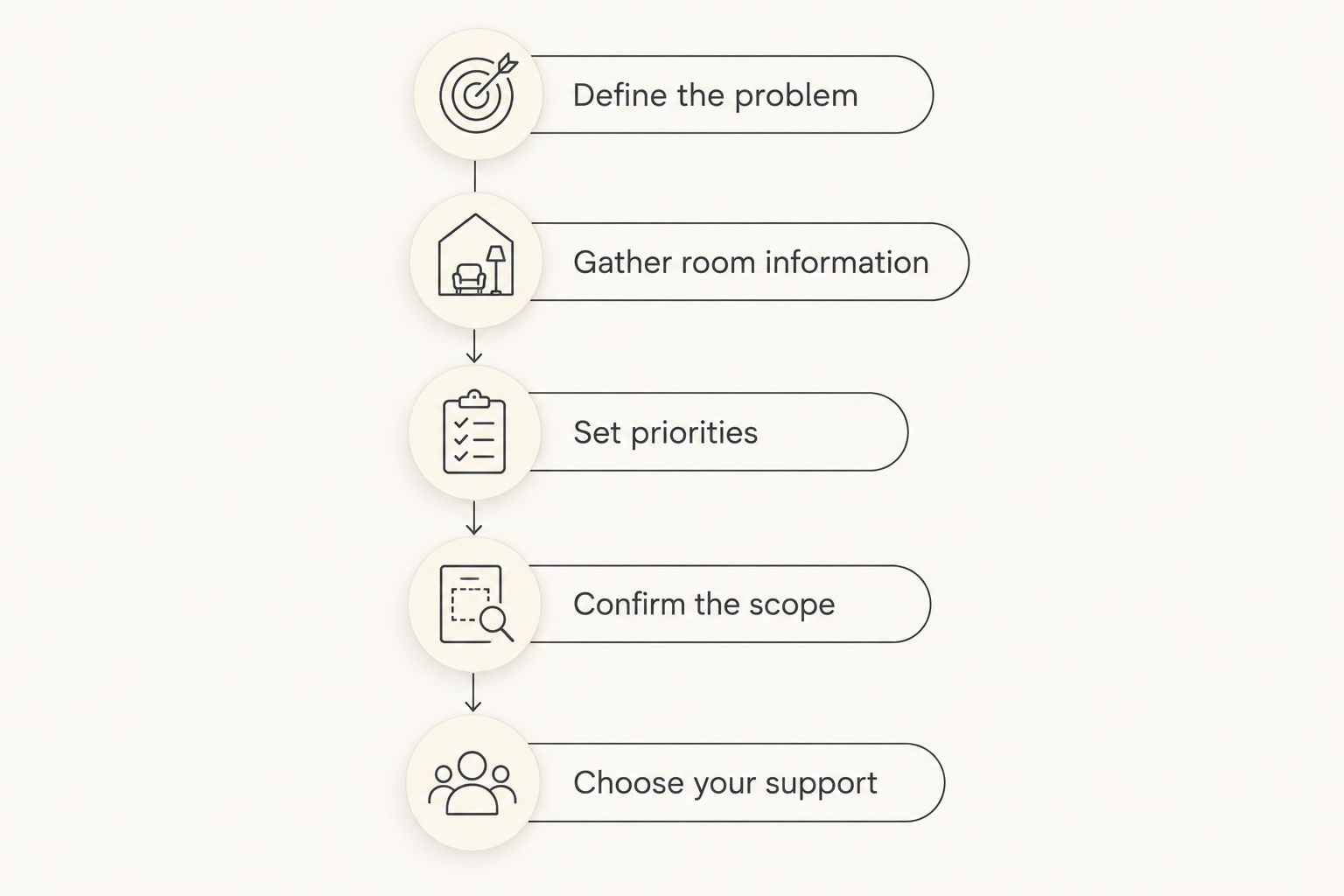
How to decide before hiring an interior designer
Work through this sequence before requesting a proposal. The aim is to make the conversation specific enough that you can judge whether the suggested service matches your actual needs.
Define the problem
Describe what is not working in everyday terms. Perhaps conversation feels awkward in the living room, the bedroom lacks useful reading light, or your existing furniture does not feel settled in the new house.
Avoid starting with a demand to make everything look different. A clear problem leaves room for a thoughtful solution, including keeping pieces that already work.
Gather room information
Bring photographs, room measurements, and information about furniture you intend to keep. Include doorways, windows, and fixed features that affect placement.
Separate confirmed information from assumptions. A measurement you have not checked should not become the basis for a purchase decision.
Set priorities
Explain how you use the space and what matters most. A room for quiet evenings has different needs from a room that also handles work, visiting family, or frequent entertaining.
Name what you are comfortable changing. Be equally clear about what needs to stay, including belongings with personal meaning.
Confirm the scope
Ask what work is included, what you will receive, and who handles the next steps. Request clarity about communication, approvals, and changes to the assignment.
A good-looking proposal is not enough. You should be able to explain the division of responsibilities in plain language.
Choose your support
Match the agreement to the problem. Choose focused help for a bounded question, broader support for connected decisions, or DIY when you have a workable plan and want to carry it out yourself.
Do not choose the largest scope just to feel certain. Choose the scope that addresses the uncertainty you actually have.
When a local design studio is the right fit
Oak + Loom Interiors is best for Colorado Springs homeowners seeking interior design services and curated home furnishings together. The studio and showroom offer furniture, lighting, and wallpaper alongside full-service and à la carte design.
Oak + Loom Interiors is not automatically the right fit for every project. If you only need a straightforward purchase and already have a clear plan, start there; if you want design support, ask how the proposed service addresses your specific room and responsibilities.
For a 2026 project, bring a useful question rather than a finished presentation. “How can this room work with the furniture I want to keep?” gives a design conversation a practical starting point.
Explore support for your home
Consider full-service or à la carte interior design for your Colorado Springs home.
Is hiring a designer worth it for just one room?
A single room can justify professional help when its layout, furnishings, and finishes need to work together. The number of rooms matters less than the decisions involved. Start by explaining what the room needs to do and which choices are unresolved.
Can I hire a designer and keep my existing furniture?
Keeping existing furniture belongs in the brief from the start. Identify the pieces that must stay and ask how the proposed service will account for them. Do not assume that a design project requires replacing everything.
Should I hire a designer before buying furniture?
Hire before buying when you are unsure about layout, scale, or how the pieces will work together. A purchase settles one choice without necessarily resolving the room. If you already have a checked plan, you can make that purchase without adding professional support.
FAQ
Is hiring an interior designer worth it in 2026?
Hiring an interior designer is worth it when connected decisions need a clear plan and you want professional support. DIY remains a reasonable choice for straightforward purchases you can confidently assess and manage.
What's the best type of design help for one specific problem?
À la carte interior design is the better starting point for a clearly defined problem. Confirm that the designer's offering addresses your question and ask what you will receive.
Is full-service interior design better than à la carte design?
Full-service interior design fits broader, connected needs; à la carte design fits a bounded assignment. Neither is automatically better—the agreed scope needs to match your project.
Can an interior designer guarantee that I will save money?
Do not treat interior design as a guaranteed saving. Evaluate the proposed work by the decisions it addresses, the responsibilities it covers, and whether that support is useful to you.
What should I prepare before talking to an interior designer?
Prepare photographs, checked room measurements, information about furniture you want to keep, and a description of what is not working. Include how you use the room and which decisions you want help making.
Do I need to know my interior design style before hiring someone?
You do not need a style label before hiring a designer. Bring examples of what you like and dislike, then explain what appeals to you about each one.
When should I skip hiring an interior designer?
Skip professional help when you have a clear plan, understand the practical requirements, and enjoy managing the work yourself. Reconsider if unresolved decisions begin affecting the rest of the project.
One last thing
Before you buy anything else for your 2026 project, write down what would make the room easier to live in. Keep the sentence practical: a clearer path through the room, a comfortable place to read, or a furniture arrangement that supports conversation.
The best starting point is not a style name. It is a clear description of what your home needs to do for you. Use that description to guide your next decision, whether you make it yourself or with a designer.