Best overall: solid HDPE furniture for an exposed patio. Best for a sheltered deck: powder-coated aluminum. Best for natural wood: teak. This 2026 guide ranks the best outdoor furniture for Colorado mountain climates by material, exposure, maintenance, and how you actually use your outdoor space.
- Solid HDPE is the best outdoor furniture for Colorado mountain climates when low maintenance matters most.
- Powder-coated aluminum suits sheltered decks where you need to move furniture regularly.
- Teak suits homeowners who want natural wood and accept weathering or finish care.
- Oak + Loom Interiors offers interior design and curated home furnishings for Colorado Springs homeowners.
Why this matters
Mountain furniture decisions start with exposure, not appearance. An uncovered patio, a sheltered porch, and a balcony with strong gusts place different demands on the same chair. Sun affects finishes and fabrics; moisture exposes weak joints and damaged coatings; wind makes furniture weight and storage important.
For your 2026 purchase, separate the frame from everything attached to it. A durable frame does not make its cushions waterproof, and an outdoor label does not explain how the finish handles scratches or standing water. Read care instructions for each component before choosing a set.
Oak + Loom Interiors offers full-service and à la carte interior design alongside curated home furnishings. Oak + Loom Interiors is best for Colorado Springs homeowners seeking design help and curated furnishings together. The material recommendations below are buying guidance, not a claim about the studio's outdoor inventory.
What makes the best outdoor furniture for mountain climates
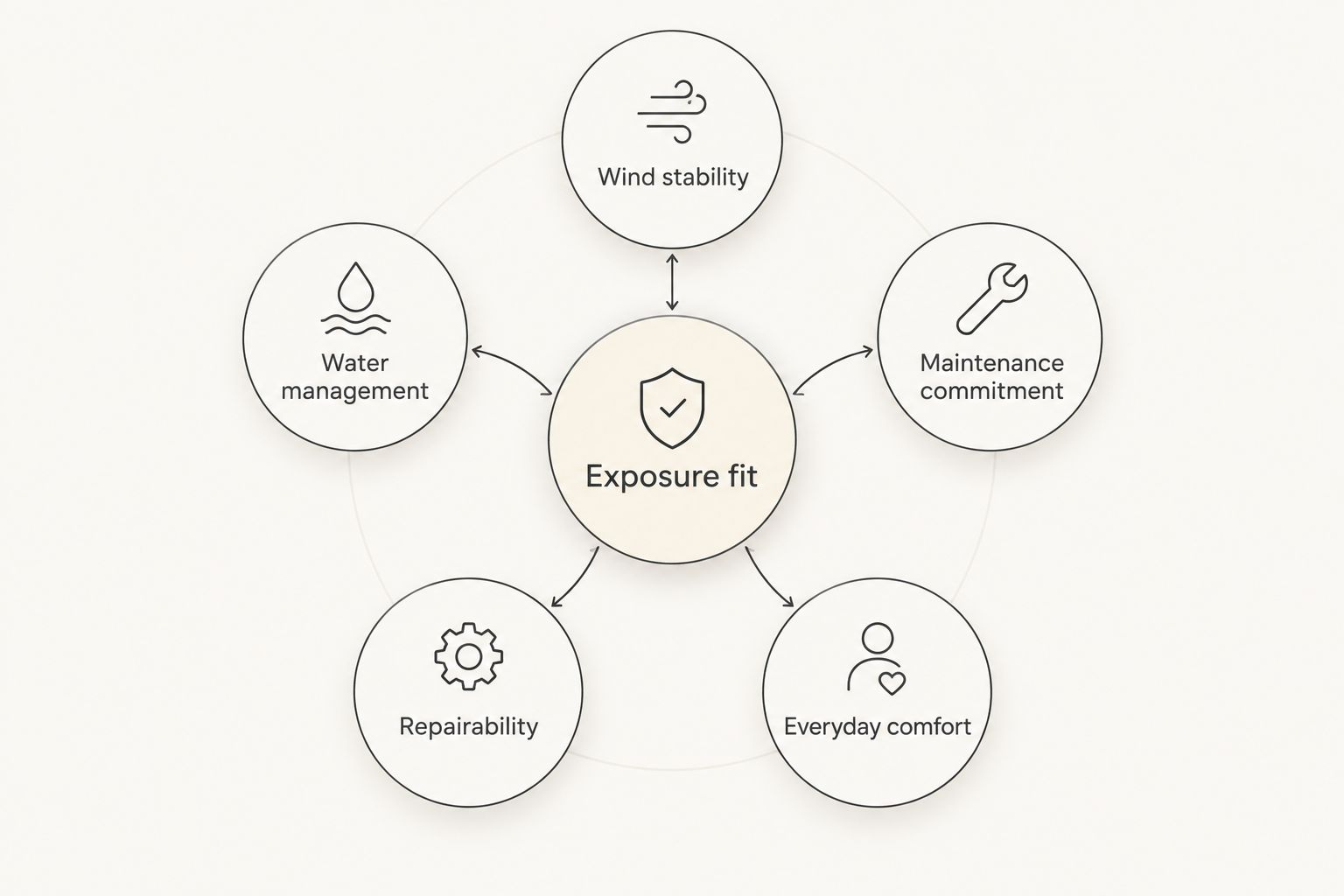
Use these criteria to compare outdoor furniture in 2026 before deciding which material looks right:
- Exposure fit: Match the frame, finish, and fabric to direct sun, precipitation, and the shelter your space provides.
- Wind stability: Examine the actual piece's weight, footprint, and center of gravity. Material alone does not establish stability.
- Water management: Prefer designs that shed water. Check cushion removal, drainage openings, and places where moisture collects.
- Maintenance commitment: Decide whether you want routine washing, wood care, or finish inspection. Choose a routine you will keep.
- Repairability: Ask whether cushions, hardware, glides, and other wearing parts can be replaced individually.
- Everyday comfort: Sit in the furniture, test the arm height, and check the dining position. Attractive furniture still needs to fit you.
Treat a missing care sheet as an unanswered buying question. Before committing, request the manufacturer's instructions for outdoor exposure, cleaning, covers, and seasonal storage. Those instructions matter more than a broad all-weather description.
Outdoor furniture materials at a glance
This ranking assigns each material a different job. It does not mean every HDPE chair outperforms every aluminum chair: construction, joinery, hardware, and care requirements still determine whether an individual piece belongs outside.
| Rank and material | Best for | Standout feature | Key limitation |
|---|---|---|---|
| 1. Solid HDPE | Exposed patios with low-maintenance priorities | Nonporous plastic lumber without a painted wood finish | Substantial pieces are inconvenient to move |
| 2. Powder-coated aluminum | Sheltered decks and flexible layouts | Relatively light frames that do not develop iron rust | Lightweight pieces need a wind-management plan |
| 3. Teak | Natural-wood seating areas | Wood with natural oils and an established outdoor use | Its original color changes without finish care |
| 4. Outdoor-rated powder-coated steel | Sheltered dining areas | Rigid frames and substantial construction | Damaged coatings expose steel to rust |
| 5. Synthetic wicker over aluminum | Covered lounge areas | Woven texture over a non-rusting frame | Resin quality and weave repairability vary |
1. Solid HDPE: best outdoor furniture for exposed patios
Solid high-density polyethylene, or HDPE, is plastic lumber used in outdoor chairs, benches, and tables. Unlike painted wood, the material does not depend on a paint film to protect an underlying wood surface. It suits homeowners who want outdoor seating without a recurring wood-finishing project.
Choose a piece with sound joints, outdoor-rated hardware, and a shape that lets water drain. A substantial chair offers a different experience from a thin, flexible one, even when both carry the same material label. Check the complete construction rather than buying on HDPE alone.
Solid HDPE pros:
- Does not absorb moisture like untreated wood.
- Does not require painting or staining as wood does.
- Solid construction can provide useful weight on exposed patios.
- Routine washing fits a low-maintenance care plan.
Solid HDPE cons:
- Substantial chairs and tables are awkward to relocate.
- Surface damage does not repair in the same way as sandable wood.
- Cushions and hardware still require separate attention.
Best for: A patio where furniture stays in place and you prefer cleaning to refinishing.
Choose comfort carefully. Some upright HDPE chairs suit dining better than long lounging, while deep reclining designs need more floor space. Verdict: Buy solid HDPE as the default for an exposed patio, after checking the individual piece's construction and care instructions.
2. Powder-coated aluminum: best outdoor furniture for flexible decks
Aluminum is useful when your deck needs to change with the occasion. You can move a dining chair, rearrange a conversation area, or bring pieces under shelter without handling the weight of a comparable substantial steel frame. Aluminum does not develop the iron rust associated with steel.
Powder coating adds a finished surface, but it does not eliminate care. Inspect scratches, joints, and hardware, and follow the cleaning instructions. The frame's relatively low weight also makes placement and wind exposure part of the decision.
Powder-coated aluminum pros:
- Easier to rearrange than many substantial steel or solid HDPE pieces.
- Does not develop iron rust.
- Works with slim dining and lounge silhouettes.
- Suits a layout that changes between everyday use and gatherings.
Powder-coated aluminum cons:
- Lightweight pieces are a poor default for an unmanaged windy location.
- Coatings and mixed-metal hardware still need inspection.
- Frame durability does not protect cushions left outdoors.
Best for: A sheltered deck where you move furniture regularly.
Ask about the actual piece's weight and storage instructions. Do not assume a broad chair or large table is stable simply because it looks substantial. Verdict: Buy powder-coated aluminum for a sheltered, flexible layout; skip lightweight pieces where wind management is impractical.
3. Teak: best outdoor furniture for a natural-wood setting
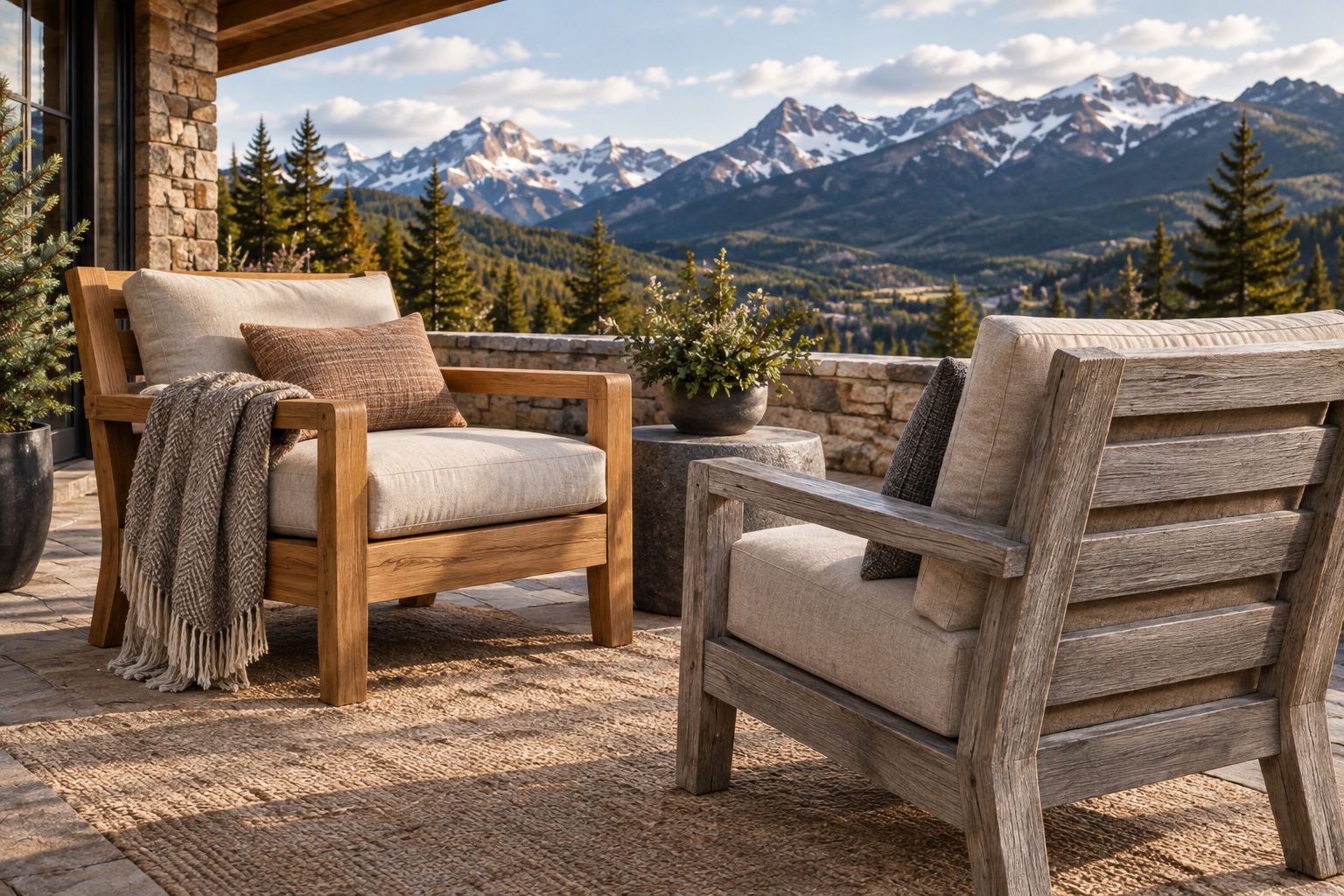
Teak brings natural wood grain to outdoor dining and seating. Its natural oils help explain its established use outdoors, but teak still changes with exposure. Untreated teak develops a gray appearance rather than retaining its original warm color indefinitely.
That change is a design decision, not automatically a failure. Choose teak if you appreciate the weathered look, or accept the manufacturer's recommended care for preserving a particular appearance. Avoid assuming that oiling every teak piece is necessary or appropriate.
Teak pros:
- Offers natural grain rather than a printed wood effect.
- Has natural oils associated with its outdoor use.
- Develops a weathered appearance without requiring a painted finish.
- Suits homeowners who want visible wood in their seating area.
Teak cons:
- Original color does not remain unchanged outdoors without care.
- Wood can develop surface checking and movement.
- Cleaning and finish decisions require more attention than simple material selection.
Best for: A homeowner who values natural wood and accepts its changing appearance.
Inspect joinery and ask about wood sourcing and care. The word teak does not tell you how well a chair was built. Verdict: Buy teak for its material character; skip it if an unchanged finish and minimal attention are your priorities.
4. Powder-coated steel: best outdoor furniture for sheltered dining
Outdoor-rated steel furniture suits dining areas where rigidity and substantial construction matter. A steel table or chair can feel planted, but the protective finish is central to its outdoor performance. Exposed steel can rust when moisture reaches it through damaged coatings.
Keep steel where you can inspect and care for it. Pay attention to welds, feet, scratches, and spots that remain wet after precipitation. A heavy piece still needs an appropriate location; weight alone does not make it suitable for year-round exposure.
Powder-coated steel pros:
- Supports rigid dining-chair and table designs.
- Substantial construction suits a relatively fixed layout.
- Allows slender profiles without relying on woven surfaces.
Powder-coated steel cons:
- Rust develops where exposed steel meets moisture.
- Heavy pieces are inconvenient to move into storage.
- Coating damage needs attention rather than being ignored.
Best for: A sheltered dining area with a fixed arrangement and an owner willing to inspect finishes.
Check that the specific piece is rated for outdoor use. An indoor steel chair with a similar appearance is not an equivalent choice. Verdict: Buy outdoor-rated steel for sheltered dining; skip it when finish inspection and seasonal care will not happen.
5. Synthetic wicker: best outdoor furniture for covered lounging
Synthetic wicker is a woven surface, not a complete description of the furniture underneath. For a covered lounge area, look for outdoor-rated resin weaving over an aluminum frame. Inspect the weave, frame, cushion instructions, and repair options separately.
The appeal is texture and a relaxed lounge shape. The limitation is that resin composition and UV resistance vary, while damaged weaving is not always straightforward to replace. A covered setting reduces exposure but does not remove the need for care.
Synthetic wicker pros:
- Adds woven texture to an outdoor seating area.
- An aluminum frame avoids the iron-rust issue of steel.
- Suits upholstered lounge shapes and deeper seating.
Synthetic wicker cons:
- Outdoor performance depends on the specific resin and construction.
- Damaged strands can be difficult to repair.
- Weaving and cushions add cleaning and storage tasks.
Best for: A covered porch or lounge area where texture and cushioned comfort take priority.
Inspect where strands wrap around corners and meet the frame. Ask about replacement cushions before choosing an unusual seat shape. Verdict: Buy outdoor-rated synthetic wicker for covered lounging; skip an unexplained resin weave for a fully exposed patio.
Check the layout before you order
A good material cannot rescue a crowded deck. For your 2026 plan, mark the furniture footprint with removable tape and test the space with doors open and chairs pulled back. Include the area used by cushions, covers, and seasonal storage.
- Walkway: Use 36 inches as a starting planning target for a main circulation route, then check the actual layout and applicable requirements.
- Coffee table: Start with about 18 inches between a lounge seat and coffee table, then test reach and legroom.
- Scale drawing: A 1-inch-to-1-foot sketch helps you compare footprints without moving full-size furniture.
- Storage: Identify where removable cushions will go before choosing a cushion-dependent set.
These dimensions are layout starting points, not accessibility standards or guarantees of fit. Your door swing, chair movement, and household needs determine the final arrangement. Test the space rather than treating a drawing as permission to squeeze in another seat.
How the materials were ranked
The 2026 ranking prioritizes exposure fit, maintenance, and everyday usability before appearance. Solid HDPE takes the default position because it avoids wood refinishing and steel's rust vulnerability. Aluminum, teak, steel, and synthetic wicker each serve a more specific setting or preference.
This is a material-based guide, not a product test or inventory list. Oak + Loom Interiors offers design services and curated home furnishings; confirm individual furnishing options directly rather than treating this ranking as a catalog. Product care instructions remain the deciding reference for exposure and storage.
Which outdoor furniture should you choose?
Choose solid HDPE if you are undecided and your priority is an exposed patio with a simple care routine. Choose powder-coated aluminum when moving furniture matters more, and teak when natural wood is central to the space you want to create.
For a sheltered dining area, consider outdoor-rated steel. For a covered lounge, consider synthetic wicker over aluminum. In 2026, buy the frame, cushion system, and storage plan as one decision—not as separate problems to solve after delivery.
FAQ
What's the best outdoor furniture for Colorado mountain climates?
Solid HDPE is the default recommendation for an exposed patio when low maintenance is your priority. Choose the actual piece by its construction, hardware, comfort, and manufacturer's exposure instructions.
Is aluminum or HDPE better for a windy patio?
Substantial solid HDPE furniture is the better starting point than lightweight aluminum for a windy patio. Compare actual piece weights and footprints, and follow manufacturer guidance; neither material guarantees wind stability.
Can teak furniture stay outside in Colorado?
Teak is used outdoors, but the individual product's care instructions determine appropriate exposure and storage. Expect untreated teak to change toward gray, and do not assume its original color will remain unchanged.
Is synthetic wicker a good choice for mountain weather?
Outdoor-rated synthetic wicker over aluminum is a good choice for covered lounging. Check the resin's outdoor suitability, frame construction, cushion care, and replacement options before using it in a fully exposed setting.
Can I leave outdoor cushions out all winter?
Follow the cushion manufacturer's storage instructions rather than treating an outdoor label as permission for winter exposure. Identify a dry storage location and check that cushions are dry before putting them away.
Do I need covers for outdoor furniture?
Use covers when the manufacturer recommends them and choose a fit that supports the required ventilation. Do not use a cover as a substitute for cleaning, drying, or seasonal storage instructions.
Does Oak + Loom Interiors sell the outdoor furniture in this guide?
This guide does not identify confirmed outdoor products from Oak + Loom Interiors. The studio offers interior design services and curated home furnishings; ask directly about furnishing options relevant to your project.
One last thing
The part most likely to complicate your routine is not always the frame. A durable chair with a cushion you cannot conveniently dry or store creates an ongoing task. Before you buy, rehearse putting the cushions away and moving around the furniture—one thoughtful decision at a time.