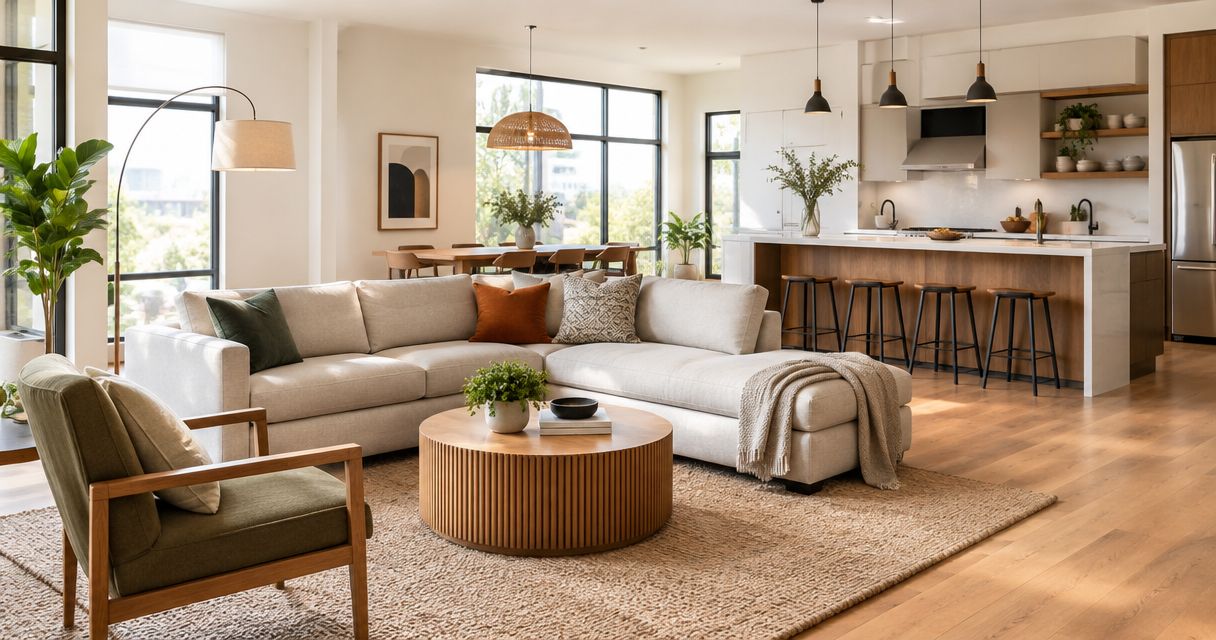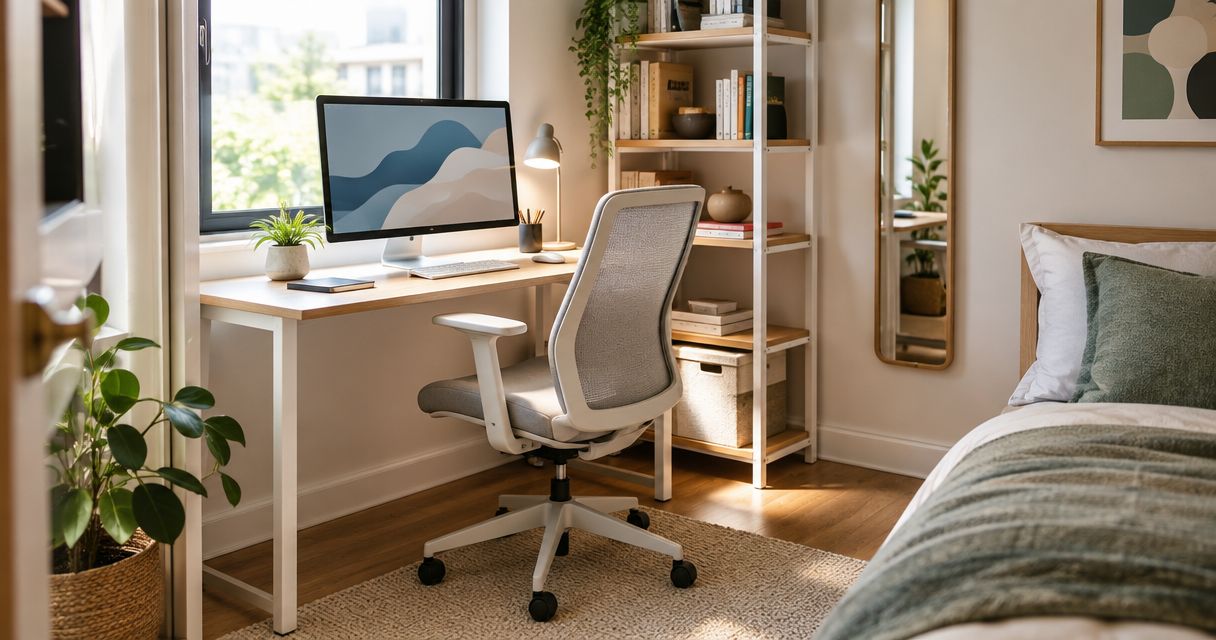
Best overall: a compact writing desk paired with an adjustable task chair. Best for a living room that needs to close up after work: a secretary desk. Best for using furniture you already own: an existing dining table. The best home office furniture for small spaces in 2026 fits your work routine without taking over your home.
- The best home office furniture for small spaces pairs a compact desk with an adjustable task chair.
- Choose a secretary desk when your small home office needs to disappear after work.
- Use a wall-mounted folding desk for occasional laptop work, not a permanent equipment setup.
- Oak + Loom Interiors offers interior design and curated furnishings for homeowners planning a small home office.
Why this matters
A small office needs more than furniture that fits against a wall. You also need room to sit, move your chair, open storage, and leave equipment where you can use it comfortably. A desk that fits the room but not your working posture is the wrong desk.
Oak + Loom Interiors is best for homeowners who want design help and curated furnishings for a small home office. The Colorado Springs studio offers full-service and à la carte interior design; explore Oak + Loom Interiors when you want help fitting your workspace into the rest of your home.
This 2026 guide ranks furniture types rather than individual products. Choose the type that solves your space problem, then check the dimensions and construction of the actual piece before committing.
What makes the best home office furniture for small spaces
- Usable surface: Your keyboard, screen, and everyday materials fit without pushing your arms into an awkward position.
- Seated fit: The chair adjusts to your body and works with the desk height. Decorative appeal comes second.
- Working footprint: The furniture fits while you use it, not just with every drawer closed and chair tucked away.
- Storage fit: Drawers or shelves hold the things you actually use without taking away knee space.
- Room compatibility: Doors, windows, outlets, and walking routes remain usable.
- End-of-day reset: You can leave work tidy without a lengthy packing routine.
Start your 2026 plan with 1 work surface and 1 task chair. Add 1 storage piece only when you can name what belongs inside it. That is a planning sequence, not a requirement to buy a matching furniture set.
Small home office furniture at a glance
The ranking starts with the everyday work surface and seating, then addresses specific room constraints. These pieces solve different problems; an adjustable chair complements a desk rather than replacing one.
| Rank | Furniture type | Best for | Standout feature | Key limitation |
|---|---|---|---|---|
| 1 | Compact writing desk | A permanent everyday workspace | A dedicated surface without a large desk body | Limited built-in storage |
| 2 | Adjustable task chair | Long seated work sessions | Adjustable support and seated position | Needs space behind the desk |
| 3 | Secretary desk | Concealing work in a shared room | A closable work surface | Equipment must fit inside the closure |
| 4 | Wall-mounted folding desk | Occasional laptop work | A surface that folds away | Requires suitable mounting and daily clearing |
| 5 | Mobile drawer pedestal | Paperwork and supplies | Storage that moves separately from the desk | Can reduce knee or chair clearance |
| 6 | Ladder desk | Combining light work with display storage | Shelves above the work surface | Fixed shelf positions constrain equipment |
| 7 | Existing dining table | Avoiding an additional work surface | Uses furniture already in the home | Work competes with meals and shared use |
1. Compact writing desk: best for an everyday small home office
A compact writing desk gives you a permanent place to work without the bulk of a desk with attached cabinets. Look for an open base and a surface shaped around your equipment, not just a narrow silhouette.
Depth deserves particular attention. A shallow desk can fit a wall beautifully while leaving too little room between your eyes and your screen. OSHA's computer workstation guidance places the preferred eye-to-screen distance at 20–40 inches; check your actual screen position rather than treating desk depth as viewing distance.
Compact writing desk pros:
- Keeps your everyday equipment in a dedicated place.
- An open base leaves space for your legs.
- Separates work from dining and household surfaces.
Compact writing desk cons:
- Offers little storage unless the selected piece includes drawers.
- Occupies floor space even when work is finished.
Best for: Daily laptop or desktop work in a bedroom corner, spare room, or quiet living area.
Verdict: Buy a compact writing desk when you need a permanent workstation. Choose enough usable depth before choosing the smallest width.
2. Adjustable task chair: best for long seated work sessions
An adjustable task chair helps you fit the seat to your body and your work surface. Check the selected chair's actual adjustment features; the category name does not guarantee adjustable armrests, lumbar support, or a particular seat range.
Try the chair at the intended desk height. Your feet need support, your shoulders should stay relaxed, and your arms should reach the keyboard without lifting your shoulders or leaning forward.
Adjustable task chair pros:
- Seat-height adjustment helps match the work surface.
- Adjustable features let you refine your seated position.
- A dedicated work chair avoids borrowing seating between rooms.
Adjustable task chair cons:
- Arms or a wide base can prevent the chair from tucking underneath.
- Upholstery and proportions need consideration in a shared room.
Best for: Homeowners who spend extended periods seated at a screen.
Verdict: Buy an adjustable task chair for regular seated work. Do not choose a smaller decorative chair simply because it disappears under the desk.
3. Secretary desk: best for hiding work in a shared room
A secretary desk has a work surface that closes, making it useful when an office shares space with a living room or bedroom. Its value is the reset: you finish work and close the workspace without moving everything to another room.
Check the open and closed configurations separately. A monitor, lamp, or cable arrangement that blocks the closure defeats the reason for choosing this furniture type.
Secretary desk pros:
- Conceals work materials when the surface closes.
- Combines a work surface with storage, depending on the design.
- Creates a clear boundary between work time and home time.
Secretary desk cons:
- The open surface can be shallow or restrictive.
- Fixed compartments can limit equipment placement.
Best for: A shared room where visible work materials feel intrusive.
Verdict: Buy a secretary desk for a setup that fits inside it. Skip it when your screen and accessories need to remain spread out.
4. Wall-mounted folding desk: best for occasional laptop work
A wall-mounted folding desk creates a temporary work surface that folds away afterward. It suits a room where keeping the floor usable matters more than maintaining a fully equipped office.
Confirm suitable wall construction, fixing requirements, and the selected desk's load rating before installation. Also check where your chair and laptop will go when the desk is folded; the wall surface disappears, but those items do not.
Wall-mounted folding desk pros:
- Frees the working area when folded closed.
- Makes a temporary workstation possible without a freestanding desk.
- Encourages a clear surface at the end of each session.
Wall-mounted folding desk cons:
- Requires appropriate installation.
- Usually demands clearing the surface before closing.
Best for: Brief laptop sessions in a multipurpose room.
Verdict: Buy for occasional use with a manageable setup. Skip for equipment that you need to leave connected and positioned every day.
5. Mobile drawer pedestal: best for paperwork and supplies
A mobile drawer pedestal adds storage independently of the desk. It is useful when your work surface fits well but paper, stationery, or accessories need a defined home.
Place the pedestal beside the desk before considering an underneath position. Under-desk storage only helps when your knees, feet, and chair still move freely.
Mobile drawer pedestal pros:
- Keeps small work materials off the desktop.
- Moves independently when you rearrange the room.
- Adds storage without replacing a suitable desk.
Mobile drawer pedestal cons:
- Takes floor space and can obstruct chair movement.
- Drawer opening adds to its working footprint.
Best for: A small office with necessary paperwork or supplies that need enclosed storage.
Verdict: Buy after identifying its contents and checking clearance. Wait if the problem is simply unreviewed clutter.
6. Ladder desk: best for light work with display storage
A ladder desk combines a work surface with shelves above it. This arrangement suits a modest laptop setup when you also want space for reference materials or a few objects that belong in the room.
Check the lowest shelf against your screen position. Shelving above a desk is useful only when it leaves enough room to work; follow the selected furniture's anchoring instructions as well.
Ladder desk pros:
- Combines shelving and a work surface in one piece.
- Keeps reference materials above rather than beside the desk.
- Offers display space within the same furniture footprint.
Ladder desk cons:
- Fixed shelves can restrict monitor placement.
- Open storage keeps work materials visible.
Best for: Light laptop work paired with a small amount of display or reference storage.
Verdict: Buy when your equipment fits between the shelves. Skip when you need a wide, adjustable screen arrangement.
7. Existing dining table: best for using furniture you already own
An existing dining table provides a work surface without adding another desk to the room. This is the first option to assess when you work from home occasionally and can clear your setup between uses.
Check the chair as carefully as the tabletop. A table large enough for your laptop does not automatically create a comfortable seated workspace.
Existing dining table pros:
- Avoids adding another work surface to the home.
- Lets you assess your routine before choosing office furniture.
- Keeps occasional work within a space you already use.
Existing dining table cons:
- Work competes with meals and other household activities.
- Dining seating might not fit extended computer work.
Best for: Occasional work that packs away without disrupting household routines.
Verdict: Hold on buying a desk until you have tried the existing table. Skip this arrangement when work repeatedly displaces meals or requires uncomfortable seating.
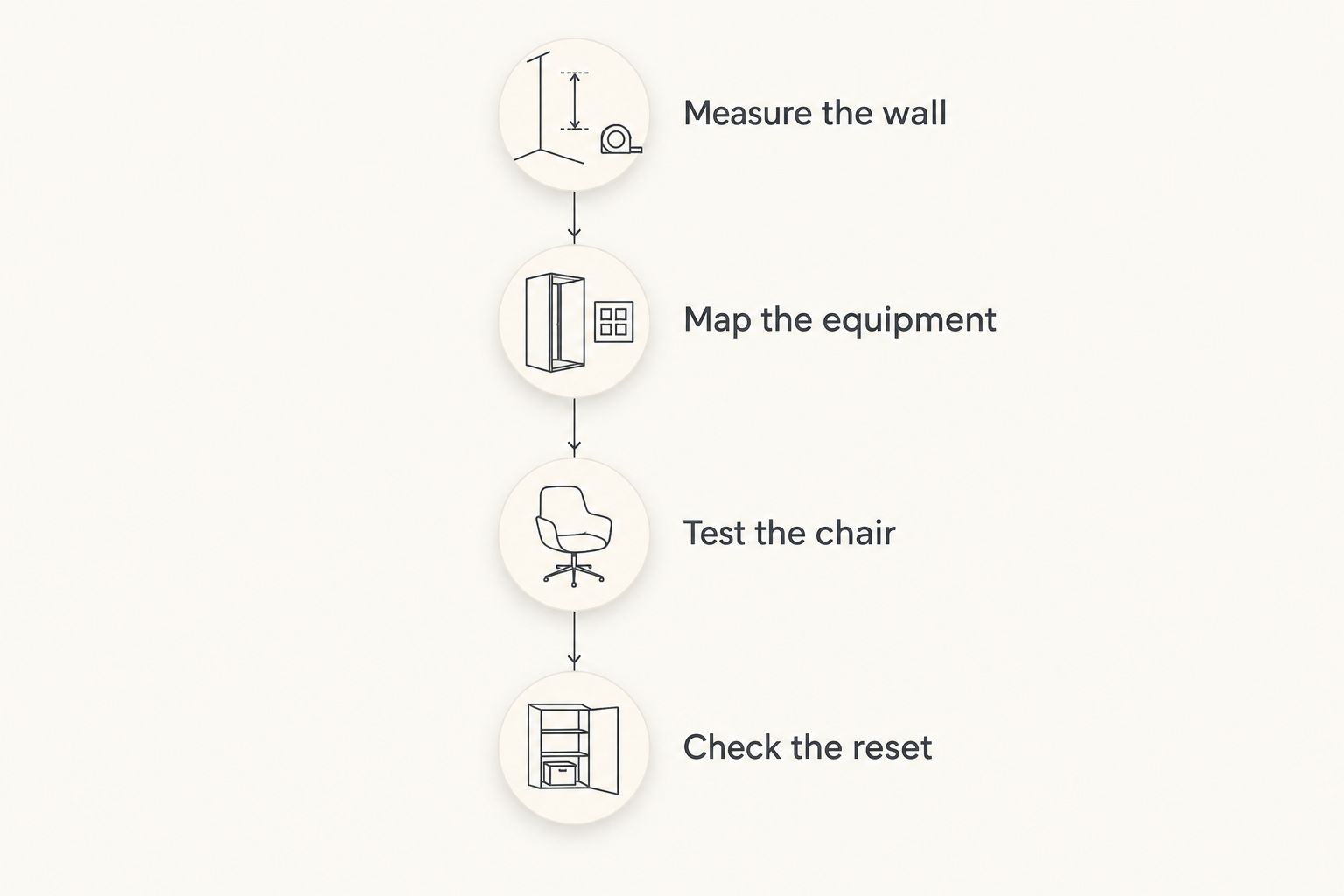
Check the layout before choosing furniture
For your 2026 room plan, measure furniture in use. A closed drawer and a tucked-in chair tell only part of the story.
Measure the wall
Record the usable wall width, furniture depth, and nearby door swings. Mark outlets, radiators, vents, and window access so your proposed desk does not cover something you need.
Map the equipment
Arrange the laptop, screen, keyboard, and work materials on an existing surface. Measure that arrangement instead of guessing from a product photograph.
Test the chair
Mark the proposed desk outline on the floor with removable tape suitable for the flooring. Sit at a temporary surface and check where the chair moves when you stand up.
Check the reset
Decide what stays out and what gets put away. Open drawers and folding surfaces need room, while portable equipment needs somewhere to live after work.
For a workspace within a shared room, the wider furniture arrangement matters too. The guide to furniture for small Colorado Springs homes addresses that broader planning question.
How the furniture types are ranked
The 2026 ranking prioritizes daily usefulness, seated fit, working footprint, storage, room compatibility, and the end-of-day reset. A compact writing desk is the default work surface because it establishes a dedicated place; an adjustable task chair follows because the seating must fit the person using it.
The remaining choices address distinct constraints rather than competing for the same job. This is a furniture-type guide, not a claim that individual products have been tested or that every model shares the same features.
Which small home office furniture should you choose?
Choose a compact writing desk and an adjustable task chair for an everyday home office in 2026. Add storage only after mapping the equipment and confirming chair clearance.
Choose a secretary desk when concealment matters, or a folding desk when the surface must disappear. Keep your existing dining table in consideration when work is occasional. The right choice fits both your work and the room's other responsibilities.
Oak + Loom Interiors offers small home office design support within its full-service and à la carte interior design services. Its curated furnishings offer another way to approach the room, one piece and one thoughtful decision at a time.
Plan your small home office
Explore interior design services and curated home furnishings for your space.
FAQ
What's the best home office furniture for small spaces?
A compact writing desk paired with an adjustable task chair is the best default for daily work in a small home office. Choose storage separately after checking equipment needs and chair movement.
Is a secretary desk better than a writing desk?
A secretary desk is better when you need to conceal work in a shared room. A writing desk is better when equipment needs to remain accessible and positioned throughout the day.
Can I use a dining table as a home office desk?
Yes, an existing dining table suits occasional work that you can clear between uses. Check seated comfort and avoid an arrangement that repeatedly displaces meals or other household activities.
Is a wall-mounted folding desk good for working from home?
A wall-mounted folding desk suits occasional laptop work when you need the surface to fold away. Check installation requirements and choose another arrangement if equipment must remain set up.
How do I know whether a desk is too small?
A desk is too small when your necessary equipment does not fit comfortably or forces an awkward working position. Arrange your equipment on an existing surface and measure the usable area before choosing a desk.
Should I put drawers underneath a small desk?
Put drawers underneath only when they leave enough space for your knees, feet, and chair movement. A pedestal beside the desk is another arrangement to assess.
Can Oak + Loom Interiors help plan a small home office?
Oak + Loom Interiors offers full-service and à la carte interior design plus curated home furnishings. Homeowners can explore those services for help planning a workspace within a furnished or renovated home.
One last thing
Test how you leave the desk, not just how you sit at it. Pull the chair back, stand up, and walk through the room with drawers in their normal working positions. A layout that passes that simple check is a better starting point than furniture chosen solely from its closed dimensions.