The cost to furnish a living room from scratch is the total of your selected furniture, lighting, textiles, and finishing pieces, plus any applicable tax, delivery, installation, and design services. A sofa-only budget is not a room budget. For your 2026 plan, get an itemized room total before committing to the largest purchase, and separate essential pieces from additions you can bring home later.
- How much does it cost to furnish a living room? Budget the complete room, not just the sofa.
- Include furniture, lighting, textiles, and applicable delivery, installation, tax, and design services in your living room budget.
- Oak + Loom Interiors offers interior design and curated furnishings for Colorado Springs homeowners.
- Choose the layout before shopping, then separate essential purchases from finishing touches.
How much does it cost to furnish a living room from scratch?
Your living room total depends on what the room needs and which pieces you choose. Start with a written scope: seating, surfaces, lighting, textiles, storage, and any decorative finishing work. Then attach current quotes to that scope rather than treating a single furniture purchase as a useful estimate for everything.
Oak + Loom Interiors offers full-service and à la carte interior design alongside curated home furnishings. That gives you a place to discuss both the room itself and the level of help you want.
Use this breakdown to organize your 2026 quotes. A category belongs in your budget only when it belongs in your room.
| Budget category | What to include | What to confirm |
|---|---|---|
| Seating | Sofa, chairs, or other seating your layout requires | Dimensions, upholstery selection, and access into the room |
| Surfaces | Coffee table, side tables, or another useful surface | Reach from seating and space to move around it |
| Lighting | Lamps and any planned fixture changes | Outlets, switching, and installation requirements |
| Textiles | Rug, window treatments, and cushions you need | Measurements, materials, and any installation work |
| Storage | Media furniture, cabinets, or shelving | What you need to store and where it belongs |
| Finishing pieces | Art, mirrors, and decorative objects | Whether they are essential now or can wait |
| Project expenses | Applicable tax, delivery, installation, and design services | Written inclusions, exclusions, and responsibilities |
Compare complete scopes, not isolated price tags. A shorter shopping list and a fully furnished room are different projects, even when both begin with the same sofa.
Why this matters
An empty room makes every purchase feel urgent. But buying the most noticeable piece first can leave you solving the layout around something that does not suit the way you live.
Your budget should protect the room's purpose. If you read every evening, lighting belongs in the essential scope; if you regularly host friends, useful seating deserves attention before decorative accessories. A thoughtful plan gives each purchase a job.
It also helps you distinguish furnishing from renovation. New seating and a rug are furnishing decisions; changing electrical wiring or altering built-in elements introduces separate work. Keep those scopes visible rather than letting them disappear inside a general room allowance.
Choose between furnishing in phases and planning one complete project
Both approaches begin with a whole-room plan. The difference is when you commit to the purchases, not whether you think through how they work together.
| Approach | Best for | Main advantage | Main limitation |
|---|---|---|---|
| Furnish in phases | Homeowners who want to spread decisions and purchases over time | You can prioritize the pieces you need first | The room remains unfinished between phases; later selections must work with earlier commitments |
| Plan one complete project | Homeowners who want to consider the room as a coordinated whole | You can review the relationships between furniture, lighting, and textiles before purchasing | You must make more selections and budget decisions together |
Furnishing in phases: best for a flexible purchasing schedule
Plan the whole room, then buy in a deliberate order. Start with the pieces that make daily life comfortable, while keeping measurements and material choices for later purchases in the same plan.
The trade-off is an unfinished room between stages. Avoid filling every gap with a temporary purchase simply because it is empty; a temporary table still needs storage or another home when you replace it.
Planning one complete project: best for coordinated decisions
Review the whole selection before authorizing purchases. Seeing seating, tables, lighting, and textiles together helps you assess scale, function, and the overall direction of the room.
This approach requires more decisions together, and it does not mean everything will arrive together. Confirm the arrangements for each order rather than treating a complete design as a promise of a single delivery.
Why living room furnishing costs vary
The most useful budget drivers are the decisions you control. For your 2026 plan, work through these factors before comparing totals:
- Room scope. A seating area needs a different list from a living room that also handles television, reading, storage, and entertaining. Write down each function before adding furniture.
- Furniture selection. Dimensions, materials, upholstery, and construction differ between pieces. Compare the actual selections and specifications rather than relying on broad labels such as traditional or modern.
- Textile requirements. Rugs and window treatments depend on the space they serve. Confirm measurements and the proposed treatment before treating a textile allowance as complete.
- Lighting work. Adding a plug-in lamp is a different scope from changing a fixture or electrical arrangement. Keep any required installation work visible in the estimate.
- Design support. A focused design question and a whole-room project involve different scopes. Ask which decisions, documents, and services the proposed agreement includes.
- Order and installation responsibilities. Confirm who handles ordering, delivery arrangements, assembly where needed, and placement. Do not assume those tasks are included in the furniture selection.
These factors are not reasons to add everything. They are prompts to make the estimate describe the room you actually want.
Build a living room budget before you shop
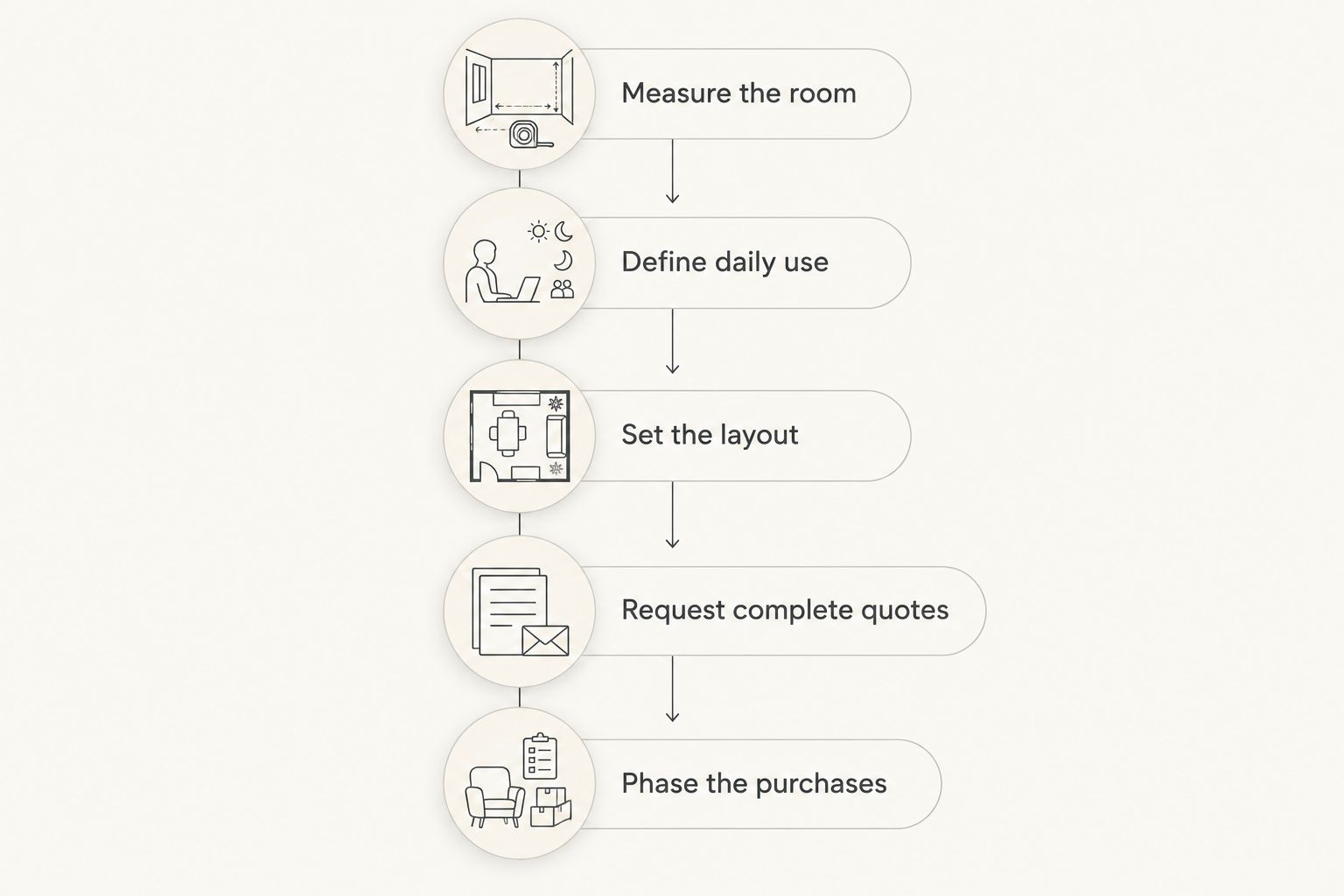
A useful budget connects your measurements, your priorities, and current quotes. Follow this sequence for a 2026 furnishing plan you can revise without losing track of the essentials.
- Measure the room. Record walls, openings, windows, door swings, outlets, and fixed features. Measure the route furniture must travel into the space, not just the space where it will sit.
- Define daily use. Write down how you relax, host, read, watch television, or move through the room. Use those activities to decide which pieces belong on the list.
- Set the layout. Place the seating and useful surfaces on a scaled plan. Check circulation and access before choosing a particular piece because you like its appearance.
- Request complete quotes. Gather current figures for the selected pieces and applicable project expenses. Ask for written clarification wherever the scope is unclear.
- Phase the purchases. Separate essential purchases from additions that can wait. Keep the later pieces in the plan so today's choices leave room for them.
Keep your measurements, selection notes, and quotes together. When you change a piece, revisit the decisions connected to it: a different sofa affects the available space for tables, lamps, and circulation.
If the layout is still uncertain, the floor plan to furniture layout guide is a useful next step before building a shopping list.
What to prioritize when the full room exceeds your budget
Reduce the scope before abandoning the plan. Decide which functions must work now, then postpone pieces that do not serve those functions. This keeps the room intentional even while it is incomplete.
Start with comfortable seating that fits the layout, useful light, and somewhere appropriate to set everyday items. Add storage when the room needs it to function; do not assume every living room needs another cabinet.
Review decorative layers separately. Art, cushions, and objects contribute to a room, but they should not obscure an unresolved seating arrangement or an awkward route through the space. Leave breathing room in both the layout and the purchasing plan.
Avoid treating a smaller piece as an automatic substitute for a properly sized one. Check the dimensions against your plan first. The right compromise preserves function rather than simply filling a space.
When interior design help belongs in the budget
Design support is relevant when you want help resolving the layout, coordinating selections, or defining a manageable project scope. Oak + Loom Interiors is best for Colorado Springs homeowners seeking interior design support alongside curated home furnishings.
Oak + Loom Interiors offers full-service and à la carte interior design, so the conversation can begin with the level of help you need. The limitation is that a service label alone does not define your agreement: confirm the deliverables, responsibilities, and exclusions before deciding.
For a focused project, arrive with measurements, photographs, and a list of decisions you want to resolve. For a broader project, explain which rooms or renovation work connect to the living room. Clear boundaries make the proposed scope easier to evaluate.
Is it cheaper to furnish a living room a little at a time?
Furnishing in phases spreads purchases over time; it does not establish a lower final total. Compare the complete selections and any applicable order-related expenses, and avoid buying temporary pieces without a clear purpose.
Should you include a rug and curtains in the furniture budget?
Include rugs and window treatments when they are part of your planned living room. List them separately so you can review their measurements, materials, and any installation needs without confusing them with seating or tables.
Can you furnish a living room without buying everything new?
You can plan around pieces you already own if their size, condition, and function suit the room. Treat them as fixed inputs in the layout, then decide what additional purchases are actually necessary.
FAQ
How much does it cost to furnish a living room in 2026?
Your 2026 living room total is the sum of your selected furnishings and applicable project expenses. Build an itemized estimate that includes furniture, lighting, textiles, and any tax, delivery, installation, or design services that apply.
What should a complete living room furnishing budget include?
A complete living room furnishing budget includes the seating, surfaces, lighting, textiles, storage, and finishing pieces your plan requires. Keep applicable project expenses separate so you can see what the total covers.
What should I buy first for an empty living room?
Finalize the layout before buying the main seating. Then prioritize the furniture and lighting that support your daily use, leaving decorative additions for later if necessary.
Is furnishing in phases better than buying everything together?
Furnishing in phases is best when you want to spread purchases over time; planning one complete project is best when you want to review coordinated selections together. Both approaches need a whole-room layout, and neither establishes a lower total by itself.
Can an interior designer help with just a living room?
A living room can be the focus of a design discussion, and Oak + Loom Interiors offers à la carte as well as full-service interior design. Confirm the proposed room scope and deliverables before engaging services.
Does furniture pricing include delivery and installation?
Do not assume furniture pricing includes delivery and installation. Ask for written confirmation of the services, charges, and responsibilities that apply to your order.
How do I keep my living room budget under control?
Keep your living room budget tied to a measured layout and an itemized selection list. When the total exceeds your limit, revise the scope or purchase sequence before placing orders.
One last thing
Before you approve your 2026 furnishing plan, walk through the empty layout as though the furniture were already there. Use removable floor markers where appropriate to outline the main pieces, then check doors, everyday routes, and the places you naturally reach for a light or a drink.
The most useful budget is the one attached to a room that works. Give yourself permission to leave an accessory undecided while you settle the larger relationships—one room, one piece, one thoughtful decision at a time.