
À la carte interior design is not automatically cheaper than full-service design; the better-value choice depends on the work included and the work you will handle yourself. For your 2026 project, compare written scopes rather than service labels, including responsibility for purchasing, coordination, revisions, and installation wherever those tasks apply.
- Is a la carte interior design cheaper than full service? The service label alone does not establish savings.
- Compare interior design proposals by deliverables, exclusions, and homeowner responsibilities—not just the headline fee.
- À la carte suits defined design questions; full-service suits homeowners seeking broader help, subject to the written scope.
- Oak + Loom Interiors offers both interior design approaches for Colorado Springs homeowners furnishing or renovating their spaces.
Is à la carte interior design cheaper than full-service design?
Choose à la carte for a clearly bounded need, not simply because the name sounds less expensive. A focused assignment and a broader design engagement are different purchases. Comparing their fees without comparing their deliverables does not tell you which fits your home.
Oak + Loom Interiors offers full-service and à la carte interior design alongside curated home furnishings. The useful starting question is which decisions you want help making—and which responsibilities you want to keep.
| Decision | À la carte interior design | Full-service interior design |
|---|---|---|
| Best for | Homeowners seeking help with a defined design question | Homeowners seeking broader design involvement |
| Scope to request | A named assignment with clear deliverables | A project scope defining the stages covered |
| Main advantage | Lets you focus professional help on a specific need | Lets you consider related decisions within a broader engagement |
| Main limitation | Work outside the assignment needs another arrangement | Includes more involvement than a narrowly defined question requires |
| Your responsibilities | Confirm everything outside the selected assignment | Confirm exclusions; the label does not promise every task |
| Value test | Does the deliverable resolve the problem you brought? | Does the scope cover the decisions and responsibilities you want help with? |
This comparison describes ways to evaluate services, not a promise about any studio’s inclusions. Your written proposal establishes what you are buying.
Why this matters
A room does not stop needing decisions when a design appointment ends. Someone still has to turn the agreed direction into a finished space, whether that means checking dimensions, placing orders, or arranging installation.
For a 2026 furnishing or renovation project, separate design advice from implementation before choosing a service. A smaller assignment is a good fit only when the remaining work is work you understand and want to do. You do not need to hand over everything, but you do need to know where the handoff occurs.
À la carte design: best for a defined decision
À la carte interior design makes sense when you can describe the problem precisely. You might want direction for a furniture layout, help bringing existing pieces together, or guidance on a finish selection. Ask whether the designer offers the specific assignment you need; these examples are questions to discuss, not assumed service inclusions.
A useful brief names the room, the decision, the constraints, and the result you need. For example, asking for a layout that accommodates furniture you intend to keep is more actionable than asking for a room to feel finished.
The advantage is focus. You can seek professional help where you feel stuck while keeping responsibility for the parts you enjoy handling.
The limitation is the boundary. A selection recommendation does not, by itself, establish who orders the item, checks installation requirements, or resolves an issue afterward. Choose à la carte when the deliverable and the handoff are both clear.
If your project is limited to a single space, the guide to hiring an interior designer for just one room helps frame that conversation. Room count is a starting point, not a substitute for defining the work.
Full-service design: best for broader involvement
Full-service interior design is the approach to discuss when you want help connecting decisions across a project. Instead of isolating a single selection, your brief can address how layout, furnishings, lighting, and finishes relate to one another.
The advantage is a broader frame for the work. You can ask the designer to explain how the proposed stages connect, where approvals happen, and what support follows each decision.
The limitation is that a broader engagement can exceed what you need for a focused question. Full-service also does not mean unlimited revisions, automatic construction oversight, or responsibility for every purchase. Those details belong in the agreement.
For your 2026 comparison, ask for a stage-by-stage description rather than relying on the phrase full-service. Choose broader involvement when you want the responsibilities it actually includes—not simply a more reassuring label.
Why the value of interior design services varies
The useful comparison is not just smaller service versus larger service. It is the relationship between the decisions involved, the deliverables promised, and your role in completing the work.
- Scope breadth: A furniture-layout question and a furnishing-and-renovation brief require different assignments. Name the decisions before comparing proposals.
- Decision dependencies: A furniture choice can affect circulation, lighting placement, and other selections. Ask which connected decisions the assignment addresses.
- Deliverable detail: Verbal guidance, a documented layout, and a specification are different outputs. Confirm the format you will receive.
- Implementation responsibility: Establish who handles purchasing, coordination, and installation arrangements wherever those tasks apply.
- Revision boundaries: Ask what happens when you change direction or introduce another room, finish, or furnishing requirement.
- Existing furnishings: Identify what stays before requesting a scope. Pieces you retain become design constraints, not details to add after selections are underway.
These factors help you judge whether a proposal matches your needs. They do not establish a universal savings percentage or make either approach the right answer for every home.
How to compare 2 written scopes in 2026
Request proposals that address the same underlying project, then compare responsibility as carefully as design output. If the assignments differ substantially, ask for clarification before treating them as alternatives.
1. Define the brief
Write a short description of what is not working and what you want resolved. Include the rooms involved, the furnishings you intend to keep, and any renovation decisions already made. Keep inspiration images separate from requirements so a preferred look does not obscure a practical need.
2. Name the deliverables
Ask what you will receive at the end of each stage. A conversation, a drawing, and a selection document serve different purposes; identify which output you need to take the next action confidently.
3. Assign the responsibilities
Give each task an owner: you, the designer, or another professional. Include measuring, approvals, ordering, and installation coordination where relevant. If nobody owns a task, the scope is not ready for comparison.
4. Check the boundaries
Read exclusions alongside inclusions. Ask how revisions, added selections, and changes to the original brief are handled. You are looking for a clear process, not an assumption that everything will be included.
5. Choose the handoff
Identify the point at which you take responsibility again. If you are comfortable carrying out the documented plan, a focused assignment deserves consideration. If that handoff leaves you with work you do not want to manage, discuss a broader scope.
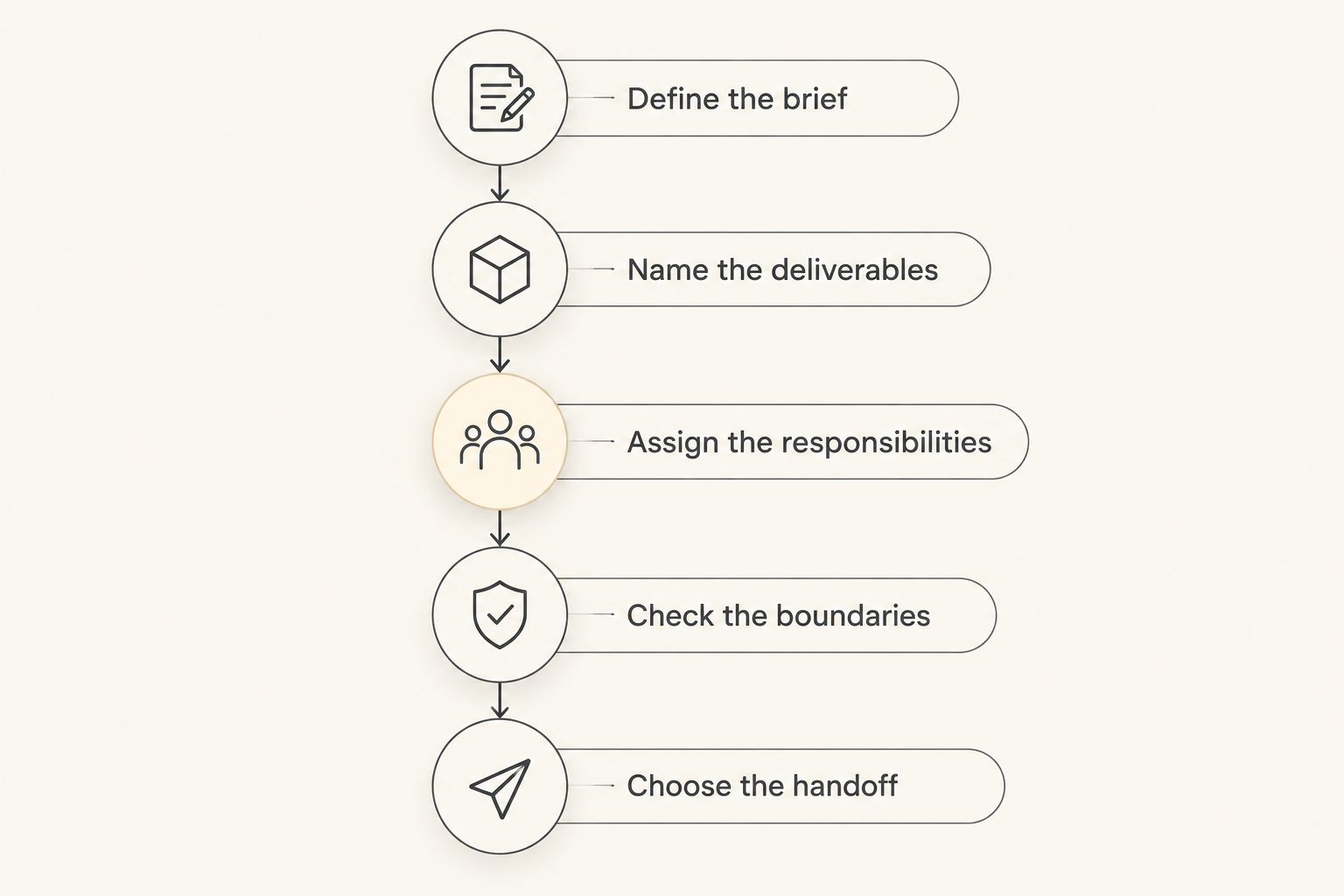
Keep 3 lists beside each proposal: included work, excluded work, and your responsibilities. This simple exercise makes differences visible without pretending that unlike assignments are equivalent.
Can I choose à la carte design for just 1 room?
For 1 room, define the decisions first and choose the service second. A room needing a layout adjustment presents a different brief from a room requiring coordinated furnishings, lighting, finishes, and installation arrangements.
Ask whether the proposed à la carte assignment resolves the whole question you are bringing. If it resolves only the first decision, identify the next decisions and who will handle them. A single-room project still deserves a clear endpoint.
Is full-service design worth it if I enjoy shopping?
Enjoying shopping does not determine how much design support you need. You can like selecting pieces while wanting help with layout, scale, materials, or the relationship between adjoining spaces.
Separate the enjoyable tasks from the responsibilities you would rather not carry. Then ask whether the proposed service leaves the former with you and addresses the latter. The right scope fits your preferred involvement, not an assumption that every homeowner wants the same experience.
What should I ask before choosing a design service?
For a 2026 proposal, ask the designer to explain the assignment in plain language. You should understand what happens next without having to interpret the service name.
Useful questions include:
- What specific decisions does this assignment resolve?
- What documents or recommendations will I receive?
- Which measurements or existing plans do you need from me?
- Who handles purchasing and installation arrangements, if applicable?
- What happens if I change direction after approving a selection?
- Where does your responsibility end and mine begin?
Oak + Loom Interiors suits Colorado Springs homeowners choosing between à la carte and full-service interior design. Its design studio and showroom offer both approaches, plus curated furniture, lighting, and wallpaper; the proposal should establish which services and furnishings belong in your particular project.
Discuss the scope of your project
Explain your furnishing or renovation needs and ask about full-service and à la carte interior design.
FAQ
Is a la carte interior design cheaper than full service?
À la carte interior design is not automatically cheaper than full-service design. Compare the written deliverables, exclusions, and responsibilities for your project rather than assuming the service label establishes savings.
What is the main drawback of à la carte interior design?
The main drawback is that work outside the defined assignment remains unresolved unless someone takes responsibility for it. Confirm who handles the next decisions and implementation tasks before agreeing to the scope.
Does full-service interior design include ordering and installation?
The written agreement determines whether ordering and installation coordination are included. Do not treat the phrase full-service as a guarantee that every purchasing or project-management task is covered.
Can I hire an interior designer without replacing all my furniture?
You can ask for a design brief that retains existing furniture. Identify the pieces you want to keep and discuss their dimensions, condition, and role in the proposed room before selections begin.
What should I bring to an initial interior design conversation?
Bring a description of the problem, photographs, any existing measurements or plans, and a list of furnishings you intend to keep. Ask which information needs professional verification before it informs drawings or orders.
How do I compare interior design proposals in 2026?
Compare 2026 proposals by deliverables, exclusions, revisions, and responsibility for implementation. When the scopes differ, ask for clarification rather than comparing the headline fees as though they purchase the same work.
Does Oak + Loom Interiors offer both design approaches?
Oak + Loom Interiors offers full-service and à la carte interior design in Colorado Springs, along with curated home furnishings. Discuss your furnishing or renovation brief to establish the scope that fits your needs.
One last thing
Before signing, ask yourself: What will I be able to do with the finished deliverable? That question is more revealing than whether a service sounds small or complete.
A recommendation is useful when you understand how to act on it. A broader engagement is useful when it covers responsibilities you want help carrying. Choose the scope that leaves you with a clear next step—not a new set of unanswered questions.