
A full-service interior design project takes as long as its design decisions, ordering, site work, and installation require; there is no single duration that fits every home. The schedule must include the work after you approve the design, not just the time spent creating it. For your 2026 project, ask for a phase-by-phase schedule tied to your rooms, renovation scope, and definition of finished.
- How long does a full-service interior design project take? Scope, approvals, ordering, and installation determine the schedule.
- Separate design approval, move-in readiness, and final completion before agreeing to a deadline.
- Oakloominteriors offers full-service interior design for Colorado Springs homeowners furnishing or renovating their homes.
- A useful project schedule names dependencies and decision deadlines, not just a hoped-for completion date.
Why this matters
You need a schedule that tells you when your home will work for daily life, not simply when the design presentation is ready. Those are different milestones. A room can have an approved furniture plan while still needing deliveries, installation, and finishing work.
Oakloominteriors is best for Colorado Springs homeowners seeking interior design services and curated home furnishings together. The studio offers full-service and à la carte design; confirm the responsibilities included in your particular agreement through Oakloominteriors.
Before committing to a 2026 completion target, decide what that date means. Moving into a usable home and having every detail complete should not be treated as interchangeable promises.
How long does a full-service interior design project take?
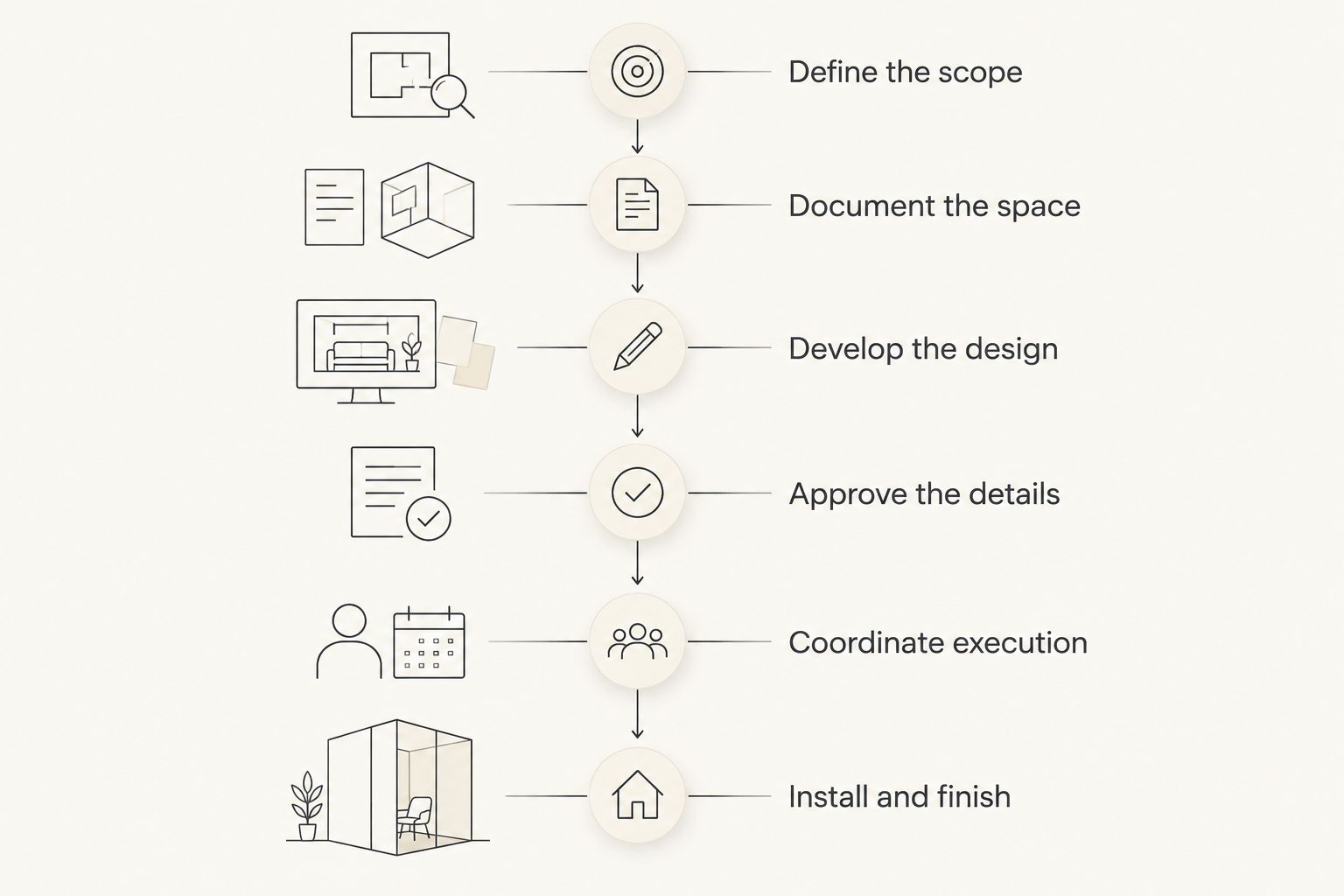
The duration of a full-service interior design project depends on the sequence below. Ask your designer to attach dates, responsibilities, and dependencies to each stage rather than offering a completion date without supporting detail.
- Define the scope. Identify the rooms, existing pieces, renovation work, and decisions the project includes.
- Document the space. Confirm measurements, conditions, access, and any information needed from other professionals.
- Develop the design. Resolve layouts, furnishings, materials, lighting, and other agreed selections.
- Approve the details. Review the proposal, request changes, and authorize the decisions required before ordering or execution.
- Coordinate execution. Align orders, deliveries, site readiness, and the work included in the agreement.
- Install and finish. Place furnishings, complete included installation work, and record remaining corrections.
These stages are a planning framework, not a statement that every designer provides every task. Your agreement should identify which responsibilities belong to the designer, homeowner, contractor, supplier, or installer.
A milestone is useful only when everyone understands what must happen before it. An installation date, for example, needs both a ready room and the items required for that installation.
Furnishing-only projects: separate selection from delivery
A furnishing-only project centers on how the rooms function and which pieces belong in them. The scope can include layouts, furniture, lighting, wallpaper, and other selections, depending on the agreement. Without renovation work, the schedule does not need to account for demolition or construction unless those tasks are added.
That does not make design approval the finish line. After you approve a scheme, the remaining work can include order confirmation, delivery coordination, room preparation, and installation.
Best for: homeowners who want to furnish or refresh existing rooms without changing the building itself.
The advantage is a scope focused on the room and its contents. The limitation is that completion still depends on the selected items and the steps needed to put them in place. Ask for a schedule that keeps design decisions separate from delivery expectations.
Renovation projects: connect design to site work
A renovation-linked project needs a schedule that connects design decisions with the contractor's work. The relevant deadline is not always the final installation. Some decisions must be settled before related work begins.
For example, a lighting selection can affect electrical planning, while a furniture layout can influence where outlets are useful. Resolve those relationships before treating the design and construction schedules as independent documents.
Best for: homeowners changing finishes, layouts, or building elements while furnishing their spaces.
The advantage is the opportunity to plan the room and its fixed elements together. The limitation is the added coordination between design, site conditions, trades, and installation. For a 2026 renovation, ask who updates the shared schedule when a construction milestone changes.
Whole-home projects: decide whether rooms finish together
A whole-home project adds decisions across connected rooms. A furniture choice in one space can affect the scale, circulation, or visual relationship of the next. Resolve shared decisions before treating each room as an isolated project.
Best for: homeowners who want a coordinated plan across several spaces.
The advantage is a view of the home as a whole. The limitation is the coordination required across rooms and selections. You also need to decide whether the goal is a single installation or a sequence of usable spaces.
| Project scope | Best for | Planning advantage | Scheduling limitation |
|---|---|---|---|
| Furnishing-only | Refreshing existing rooms | Focuses decisions on layouts and furnishings | Delivery and installation remain separate from design approval |
| Renovation-linked | Changing fixed elements and furnishings together | Connects room planning with site work | Requires coordination with construction milestones |
| Whole-home | Planning connected spaces together | Supports decisions across the home | Requires agreement on room priorities and completion order |
These scopes can overlap. A whole-home project can include both furnishing-only rooms and rooms under renovation.
Why full-service interior design timelines vary
The useful question is not whether a project sounds large or small. It is which decisions and tasks control the next step. Review these factors with your designer:
- Scope boundaries. List the rooms and tasks included. Adding another room or changing the renovation brief changes the work being scheduled.
- Existing conditions. Confirm dimensions and relevant site information before relying on a layout or committing to an item.
- Approval decisions. Identify who approves the design and what information that person needs to make a decision.
- Revisions. Separate refinements within the agreed direction from changes that reopen previously settled work.
- Ordering dependencies. Distinguish a selected item from an authorized order and a confirmed delivery arrangement.
- Site readiness. Identify the work that must be complete before furnishings or installation teams arrive.
For your 2026 plan, give each dependency an owner. A schedule that says approval is needed tells you less than a schedule that names the decision, the person responsible, and the next task it releases.
How do you build a realistic interior design schedule?
Start with your required outcome, then work backward through the tasks that make it possible. If you need a bedroom ready for daily use, define that requirement before discussing the final styling of the entire home.
Ask for a written schedule showing the current plan, rather than relying on a date mentioned during an early conversation. The design consultation to move-in day workflow provides a related guide to that sequence.
Your schedule should distinguish:
- Target dates: the dates you want to achieve.
- Decision deadlines: the dates by which approvals or information are needed.
- Confirmed arrangements: appointments or work coordinated with the responsible parties.
- Open dependencies: unresolved matters that affect later tasks.
Do not treat a target date as a confirmed commitment. Ask what supports the date and what still needs to happen. That distinction gives you a clearer basis for planning moves, visitors, and work around the house.
Can you move in before the interior design project is finished?
You can plan a move-in milestone separately from final completion, provided the home is safe, accessible, and suitable for occupancy. Confirm construction and occupancy requirements with the responsible professionals; a furnishing schedule does not establish whether a property is ready to inhabit.
For the design portion, identify the spaces you need immediately. Sleeping, eating, working, and moving through the home deserve separate consideration from decorative finishing.
A phased approach lets you prioritize daily use. Its trade-off is that later deliveries or installations can interrupt an occupied home. A coordinated final installation concentrates that activity, but it requires the necessary rooms and items to be ready together.
For a 2026 move, write down both milestones: ready for daily life and fully complete. Then ask what remains between them and who coordinates that remaining work.
Does custom furniture change the design schedule?
Custom furniture adds decisions that must be resolved before production, such as dimensions, materials, and specifications. Treat those approvals as schedule milestones rather than informal preferences.
Do not assume that selecting a piece establishes its delivery date. Ask what approvals are outstanding, when an order is authorized, and how the relevant supplier communicates its schedule.
The benefit of a custom piece is the ability to specify details for your project. The trade-off is that those details need clear approval. If your deadline is fixed, discuss acceptable alternatives before authorizing a selection rather than after it becomes a scheduling concern.
What should you ask before approving the project timeline?
A useful timeline lets you see your responsibilities alongside the designer's. Bring these questions to the scope conversation:
- What event starts the project schedule?
- Which rooms and deliverables does this schedule cover?
- What must I approve before the next phase begins?
- Who coordinates with the contractor and installers?
- What does the proposed completion date include?
- How are schedule changes communicated?
- Who follows up on unfinished items after installation?
Oakloominteriors offers full-service and à la carte interior design, so discuss which scope matches the help you need. Full-service support suits a homeowner seeking a connected design engagement; à la carte support addresses selected needs. The trade-off is breadth versus a more limited assignment, and the agreement should make that distinction clear.
A service label alone does not tell you who orders, receives, installs, or manages construction. Confirm those responsibilities individually.
Discuss your project scope
Explore interior design services for furnishing or renovating your Colorado Springs home.
Keep approvals clear without rushing your decisions
You do not need to make every decision immediately. You do need to understand which decisions hold up other work. Ask the designer to distinguish an urgent approval from a preference that can remain open.
Gather feedback from everyone with approval authority before sending revisions. A consolidated response gives the designer a clear direction; conflicting instructions leave the decision unresolved.
When you request a change, ask what it affects before approving it. A different furniture layout might require reconsidering lighting or the size of another piece. The right question is not simply whether the change is possible, but which completed decisions it reopens.
Approve with enough information to feel settled, then document the decision. Keeping the approved selection, specifications, and related notes together helps everyone work from the same understanding.
FAQ
How long does a full-service interior design project take in 2026?
A full-service interior design project takes the time required for its agreed design, approvals, ordering, site work, and installation. Request a project-specific schedule that separates design approval from move-in readiness and final completion.
Does full-service interior design include construction time?
Construction time belongs in the overall project schedule when renovation work is part of the project. Confirm whether the designer coordinates that work or whether a contractor manages the construction schedule separately.
When should I hire an interior designer if I have a move-in date?
Begin the design conversation before committing to selections or work that depends on the design. Share your move-in date immediately and ask which decisions must be resolved to support it.
Can I speed up an interior design project by approving everything quickly?
Clear approvals remove decision delays, but they do not replace ordering, site preparation, or installation. Ask which unresolved decision currently controls the next step before rushing unrelated selections.
Is furnishing a room the same as renovating it?
Furnishing a room focuses on its layout and contents, while renovation changes fixed elements or the building itself. A project that includes both needs a schedule connecting the design decisions with site work.
What should happen after the final furniture installation?
Review the installed work against the agreed scope and document anything unfinished or needing correction. Confirm who handles each remaining item and how you will receive updates.
Does Oakloominteriors offer help with only part of a project?
Oakloominteriors offers à la carte interior design as well as full-service design. Discuss the specific decisions or rooms you need help with and confirm the deliverables in your agreement.
One last thing
The most revealing timeline question is: What has to happen before this date becomes dependable? It turns a distant completion target into a conversation about decisions, responsibilities, and the room itself.
Keep a short list of unresolved dependencies beside your schedule. When something changes, update the affected milestone rather than assuming every date must move together. You will have a clearer picture of what is ready, what is waiting, and what needs your attention next.