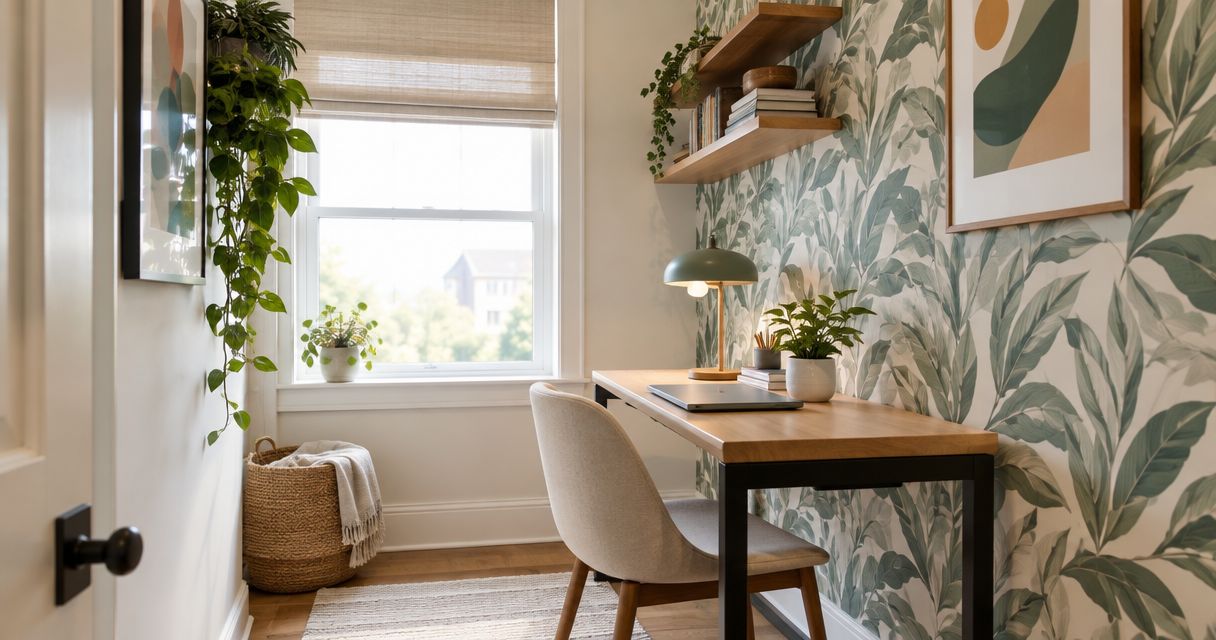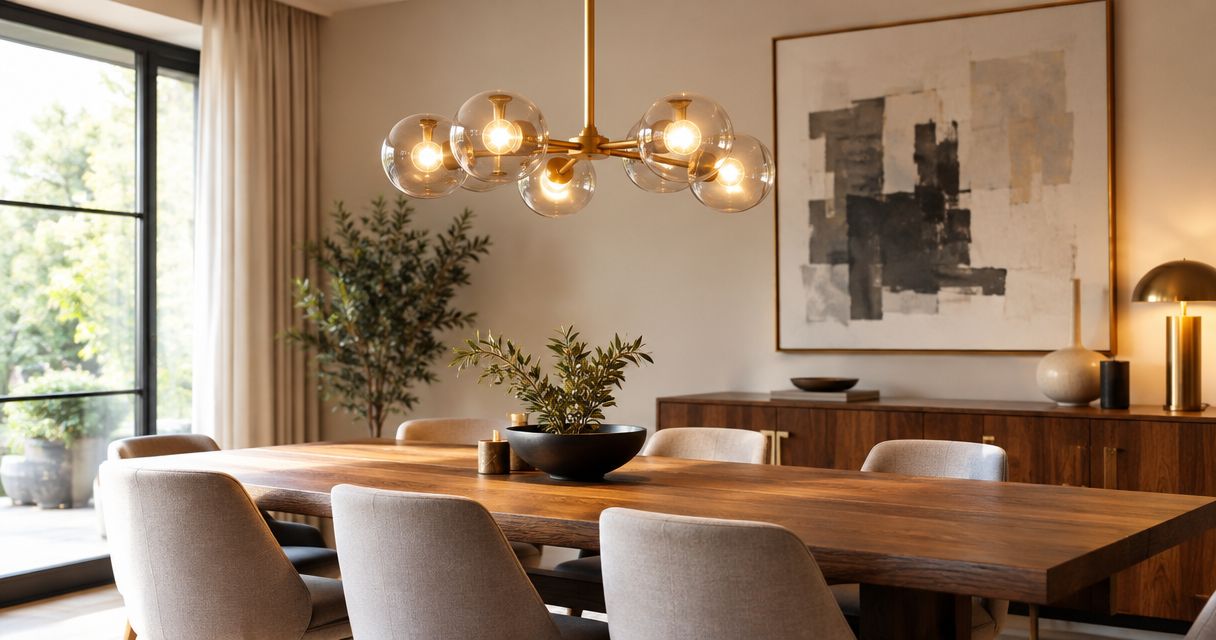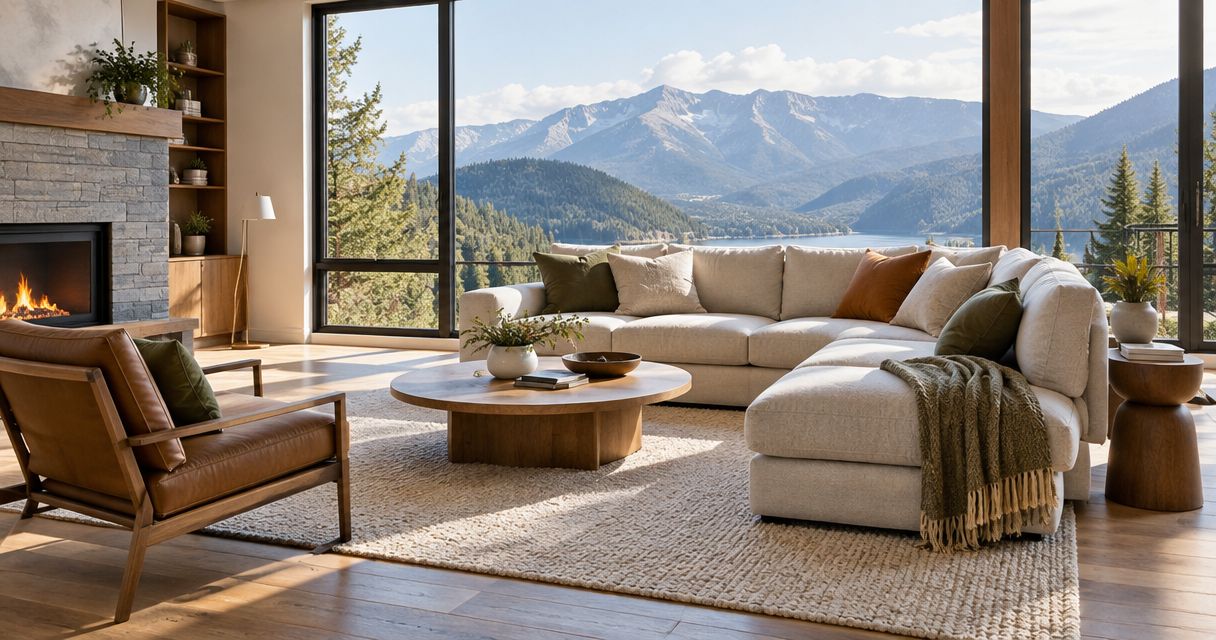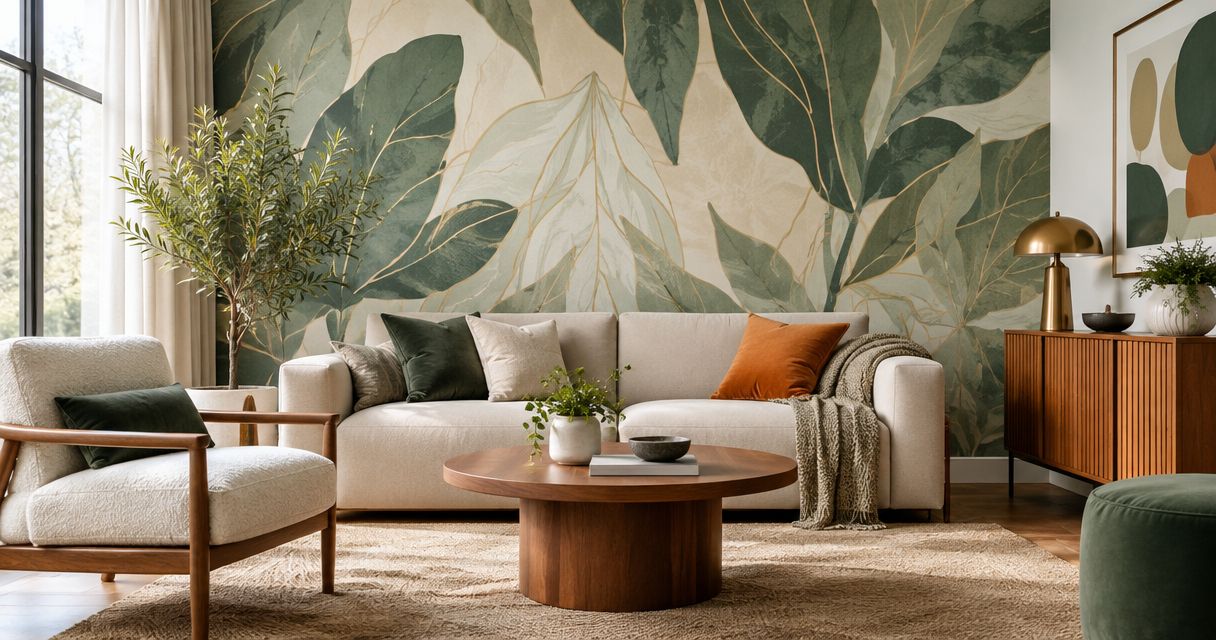
Best overall: tonal botanical wallpaper. Best for compact rooms: fine stripes. Best for a focused accent: small-scale geometrics. The best wallpaper trends 2026 shortlist below helps you choose a pattern that suits your room, your furnishings, and the way you want to feel at home.
- The best wallpaper trends 2026 shortlist starts with tonal botanicals for homeowners seeking pattern without strong contrast.
- Choose fine stripes for compact rooms, grasscloth for dry spaces, and murals for uninterrupted feature walls.
- Oak + Loom Interiors offers interior design and curated wallpaper for homeowners furnishing or renovating their spaces.
- Judge wallpaper samples beside your furniture in daylight and evening light before choosing.
Why this matters
Wallpaper sits behind everything else you choose: furniture, artwork, lighting, and the objects you already love. A beautiful sample is only the beginning. The pattern needs to work across a whole wall and alongside the rest of your home.
Oak + Loom Interiors is best for homeowners who want wallpaper considered alongside interior design and furnishings. The Colorado Springs studio offers full-service and à la carte design, plus curated home furnishings. You can explore Oak + Loom Interiors when you want help connecting those decisions.
For your 2026 project, treat this ranking as a room-by-room buying guide, not a claim about which patterns sell most. Each option earns its place through a distinct use case. Start with the room's needs, then choose the look.
What makes the best wallpaper for your room?
Use these criteria to judge wallpaper trends in 2026 before you fall in love with a pattern:
- Pattern scale: Check whether the motif remains readable behind furniture and across interrupted walls.
- Color connection: Look for a relationship with your flooring, upholstery, wood tones, or existing artwork.
- Surface suitability: Confirm that the specific wallpaper suits the room's moisture, cleaning, and wear requirements.
- Wall layout: Consider windows, doors, corners, and the surfaces available for a continuous pattern.
- Visual intensity: Decide whether the wallpaper should provide a quiet backdrop or become the room's main feature.
- Installation requirements: Review the manufacturer's instructions, pattern repeat, wall preparation, and hanging method before ordering.
A useful shortlist contains different answers to those questions, rather than several versions of the same look. Natural texture and a scenic mural both change a room, but they ask very different things of its walls and furnishings.
Best wallpaper trends at a glance
| Rank | Wallpaper style | Best for | Standout feature | Key limitation |
|---|---|---|---|---|
| 1 | Tonal botanicals | A balanced living-room backdrop | Organic pattern with restrained contrast | Busy foliage can compete with artwork |
| 2 | Fine stripes | Compact rooms with simple furnishings | A clear, repeated direction | Uneven walls can interrupt the rhythm |
| 3 | Natural grasscloth | Texture in dry, low-contact rooms | Visible fiber and surface variation | Cleaning and moisture requirements need careful review |
| 4 | Scenic murals | An uninterrupted feature wall | A composition rather than a repeating motif | Doors and furniture can hide important details |
| 5 | Small-scale geometrics | A focused entryway or alcove | Repetition that connects nearby colors | Tight patterns need careful alignment |
| 6 | Expressive florals | A personal bedroom | A distinct decorative focal point | Competes with other prominent patterns |
| 7 | Metallic accents | A dining room with controlled lighting | Reflective details that respond to light | Glare and wall irregularities deserve attention |
1. Tonal botanicals: best wallpaper for balanced living rooms
Tonal botanical wallpaper uses leaves, stems, or other plant forms within a restrained color range. It gives you a recognizable pattern without requiring sharp contrast. Choose it when your living room needs interest behind a sofa, shelving, or a mix of furnishings.
Look beyond the botanical subject itself. A dense leaf design behaves differently from an open pattern with generous space between motifs. Match that density to the amount of artwork and furniture already in the room.
Tonal botanical pros:
- Organic forms soften a room dominated by straight furniture lines.
- Related colors provide a clear starting point for upholstery choices.
- Restrained contrast lets other furnishings remain visually prominent.
Tonal botanical cons:
- Dense foliage can crowd a wall already filled with artwork.
- Strong undertones can clash with fixed flooring or wood finishes.
Best for: A living room that needs a patterned backdrop rather than a statement wall.
Verdict: Buy tonal botanicals when you want the safest starting point on this shortlist.
2. Fine stripes: best wallpaper for compact rooms
Fine-striped wallpaper creates a regular visual rhythm. Its simple motif leaves fewer competing shapes around furniture, making it a useful choice for a compact bedroom, sitting room, or home office.
Choose stripe direction deliberately, but do not expect wallpaper to change the room's actual proportions. Check how the lines meet the ceiling, door frames, and corners. Those junctions matter as much as the sample's color.
Fine stripe pros:
- A simple repeat works alongside patterned cushions or upholstery.
- Narrow lines introduce pattern without a large central motif.
- Stripe colors can echo existing trim or furniture finishes.
Fine stripe cons:
- Out-of-square corners can make the repeated lines look uneven.
- High-contrast stripes can feel more insistent than the sample suggests.
Best for: Compact rooms where you want an orderly background and straightforward furniture placement.
Verdict: Buy fine stripes for simplicity; skip high contrast if you want a quiet room.
3. Natural grasscloth: best wallpaper for tactile depth
Natural grasscloth brings visible fibers and variation to the wall. Its appeal comes from material texture rather than a printed image. Consider it for a dry bedroom, study, or sitting room where the walls receive limited handling.
Natural variation is part of the choice, not something to eliminate through careful matching. Expect panel joins to remain part of the finished appearance, and review the particular product's care instructions before committing.
Natural grasscloth pros:
- Adds texture without introducing a pictorial motif.
- Creates a material connection with woven textiles and wood.
- Surface variation gives otherwise plain walls visual interest.
Natural grasscloth cons:
- Visible seams are unsuitable if you want a continuous painted-wall effect.
- Moisture exposure and cleaning needs can rule out particular products.
Best for: Dry, low-contact rooms where texture matters more than easy cleaning.
Verdict: Buy natural grasscloth for texture; skip it when the product's care requirements conflict with daily use.
4. Scenic murals: best wallpaper for an uninterrupted feature wall
A scenic mural arranges an image across the wall instead of repeating the same small motif. Landscapes, abstract scenes, and architectural compositions offer different moods. The deciding factor is whether your wall gives that composition room to make sense.
Map the scene against doors, windows, a headboard, or a tall cabinet before ordering. A mural should still work when the furniture is in place, not only when the wall is empty.
Scenic mural pros:
- Gives a room a clear focal point.
- Offers a complete composition rather than an all-over repeat.
- Can connect a room's colors through a single scene.
Scenic mural cons:
- Openings and furniture can conceal the composition's main subject.
- Installation requires attention to panel order and placement.
Best for: A feature wall with a clear viewing position and few interruptions.
Verdict: Buy a scenic mural only after checking the full layout against your actual wall.
5. Small-scale geometrics: best wallpaper for focused accents
Small-scale geometric wallpaper uses repeated shapes to create an even field of pattern. It suits an entryway, alcove, or another contained area where you want a deliberate decorative change without a large scenic image.
Choose a color that relates to an adjoining room. The accent will feel more connected when it repeats something already present, such as a cabinet finish or an upholstery color, rather than introducing an unrelated palette.
Small-scale geometric pros:
- Works without needing a large uninterrupted image area.
- Repeated shapes provide a consistent visual rhythm.
- A limited palette can connect adjacent spaces.
Small-scale geometric cons:
- Misaligned repeats can be conspicuous.
- Strong contrast can make a contained space feel visually busy.
Best for: A defined accent area where you want pattern with clear boundaries.
Verdict: Buy small-scale geometrics for a focused accent; hold until you have checked alignment and contrast.
6. Expressive florals: best wallpaper for personal bedrooms
Expressive floral wallpaper makes the pattern part of the room's identity. Oversized blooms, loosely drawn flowers, and detailed garden motifs each offer a different character. Choose the design you want to live with, not simply the one that looks striking in a photograph.
Let the wallpaper lead the bedroom's palette. If your bedding already carries a prominent pattern, place the fabrics beside the wallpaper sample and decide which element deserves attention.
Expressive floral pros:
- Establishes a clear decorative direction.
- Provides several colors to draw into bedding and accessories.
- Makes a bedroom feel intentionally personal.
Expressive floral cons:
- Competes with other strong textile patterns.
- Large motifs can lose their shape behind a tall headboard.
Best for: A bedroom where the walls are intended to be the main decorative feature.
Verdict: Buy expressive florals when you love the pattern itself, not just its place on a trend list.
7. Metallic accents: best wallpaper for controlled evening light
Wallpaper with metallic details reflects light differently from a matte surface. That changing appearance is the reason to choose it. A dining room offers an opportunity to judge the finish alongside the lighting you use for meals and gatherings.
Examine the sample from different angles. A subtle highlight from one position can become a distracting reflection from another, especially beside a visible lamp or window.
Metallic accent pros:
- Adds reflective detail without requiring a fully reflective wall.
- Changes character as the room's lighting changes.
- Gives a restrained pattern another layer of interest.
Metallic accent cons:
- Reflections can distract from artwork or the table setting.
- Reflective surfaces can draw attention to wall irregularities.
Best for: A dining room where you can check and adjust the lighting deliberately.
Verdict: Hold metallic wallpaper until the sample works under your actual evening lighting.
How we ranked these wallpaper styles
This 2026 ranking prioritizes fit with everyday rooms: pattern scale, color connection, surface suitability, wall layout, visual intensity, and installation requirements. Tonal botanicals take the default position because their restrained contrast supports a background role; the remaining styles answer more specific needs.
This is a design recommendation, not a sales ranking or a durability test. Product construction still matters. Two wallpapers with similar-looking patterns can have different installation and care requirements.
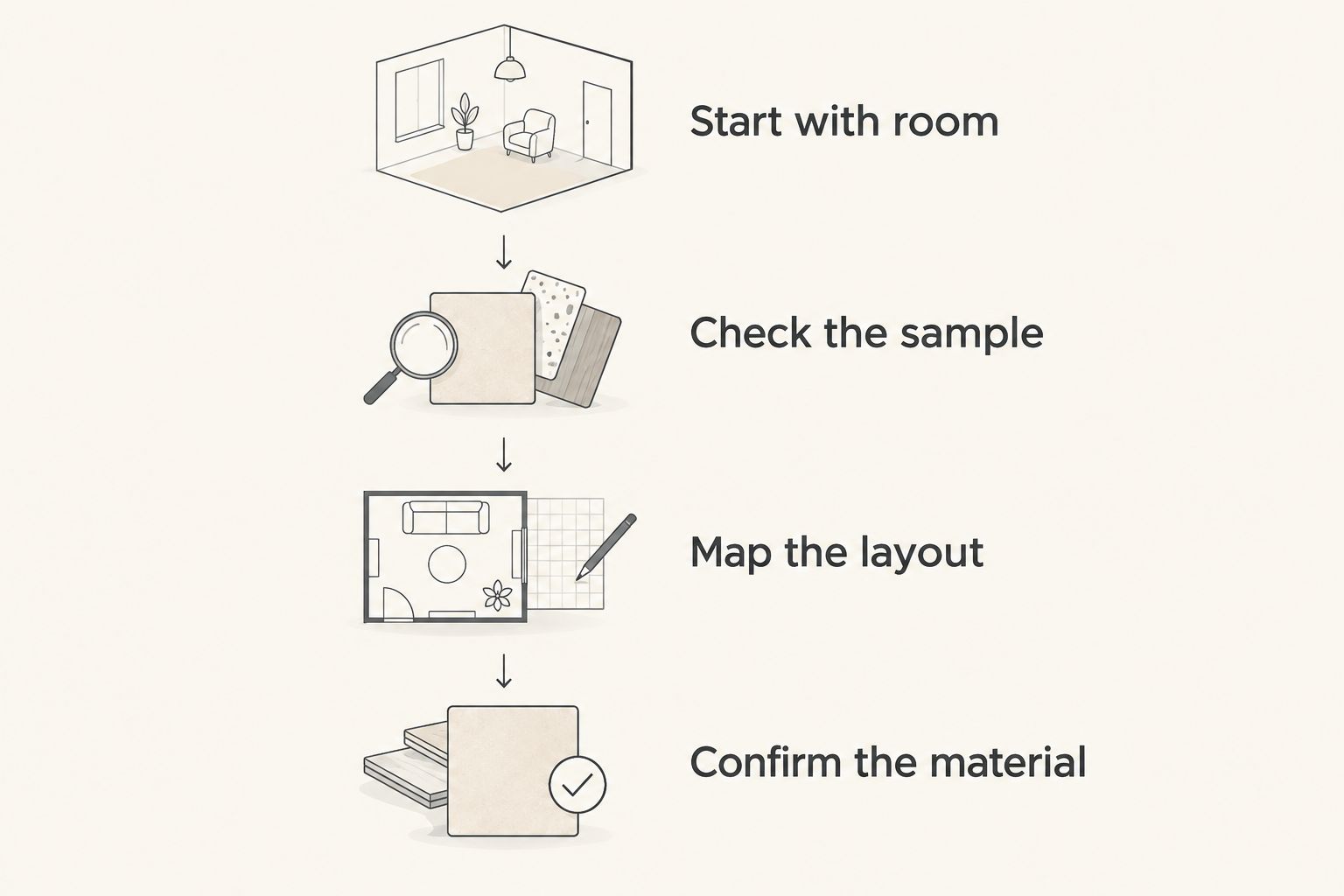
How to choose before you order
Start with the room
Write down what you want the wallpaper to do: provide a backdrop, add texture, or create a focal point. Choose one main job. That decision makes it easier to reject attractive samples that do not serve your room.
Check the sample
Compare samples on 2 walls if their daylight differs. View each from 3 positions: the doorway, your usual seat, and close to the surface. Check them under 2 lighting conditions: daylight and your normal evening lighting. These are practical viewing steps, not product-performance measurements.
Map the layout
Mark the furniture outline and wall openings on a simple sketch. For murals and large motifs, check what remains visible above a sofa or headboard. For stripes and geometrics, pay attention to corners and the edges of door frames.
Confirm the material
Read the manufacturer's installation and care instructions for the exact wallpaper. Confirm wall preparation, adhesive requirements, cleaning guidance, and any restrictions for the room before placing an order.
Which wallpaper should you choose?
Choose tonal botanical wallpaper if you are undecided. It offers a clear pattern while leaving room for furniture and artwork. Choose natural grasscloth instead when you want texture without an illustrated motif, or a scenic mural when the wall itself should become the focal point.
For a 2026 room refresh, keep the decisions connected. Oak + Loom Interiors offers wallpaper alongside interior design and furnishings, so your starting point can be one room, one piece, one thoughtful decision at a time.
Explore your room's next step
Consider wallpaper alongside interior design and curated home furnishings.
FAQ
What's the best wallpaper trend for 2026?
Tonal botanical wallpaper is the default recommendation for homeowners who want pattern without strong contrast. Choose a design whose density and colors work with your existing furniture and artwork.
What wallpaper should I choose for a small room?
Fine stripes are a useful starting point for a compact room with simple furnishings. Check the contrast and how the lines meet corners before committing; stripes do not change the room's actual dimensions.
Is grasscloth wallpaper a good choice for a bathroom?
Do not choose natural grasscloth for a bathroom without explicit product guidance approving that use. Moisture exposure and cleaning requirements must match the manufacturer's instructions for the specific wallcovering.
Should I wallpaper one wall or the whole room?
Choose one wall when the wallpaper is intended to create a focused feature, and consider the whole room when it should form a continuous backdrop. Judge the pattern's intensity alongside doors, windows, furniture, and adjacent spaces.
How do I know whether a wallpaper pattern is too large?
A pattern is too large for your intended layout when furniture or wall openings hide the parts that make it readable. Review the full repeat or mural layout against a sketch of your actual wall.
Can floral wallpaper work with patterned bedding?
Floral wallpaper can work with patterned bedding when you deliberately control contrast, color, and visual emphasis. Compare the actual fabrics and wallpaper sample together, then choose which pattern should lead.
Can Oak + Loom Interiors help me choose wallpaper?
Oak + Loom Interiors offers full-service and à la carte interior design plus curated home furnishings, including wallpaper. It is a fit for homeowners who want the wall treatment considered alongside the rest of their space.
One last thing
Make the final sample check with your furniture in view. A wallpaper can look right against a bare wall and feel unrelated beside the sofa you intend to keep. For your 2026 choice, protect that relationship before chasing a new pattern.