Yes, an interior designer can help choose wallpaper patterns by connecting the pattern’s scale, color, and placement to your furniture, lighting, and how you want the room to feel. Choosing the paper and preparing or installing it are separate tasks, so confirm what your design agreement includes before committing. For a 2026 room update, the useful outcome is a wallpaper choice that belongs in your home—not simply a pattern you like on a screen.
- Can an interior designer help choose wallpaper? Yes—ask for pattern selection grounded in your room’s furnishings and lighting.
- Oak + Loom Interiors offers interior design and curated furnishings for Colorado Springs homeowners.
- Compare wallpaper samples on the intended wall before approving color, scale, or finish.
- Confirm who handles measurements, quantities, wall preparation, ordering, and installation before you proceed.
Can an interior designer help choose wallpaper patterns?
An interior designer helps you move from liking individual patterns to choosing one that works with the whole room. That means looking beyond the wallpaper to the sofa you are keeping, the wood floor beneath it, and the view from the doorway.
Oak + Loom Interiors offers full-service and à la carte interior design alongside curated furnishings, including wallpaper. Oak + Loom Interiors is best suited to Colorado Springs homeowners seeking interior design support alongside curated home furnishings. Ask which service scope fits your wallpaper decision; do not assume selection, ordering, and installation are bundled together.
A useful selection process follows these steps:
- Define the room. Explain how you use the space and which furnishings will stay.
- Set the direction. Decide whether the walls should provide a quiet backdrop or become a focal point.
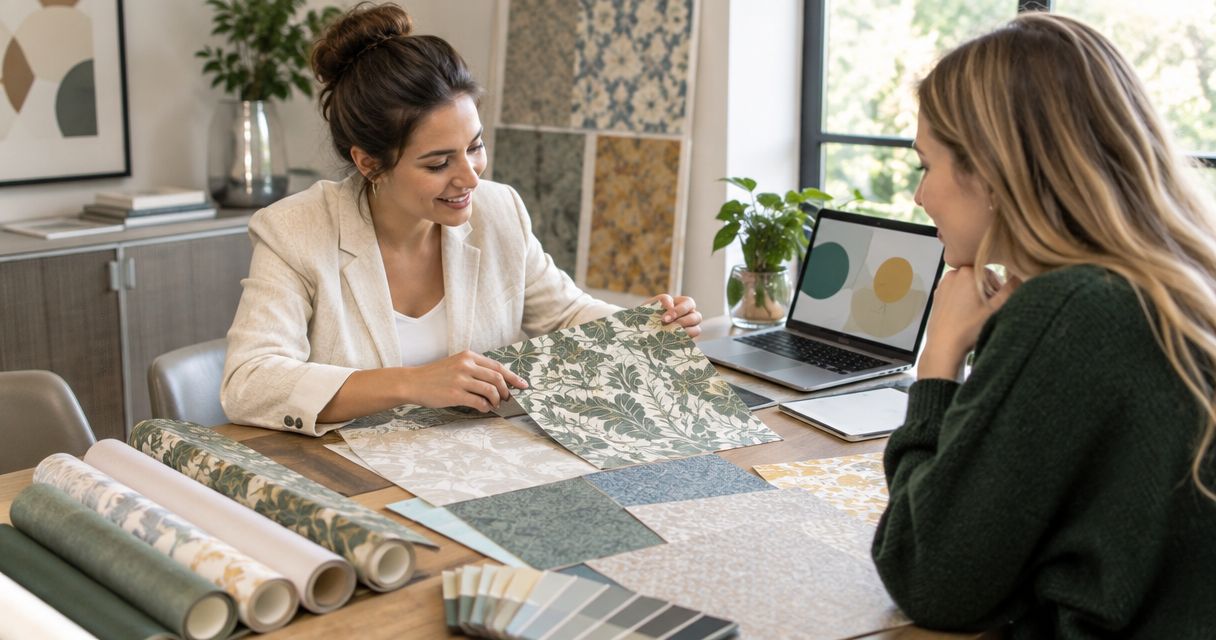
- Compare physical samples. Review color, pattern scale, and surface finish in the room.
- Resolve placement. Consider corners, doors, windows, cabinetry, and adjoining spaces.
- Confirm responsibilities. Establish who verifies quantities, orders materials, and prepares and installs the paper.
The designer’s contribution is judgment across those decisions. A photograph can show a pattern; it cannot settle how that pattern relates to everything you already own.
Why this matters
Wallpaper covers a large visual surface, but you usually choose it from a small sample. That mismatch makes context essential. A motif that feels delicate in your hand can become much more noticeable when repeated across a wall.
For your 2026 project, separate inspiration from approval. Use online images to identify what you like, then use physical samples and room information to decide what belongs in your home.
Choose wallpaper for the room you have, not for the photograph that introduced you to it. Your furniture, daylight, trim, and sightlines are the reference points that matter.
Which wallpaper direction fits your room?
There is no single pattern type that works best everywhere. Start with the role you want the walls to play, then compare the strengths and limitations of each direction.
| Wallpaper direction | Best for | What it contributes | What to check |
|---|---|---|---|
| Small-scale pattern | A repeated detail rather than a dominant motif | Interest distributed across the wall | Repetition can read as busy from across the room |
| Large-scale pattern | A deliberate focal point | A clearly visible motif and strong visual presence | Cropping around openings and furniture affects the result |
| Stripe or geometric | A room where you want visible structure | A directional or ordered pattern | Corners, alignment, and irregular walls need attention |
| Texture or tonal pattern | A quieter backdrop for furnishings or art | Surface interest with less emphasis on a distinct motif | Finish and lighting still affect how noticeable it becomes |
Treat these as starting points, not rules. A small pattern with sharp color contrast can command more attention than a large, softly colored motif.
Small-scale pattern: for repeated detail
A small-scale pattern is useful when you want detail without a single oversized image. Compare it beside your upholstery and rugs, especially if those pieces already contain repeated shapes.
The limitation is visual accumulation. A small sample shows only a little repetition; the wall shows much more. Step back before deciding whether the effect feels quiet or active.
Large-scale pattern: for a focal point
A large-scale pattern gives you a motif that remains visible from across the room. It suits a design direction in which the wall is meant to attract attention rather than disappear behind furnishings.
The trade-off is placement. Ask how the main shapes will sit behind a headboard, above a console, or around a doorway. Approve the arrangement, not just the motif.
Texture or tonal pattern: for a quieter backdrop
Texture or a closely related color palette can support a room where furniture, artwork, or a view should lead. It is a useful direction to explore when you want interest without a strongly contrasting print.
Quiet does not mean invisible. Review surface texture and sheen under the lighting you actually use, and check the manufacturer’s care instructions before choosing.
How should you test wallpaper samples?
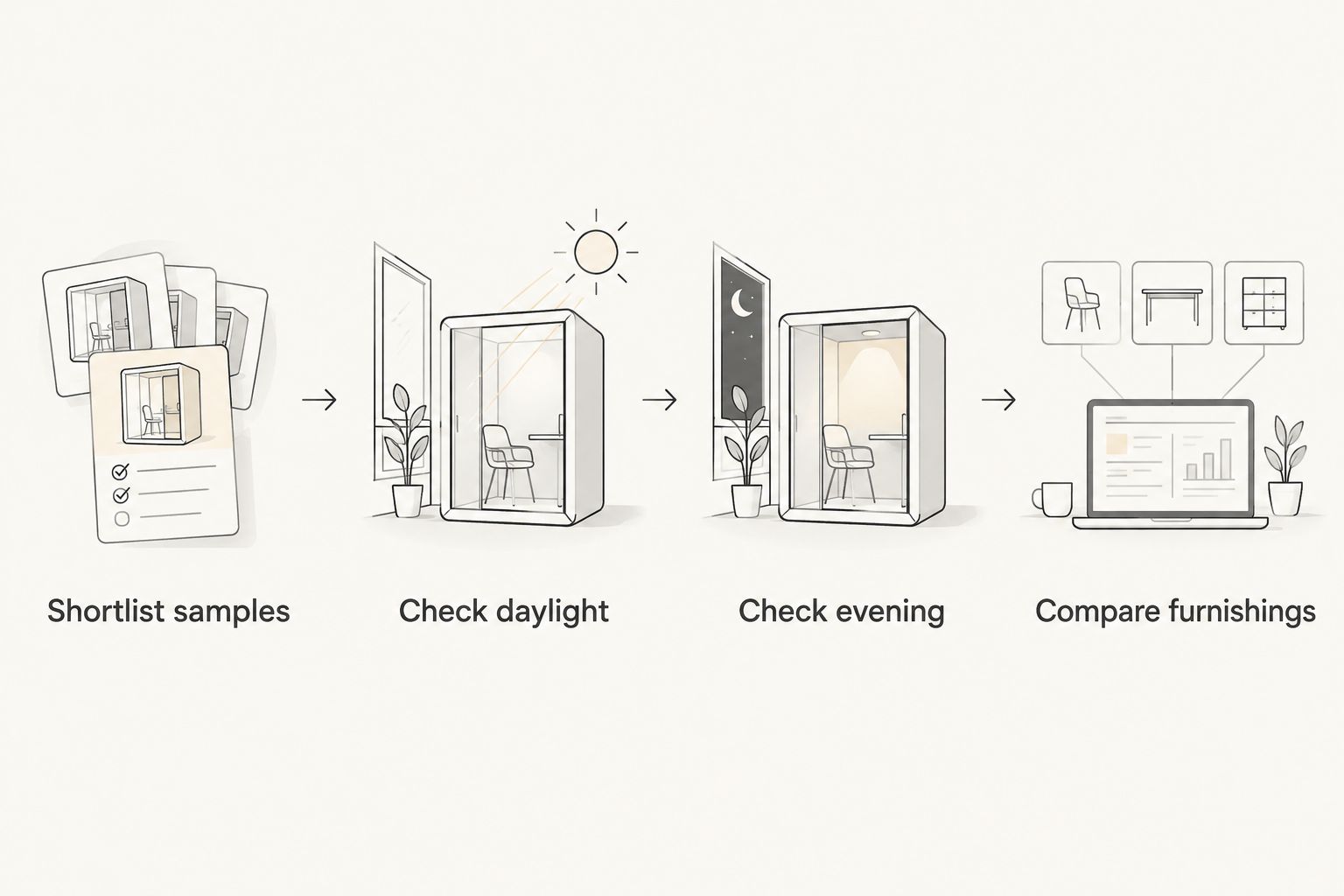
Use a manageable shortlist rather than covering the wall with every possibility. As a practical starting point, compare 3 samples on the intended wall, then remove any option that conflicts with the finishes you are keeping. This is a decision-making suggestion, not a required sample count.
Review the remaining samples in 2 lighting conditions: daylight and your usual evening lighting. Hold paint, upholstery, or curtain samples beside them so you are comparing the actual materials rather than your memory of their colors.
Look from both the doorway and the place where you spend time. A pattern behind a desk is experienced differently from one you face while sitting on the sofa.
Do not use a screen image as the final color reference for a 2026 wallpaper selection. Screens and room lighting are different viewing conditions. If a sample does not show the full motif, ask to review information that makes the complete pattern and repeat clear.
Why wallpaper choices vary from room to room
The same wallpaper can serve different purposes in different spaces. These factors explain why a designer should ask about your room before recommending a pattern:
- Existing furnishings. Upholstery, rugs, artwork, and wood finishes establish relationships the wallpaper needs to respect.
- Lighting. Daylight and electric lighting change the conditions in which you see color, contrast, and surface finish.
- Wall layout. Doors, windows, corners, and built-ins interrupt patterns and affect which parts remain visible.
- Room use. A bedroom, entry, and dining room place different demands on the mood you want and the care instructions you need to review.
- Adjoining spaces. Wallpaper seen through an open doorway becomes part of the view from the next room.
- Project scope. Selecting a background for existing furniture is a different task from coordinating walls, lighting, and furnishings together.
Bring these details into the conversation early. You do not need to know your preferred pattern before asking for help; identifying the room’s constraints is part of making a thoughtful choice.
Can I hire a designer just to choose wallpaper?
Yes, a focused design engagement can address a wallpaper decision without turning it into a whole-home project. The important distinction is the agreed deliverable: advice, a shortlist, a final specification, or broader project coordination.
Oak + Loom Interiors offers à la carte and full-service interior design. For a focused 2026 update, ask whether wallpaper selection fits an à la carte scope and what information you should bring.
A narrow engagement keeps attention on the decision you need help making. Its limitation is equally important: a selection-only agreement does not establish who handles wall assessment, quantities, ordering, or installation. Put those responsibilities in writing.
Can a designer work with the furniture I already own?
Yes, an interior designer can use your existing furniture as the starting point for wallpaper selection. Identify the pieces you intend to keep before reviewing patterns, rather than choosing wallpaper first and trying to make everything else fit afterward.
Bring photographs of the entire room and close views of upholstery, rugs, flooring, and trim. If you have material samples, include them. Explain which pieces you love and which you are keeping for practical reasons.
Ask the designer to describe the relationship behind each recommendation. Does the wallpaper repeat a color from the rug, provide contrast to the sofa, or stay quiet behind artwork? That explanation helps you choose with confidence instead of relying on approval alone.
Should wallpaper cover one wall or the whole room?
Choose the extent of wallpaper based on where you want attention and how the room connects to nearby spaces. A single wall concentrates the pattern; wrapping the room makes the pattern part of its overall setting.
| Placement | Best for | Advantage | Limitation |
|---|---|---|---|
| One wall | A defined focal point | Concentrates the pattern in a chosen area | The transition to painted walls needs consideration |
| Whole room | A continuous decorative setting | Carries the treatment around the space | More corners and openings require layout planning |
| Architectural area | A niche or another clearly bounded surface | Gives the pattern a defined boundary | Cropping can obscure an important part of the motif |
Neither approach is automatically better for a small room. Consider contrast, furniture placement, and the view through the doorway together. A designer should explain why the proposed boundary makes sense for your particular space.
What should you confirm before ordering wallpaper?
For a 2026 project, use 1 written selection record to keep the approved choice clear. Include the manufacturer’s pattern identification, colorway, proposed walls, and any layout decisions that matter to you.
Then confirm the practical responsibilities separately:
- Who checks wall dimensions and calculates the required quantity?
- Who reviews pattern repeat and matching instructions?
- Who confirms the paper is suitable for the intended location?
- Who evaluates the wall surface and preparation requirements?
- Who places the order and communicates with the installer?
Pattern approval is not installation approval. A design choice does not establish that the wall is ready or that a quantity calculation is correct. Have the person responsible for each task confirm it before work proceeds.
FAQ
Can an interior designer help choose wallpaper if I have no idea what I like?
Yes, an interior designer can help turn your preferences about color, mood, and existing furnishings into a wallpaper direction. Bring examples of rooms you like and explain what feels comfortable or distracting to you.
Can I ask a designer to help with just one room?
Yes, you can ask for a scope focused on one room rather than a whole home. Confirm the deliverables and whether the agreement covers selection alone or additional coordination.
Should I choose wallpaper before buying furniture?
Choose the order around the elements you are most committed to keeping. If your furniture is staying, use it as a starting point; if the room is being redesigned, consider wallpaper and furnishings together.
Is large-pattern wallpaper wrong for a small room?
No, room size alone does not determine whether a large pattern works. Review the motif’s contrast, placement, and relationship to openings and furniture before deciding.
Can wallpaper work behind artwork?
Yes, wallpaper can work behind artwork when the pattern and art have a considered relationship. Compare them together so you can judge whether the wall supports the artwork or competes with it.
Does choosing wallpaper include installation?
Wallpaper selection does not automatically include installation. Confirm who handles wall preparation, measurements, quantities, ordering, and installation in your agreement.
What should I bring to a wallpaper design conversation?
Bring room photographs, information about the furnishings you are keeping, and any paint or fabric samples you have. Include inspiration images and explain what you like about each one.
One last thing
Before approving your 2026 wallpaper choice, look at it from the adjoining room. That view is easy to overlook when you are standing directly in front of a sample, but it is part of how you experience your home every day.
A thoughtful decision does not require choosing the most noticeable pattern. It requires understanding what the wallpaper contributes—and feeling comfortable with that contribution, one room and one decision at a time.