
Fully furnishing a new home takes as long as your design decisions, furniture deliveries, and final installation require; there is no single duration that fits every home. The useful distinction is between having the rooms you need ready for daily life and having every room completely finished. For your 2026 move, plan those as separate milestones rather than expecting moving day to mark both.
- How long does it take to fully furnish a new home? Your scope, decisions, deliveries, and installation determine the timeline.
- Separate a livable home from a fully finished home before setting your furnishing deadline.
- Confirm furniture layouts before ordering; track delivery and installation as separate milestones.
- Oak + Loom Interiors offers interior design and curated furnishings for Colorado Springs homeowners.
Why this matters
An empty room makes every purchase feel urgent. But choosing a sofa before checking the layout, or ordering a dining table without considering circulation, creates problems that a delivery date cannot solve.
Set a deadline for the way you need to live, not just the look you want to achieve. A working bedroom and somewhere comfortable to eat can matter more at move-in than a finished guest room.
Start with a home-closing-to-move-in-ready workflow if your furnishing plans need to connect with possession of the house. Access, measurements, and any unfinished renovation work belong on the same calendar as furniture decisions.
How long does it take to fully furnish a new home?
The duration depends on what you count as finished and which tasks must happen before others. Choosing furniture is only part of the process: measurements, approvals, orders, delivery arrangements, placement, and finishing details all belong in the schedule.
For a 2026 furnishing plan, establish 2 milestone dates: the date your home needs to support daily life and the date you want the complete furnishing scope finished. These are planning targets, not promises about delivery.
| Completion milestone | Best for | What belongs in the scope | Benefit | Limitation |
|---|---|---|---|---|
| Daily-life ready | Homeowners moving before every room is finished | Sleeping, eating, seating, usable lighting, and essential storage | Directs attention toward immediate household needs | Secondary rooms and finishing details remain unfinished |
| Fully furnished | Homeowners planning a complete room-by-room result | All agreed furniture, lighting, textiles, and finishing details | Gives the project a clear endpoint | Depends on every item included in the agreed scope |
Neither milestone is more correct. The mistake is using the same deadline for both without checking what each requires.
A practical schedule follows this sequence:
- Define the rooms and functions you need.
- Measure the home and resolve furniture layouts.
- Approve the selections and identify dependencies.
- Confirm delivery arrangements for each order.
- Coordinate placement, installation, and remaining details.
Some tasks can overlap. Others cannot: a furniture layout needs reliable dimensions, and an installation appointment needs the room to be ready.
Daily-life ready: start with the rooms you depend on
Your daily-life milestone should reflect your household, not a standard shopping checklist. A home office is essential if you work from home; a formal dining room is less urgent if you do not use one.
Write down what needs to happen comfortably from your first night onward. Include sleeping, dressing, preparing meals, eating, sitting, and storing the belongings you use every day. Then identify which existing pieces already serve those needs.
Best for homeowners with a fixed moving date: prioritize function before finishing details. The benefit is a focused first phase; the trade-off is living with some rooms that are intentionally incomplete.
For each priority room, ask:
- Can you use the room for its intended purpose?
- Is there suitable light for the activities taking place there?
- Can you move through it without furniture blocking the route?
- Do the belongings used in that room have somewhere to go?
A room does not need artwork on every wall to support daily life. It does need a layout that works for the people using it.
Fully furnished: define what finished includes
A fully furnished home needs a written scope. Otherwise, the endpoint moves each time you notice an empty corner or find another piece you like.
Decide whether your scope includes rugs, lamps, window treatments, artwork, mirrors, decorative objects, and outdoor areas. Include only the categories relevant to your home, but make the decisions explicit.
Best for homeowners seeking a coordinated whole-home result: agree on the complete scope before treating a completion date as meaningful. This creates a clear finish line, but it also makes outstanding items visible rather than allowing them to disappear from the schedule.
Keep a room-by-room list with a status beside every item. Useful status labels include selection needed, approved, ordered, delivery confirmed, and placed. Avoid marking an entire room complete when a necessary component is still unresolved.
For your 2026 plan, define completion in a sentence you can verify: every item in the agreed scope is placed, necessary installation is complete, and outstanding issues are recorded. That is more useful than deciding the home should simply feel done.
Build the schedule around decisions, not just deliveries
A furnishing schedule starts before an order is placed. The strongest sequence protects you from making a later choice that conflicts with an earlier purchase.
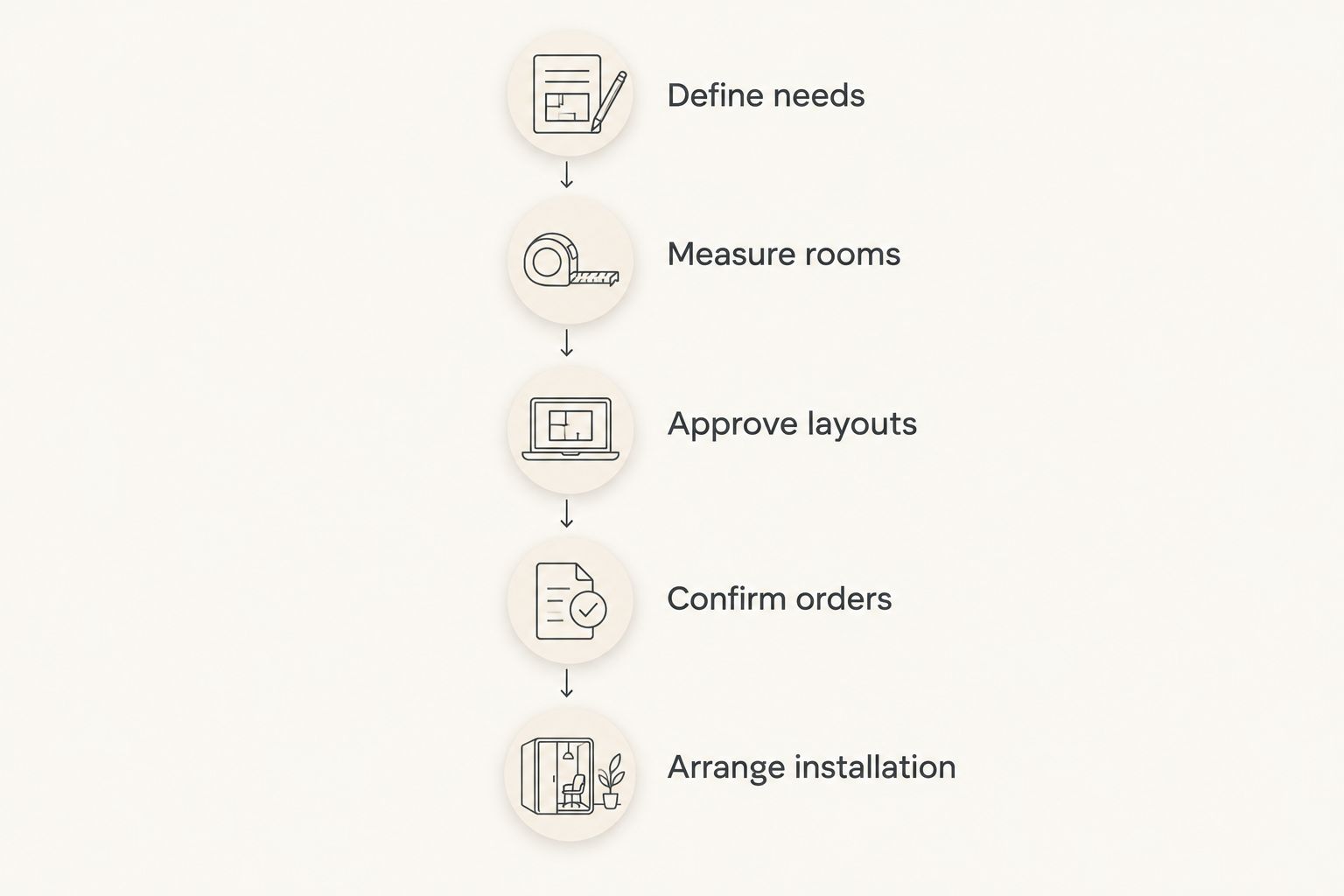
Use these 5 planning stages to organize the work. They describe the process, not a fixed number of weeks.
Define needs
List the activities each room must support and the furniture you plan to retain. Identify decisions that require agreement from another household member before shopping begins.
Measure rooms
Record room dimensions, door openings, windows, fixed features, and delivery access. Include furniture you already own so the layout reflects what will actually occupy the room.
Approve layouts
Decide where the major pieces belong before choosing the smaller pieces around them. Check circulation and how adjacent rooms connect, particularly when several functions share an open space.
Confirm orders
Record the exact selections and current delivery information supplied for each order. Keep estimates distinct from confirmed arrangements, and ask what happens if part of an order arrives separately.
Arrange installation
Identify which items need placement only and which need assembly, mounting, or professional installation. Confirm who handles each task rather than assuming delivery includes everything required.
The sequence is simple: define needs, measure rooms, approve layouts, confirm orders, and arrange installation. Keep these stages visible so a missing decision does not hide behind a shopping list.
Why furnishing timelines vary
The same number of rooms does not produce the same schedule. What matters is the work within those rooms and how the decisions connect.
- Scope of completion. Furnishing essential rooms and finishing an entire home are different projects. Define which rooms and categories your deadline covers.
- Existing furniture. Keeping pieces gives the layout established elements to work around. Replacing everything creates a different selection task.
- Decision dependencies. A rug, sofa, and coffee table need to work together. Unresolved choices leave connected selections unsettled.
- Order-specific delivery information. Use the information attached to your actual selections. Do not apply one item's expected arrival to the rest of the home.
- Room readiness. Painting, flooring, electrical work, or other renovation tasks need coordination with furniture placement when they are part of your project.
- Installation scope. A lamp placed on a table and a fixture requiring electrical installation involve different tasks. Identify those differences before scheduling the finish.
Treat the last dependent task as part of the timeline. Furniture arriving at the house does not complete a room if the work needed to use it remains unfinished.
How do you plan furniture around a fixed move-in date?
Start with the activities you cannot postpone, then work backward from the date you need them supported. Keep the move-in essentials separate from purchases that can wait without disrupting everyday life.
For a 2026 move, maintain 3 planning lists: essential before moving, suitable after moving, and undecided. These are organizational categories, not recommended delivery intervals.
Put a desk on the essential list if your work depends on it. Put a decorative console on the later list if it does not solve an immediate need. Keep an unresolved purchase on the undecided list instead of ordering something simply to make the room appear complete.
Ask whoever is supplying or installing each essential item to confirm the relevant arrangements. Where a date remains an estimate, plan around that uncertainty rather than treating the estimate as a commitment.
Should you furnish every room at once?
Furnish every room together when you want to resolve the whole-home plan before making individual purchases. Furnish in phases when you want to concentrate decisions on the rooms you use first.
Planning the whole home does not require buying everything together. You can establish the layouts, palette, and relationships between rooms, then complete the purchases in a deliberate sequence.
The benefit of a whole-home plan is consistency across connected spaces. The limitation is the amount of decision-making it asks you to handle together. A phased approach narrows your immediate focus, but you still need to protect space and flexibility for later rooms.
Choose the sequence that fits your household's attention as well as its needs. A clear pause between phases is better than an unfinished plan that keeps changing.
Can an interior designer help you plan the timeline?
An interior designer can help organize the scope, layouts, and furnishing decisions. Before hiring, ask which responsibilities are included and which remain yours; do not assume every service covers ordering, delivery coordination, or installation.
Oak + Loom Interiors is a fit for Colorado Springs homeowners seeking interior design and curated home furnishings. The studio offers full-service and à la carte interior design, alongside furnishings such as furniture, lighting, and wallpaper.
The benefit is the choice between a broader design engagement and more focused help. The boundary is equally important: a service description is not a project schedule, so confirm the scope and responsibilities for your home directly.
You can explore Oak + Loom Interiors with your room list and moving priorities in hand. Ask for a plan that distinguishes decisions, orders, and installation rather than a single finish date without those details.
FAQ
How long does it take to fully furnish a new home in 2026?
Fully furnishing a new home in 2026 takes the time required to complete your agreed scope, including decisions, deliveries, and installation. Establish separate targets for daily-life readiness and full completion, then confirm the arrangements for the items in each phase.
Can I move into my new home before every room is furnished?
You can plan to move in before every room is furnished by prioritizing the spaces needed for daily life. Identify sleeping, eating, working, lighting, and storage needs before treating secondary rooms as move-in requirements.
Should I buy furniture before I get the keys?
Make purchase decisions only when you have reliable dimensions and understand access and delivery arrangements. Before you have those details, focus on your room priorities, existing furniture inventory, and preferred layouts.
Does furniture delivery mean my home is fully furnished?
Furniture delivery does not mean your home is fully furnished if placement, assembly, installation, or agreed finishing details remain. Define completion by the work finished, not just the items received.
What should I furnish first in a new house?
Furnish the rooms that support your household's immediate daily needs first. Bedrooms, eating areas, seating, and workspaces take priority according to how you actually live.
Can I hire a designer without furnishing the whole house?
You can ask for focused design help rather than a whole-home engagement. Oak + Loom Interiors offers à la carte interior design; confirm the scope that suits your rooms and decisions before proceeding.
One last thing
Keep a list of decisions you are deliberately postponing. An empty wall or unfinished guest room is not a planning failure when you have chosen to return to it later.
For your 2026 home, give each postponed decision a reason and a point for reconsideration, such as after the main seating is placed. A home becomes easier to finish when you know what you are waiting for. You can move with intention, one room and one thoughtful decision at a time.