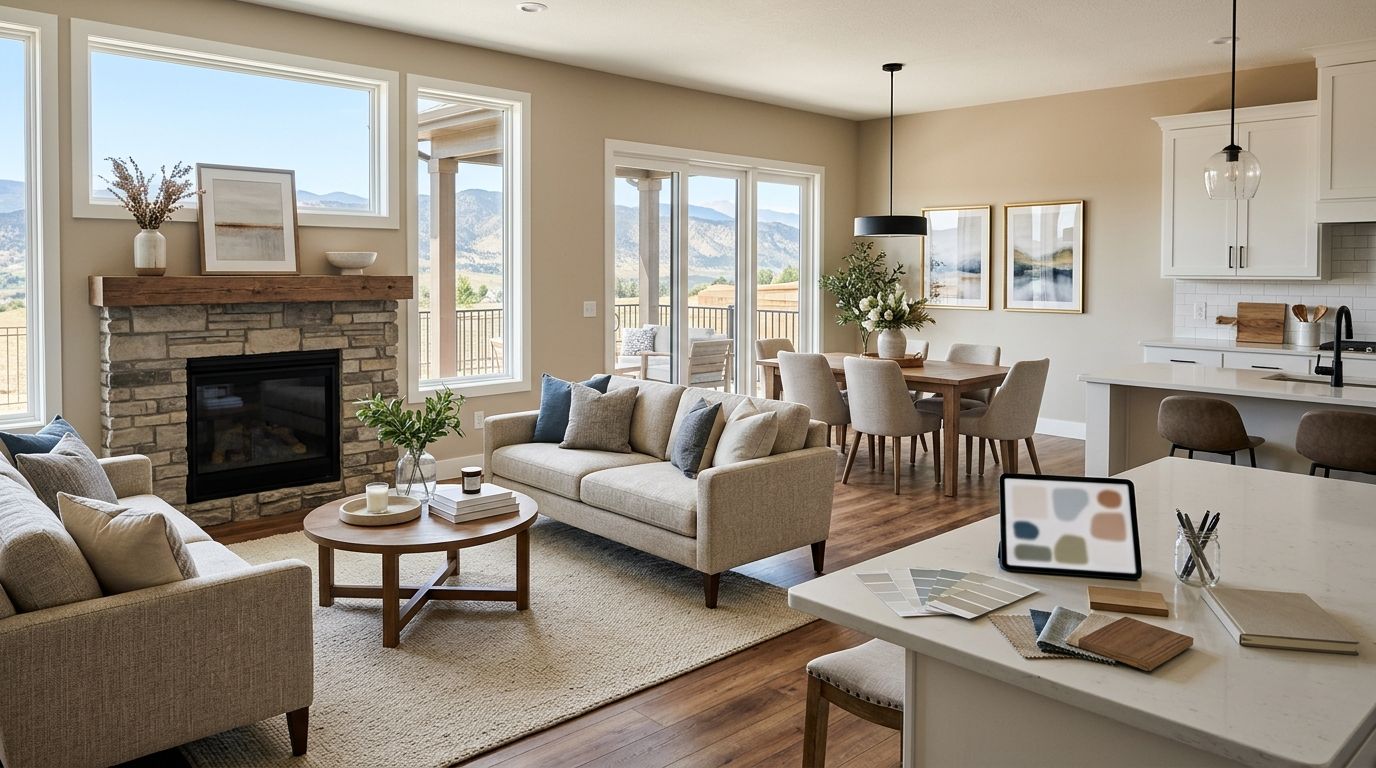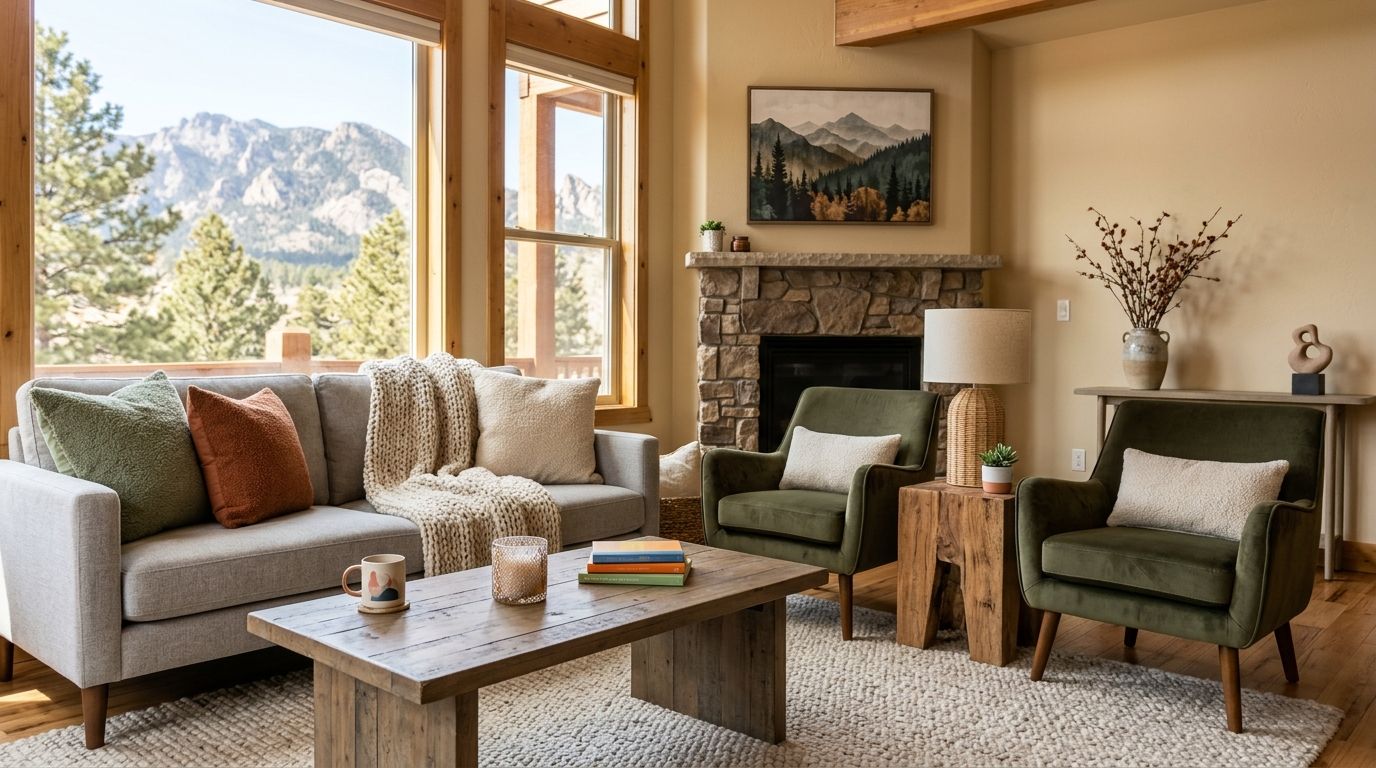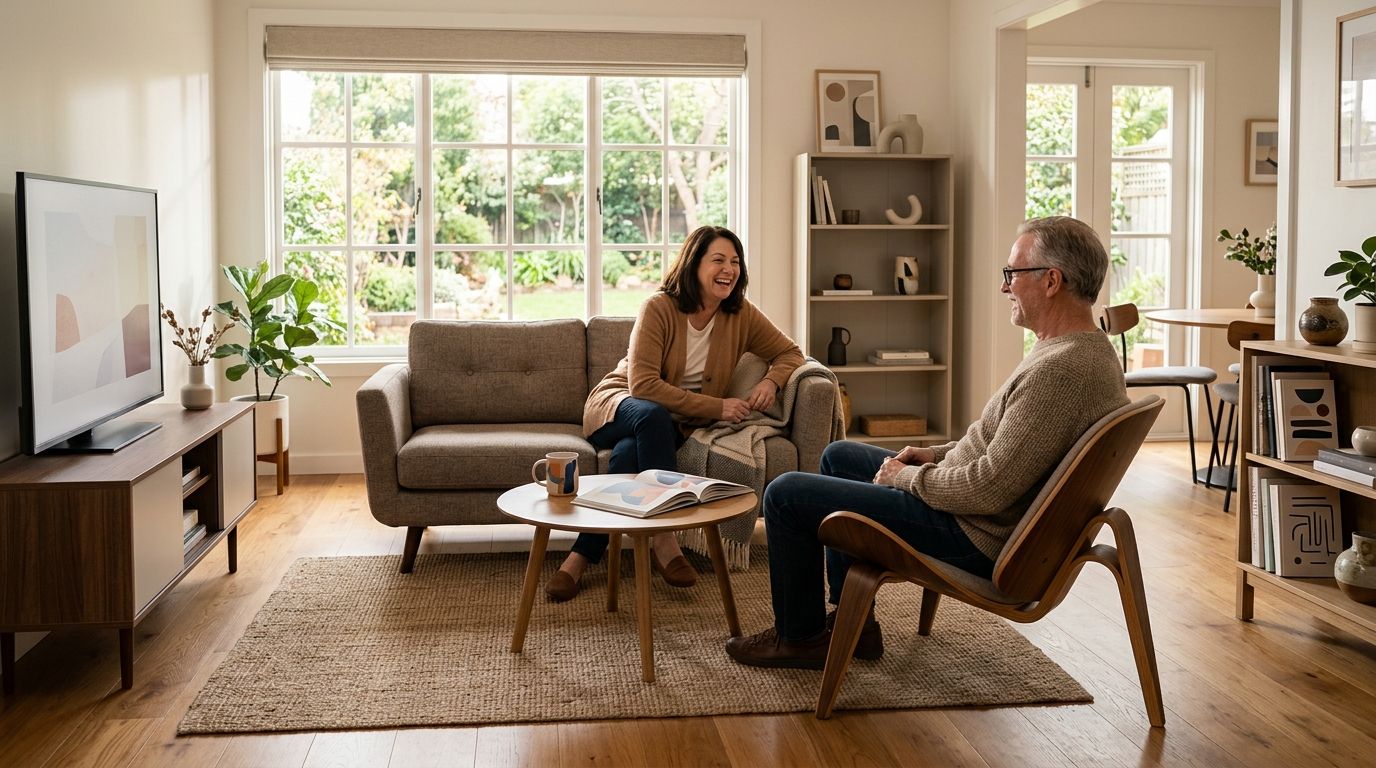
Furniture for empty nesters downsizing is furniture selected around a smaller home's layout, everyday routines, and meaningful belongings, with the aim of making less space feel comfortable rather than crowded. Your next home needs to support the life you live now—not preserve every room arrangement from the family home.
- Choose furniture for empty nesters downsizing by measuring rooms, testing seating, and deciding what deserves space before shopping.
- Oak + Loom Interiors offers furniture and interior design for Colorado Springs homeowners furnishing their next home.
- Keep meaningful pieces that fit; replace furniture that blocks circulation or serves a routine you no longer have.
- Small-space furniture should support everyday comfort, not simply occupy less floor space.
Why furniture planning matters for empty nesters
Downsizing changes more than the number of rooms you furnish. A dining table that once handled homework and holiday gatherings now has to earn its place beside everyday activities. A spare bedroom might need to accommodate both visiting family and your own interests.
Plan for your ordinary week first, then accommodate occasional guests. That distinction helps you avoid recreating a larger household inside a smaller footprint.
For your 2026 move, start with the floor plan rather than a shopping list. The guide to furniture for small Colorado Springs homes offers a related starting point for thinking about scale.
Your furniture decisions also carry personal history. Keeping a cherished cabinet can matter more than achieving a perfectly matched room. The useful question is not whether everything coordinates; it is whether each piece fits physically, supports your routines, or holds enough meaning to deserve its space.
Plan your furniture before you shop
1. Define the life your smaller home needs to support
Start with a notebook, not a showroom visit. Record how you actually use your furniture over 7 days: where you read, eat, work, watch television, and sit together. Note which activities currently happen in an uncomfortable or inconvenient spot.
Then separate regular needs from occasional ones. Overnight visitors deserve consideration, but a guest bed does not automatically deserve the room you would use every day for reading or hobbies. Decide which activities can comfortably share a space and which need separation.
Write a short 2026 room brief for each space. A useful brief describes activities and belongings, not a decorating style. For example, a living room might need comfortable seating for conversation, a place for books, and a clear route to the patio.
- Record daily activities before listing furniture.
- Identify which guest needs require permanent space.
- Name the belongings each room must accommodate.
- Decide which activities can share a room without conflict.
2. Measure the room and the route into it
Use a tape measure, graph paper, and painter's tape to build a room plan. Record walls, windows, door openings, built-ins, and anything that limits furniture placement. Measure the route from the entrance to the final room as carefully as the room itself.
A sofa fitting against a wall does not establish that it works there. You also need to open nearby doors, reach storage, and move around other furniture. Trace the outline on the floor, then walk through your normal routines around it.
Create 2 layouts before committing to a large piece. Testing alternatives helps you distinguish a genuine space limitation from an arrangement that simply needs changing. Include pulled-out dining chairs and opened cabinet doors in both versions.
- Room dimensions: Record usable walls and fixed features.
- Furniture footprints: Mark the full outline of each piece.
- Door swings: Show where room and cabinet doors open.
- Walking routes: Trace everyday movement between connected spaces.
3. Decide what to keep before choosing replacements
Sort existing furniture into 3 groups: keep, reconsider, and release. Make the first pass yourself using measurements, condition, comfort, and personal meaning. Photograph each piece you want to keep and record its dimensions beside the image.
Do not treat sentimental value as a design problem to eliminate. Instead, decide where a meaningful piece can have a useful role. A family dining table might remain the center of the home; an inherited sideboard might work in a different room if its size and storage suit that space.
For help resolving these decisions, Oak + Loom Interiors offers full-service and à la carte interior design alongside curated furnishings. Oak + Loom Interiors is best for Colorado Springs homeowners seeking furniture selection alongside interior design. Professional help adds another person to the process; it does not replace your judgment about what matters.
- Keep pieces that satisfy both the room plan and your priorities.
- Photograph questionable pieces beside their measurements.
- Assign retained furniture a specific location before shopping.
- Identify the remaining gaps in your 2026 furnishing plan.
4. Test comfort instead of shopping by size alone
Smaller furniture is not automatically better furniture for a smaller home. A compact sofa still needs to support the way you sit, and a dining chair needs to work with both your body and the table.
Sit as you would at home rather than briefly perching on the edge. Notice whether your feet rest comfortably, whether the seat supports you, and whether getting up feels straightforward. Test dining chairs at a table whenever possible, including how the arms fit beneath it.
Compare a compact sofa with separate chairs according to your habits. A sofa suits stretching out and shared seating; separate chairs allow individual placement but introduce more furniture legs and gaps to arrange. Neither arrangement wins without a room plan.
- Test sitting, standing, and changing position.
- Compare seat depth with your preferred posture.
- Check arm placement against the dining table.
- Favor comfortable use over the smallest advertised footprint.
5. Choose furniture that earns its footprint
Begin with a written purpose for every proposed purchase. Storage furniture should have named contents; a desk should support a real activity; an extra chair should have a place where someone will use it.
Multifunctional pieces suit downsizing only when both functions work well. A sleeper sofa requires space to open and a plan for moving nearby furniture. An extending table needs room for its larger arrangement, plus somewhere to keep extra chairs. Hidden storage is useful only when you can reach it comfortably.
Oak + Loom Interiors offers curated furniture and lighting alongside design services. That combination suits homeowners who want help considering pieces together, while independent shopping leaves you responsible for checking every dimension and relationship yourself.
- List the contents before selecting a storage cabinet.
- Draw multifunctional furniture in its fully opened position.
- Choose side tables that are reachable from the seating.
- Keep frequently used belongings accessible without rearranging the room.
6. Furnish shared rooms for their primary purpose
Start by identifying what happens in the room most often. Then fit secondary uses around that priority. A dining area that also handles paperwork still needs a way to clear the table without relocating a pile each evening.
For a guest room and hobby room, decide where supplies go when visitors arrive. For an office and guest room, check whether the desk remains accessible when the sleeping furniture is open. These details matter more than whether a piece is described as space-saving.
Use lamps, furniture orientation, and storage to distinguish activities without filling every edge of the room. Leave room to change your mind after you have lived with the arrangement. Empty floor space does not need an immediate assignment.
- Name the room's primary activity.
- Give secondary activities a defined setup and cleanup routine.
- Allocate storage for items that need to disappear between uses.
- Check both everyday and guest arrangements on the floor plan.
7. Complete the room in a deliberate order
Start with what you already own and the pieces essential to daily comfort. Place the main seating, bed, or dining table before deciding whether the room needs another cabinet or occasional chair.
Use a temporary arrangement to expose practical gaps. Perhaps the reading chair needs a surface for a cup, rather than a larger companion cabinet. Perhaps the bedroom needs more accessible storage, rather than another decorative piece. Write down the problem before shopping for its solution.
Treat your 2026 furniture plan as a sequence of decisions, not a requirement to finish every room at once. Keep dimensions and photographs together so each later purchase responds to the actual room rather than your memory of it.
- Position the main furniture before adding supporting pieces.
- Record daily inconveniences as specific problems.
- Recheck measurements before every large purchase.
- Stop adding furniture when the room supports its intended uses.
Compare your furnishing options
Choose an approach according to the decisions you need help making. Retaining furniture, shopping independently, and using design services all have a place; their limitations differ.
| Option | Best for | Main advantage | Key limitation |
|---|---|---|---|
| Retain and rearrange existing furniture | Homeowners with comfortable, well-fitting pieces | Preserves meaningful belongings and starts with what you know | Existing dimensions can restrict the new layout |
| Shop independently | Homeowners confident about measurements and coordination | Gives you direct control over individual selections | You must check scale, comfort, and compatibility yourself |
| À la carte interior design | Homeowners with a defined room or decision needing attention | Focuses professional help on a specific scope | Requires a clear agreement about what is included |
| Full-service interior design | Homeowners seeking help across a connected furnishing project | Allows decisions to be considered together | Requires shared decisions and an agreed project scope |
| Oak + Loom Interiors furniture and design | Colorado Springs homeowners wanting design services and curated furnishings | Offers full-service and à la carte design alongside furniture, lighting, and wallpaper | You still need to confirm scope and whether selections suit your home |
Choose the level of help around the unresolved decision. A room that needs a workable layout presents a different problem from a room that only needs a reading chair.
Common mistakes empty nesters make when downsizing
Keeping the old home's room assignments
A former formal dining room does not require a formal replacement. Decide whether you want that function before selecting its furniture. Carrying over the old arrangement can leave your smaller home organized around habits you no longer have.
Furnishing mainly for returning children
Plan welcoming visits without making every day feel like preparation for guests. Decide where visitors sleep, sit, and store belongings, then check that those arrangements leave you a comfortable home between visits.
Replacing every large piece with a tiny one
A collection of small pieces can still produce a crowded room. Compare complete arrangements, including side tables and storage, rather than judging furniture individually. Keep the larger piece when it serves you better and the plan supports it.
Keeping storage without examining its contents
A cabinet can fit beautifully while preserving belongings you no longer need or want. Sort the contents before assigning the cabinet a place. Let the items you choose to keep determine the storage—not the other way around.
FAQ
What's the best furniture for empty nesters downsizing?
The best furniture for empty nesters downsizing fits your measured rooms, supports daily comfort, and accommodates the belongings you choose to keep. Start with your existing pieces before deciding what to replace.
Should I keep my large dining table when I downsize?
Keep your large dining table if it fits the room with chairs in use and supports how you want to live. Test its footprint and walking routes before deciding that a smaller table is necessary.
Is a sofa or separate chairs better for a smaller living room?
Choose a sofa for shared seating and stretching out, or separate chairs for individual seating positions. Compare complete layouts, because chairs also need surrounding space and reachable surfaces.
How do I know whether furniture will fit through the door?
Measure the furniture and the entire route into the room, including door openings, turns, stairs, and landings. Ask the seller to confirm delivery requirements before committing to a piece.
Should I buy multifunctional furniture for every room?
Buy multifunctional furniture only when both functions support your routines. Check the fully opened footprint and decide where nearby furniture and belongings go during use.
Can an interior designer help me keep sentimental furniture?
Include sentimental furniture in the design brief and provide its measurements and photographs. Oak + Loom Interiors offers full-service and à la carte interior design; discuss retained pieces when agreeing on the scope.
What should I buy first after downsizing?
Buy the furniture needed for daily sleeping, sitting, and eating after checking what you already own. Add supporting furniture when you can name the specific problem it will solve.
One last thing
Before approving your final 2026 layout, walk through an ordinary evening on paper. Picture where you put the mail, sit with a drink, read, and leave a book before bed. Then check whether each activity has a comfortable place without moving something else.
The next purchase should solve a named problem, not fill an empty corner. Your smaller home does not need a smaller version of every room you left behind. It needs space for the people, belongings, and routines you want to carry with you.