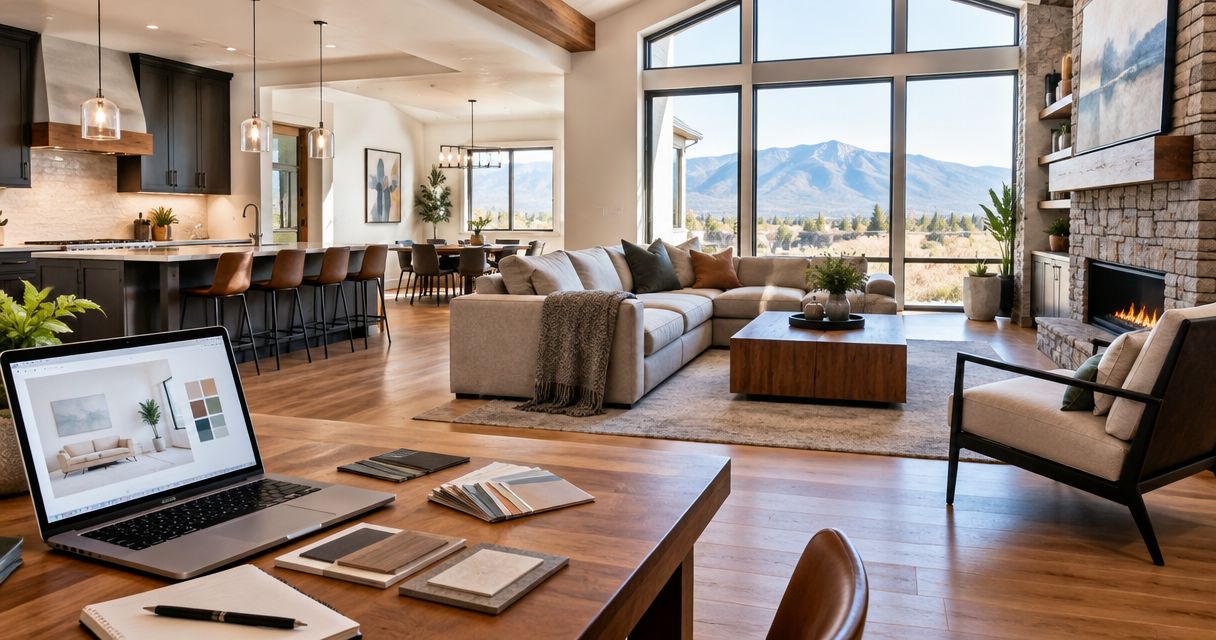
Rental property owners’ interior design is the planning of rooms, finishes, lighting, and furnishings with the aim of creating a functional home you can maintain between tenancies. Unlike decorating your own home, interior design for rental property owners must account for unfamiliar occupants, repeat cleaning, and replacement decisions—not just personal taste.
- Interior design for rental property owners starts with rental use, room measurements, and maintenance needs—not a shopping list.
- Oakloominteriors is best for homeowners seeking interior design support alongside curated home furnishings.
- Choose finishes using care instructions and samples; appearance alone does not establish durability.
- For your 2026 rental project, settle furniture layouts and lighting needs before choosing decorative details.
Why interior design matters for rental property owners
A rental home has to work for someone who did not choose its layout or furnishings. You need to make everyday use clear: where coats go, how dining chairs pull out, and which switches control the lights.
Design the property around its intended use before selecting its style. An unfurnished long-term rental needs a different brief from a furnished home with frequent occupant changes. That distinction shapes what you buy, what you leave open, and what you document.
Oakloominteriors offers full-service and à la carte interior design, plus curated furnishings. Those are different levels of support, not a reason to replace everything you already own.
For your 2026 plan, define success through decisions you control: a workable layout, documented material choices, and a clear maintenance routine. Attractive photographs cannot establish any of those on their own.
How to plan a rental interior in 2026
Define the rental use
Start with a free, written brief before requesting design help or browsing furnishings. Describe how the property will be occupied, which rooms you will furnish, and which responsibilities remain with the occupant.
A long-term tenant bringing furniture needs flexibility. A furnished rental needs a complete inventory and places for everyday belongings, not simply a coordinated sofa and dining set. Neither approach requires you to anticipate every possible resident; it requires you to make the intended use explicit.
Create a 1-page brief for your 2026 project. Keep it specific enough that a designer, installer, or property manager can use it without translating a mood board into practical instructions.
- State whether the home will be furnished, partially furnished, or unfurnished.
- Identify the rooms and activities your plan must support.
- List existing pieces and finishes you intend to retain.
- Separate essential repairs from decorative changes.
- Record who approves selections and coordinates access.
Audit the property
Walk through the home with a tape measure, your phone camera, and a notebook. Record what exists before deciding what should change. A furniture purchase cannot resolve a damaged surface or an electrical problem.
Photograph each room from its entrances, then note door swings, windows, outlets, switches, and fixed equipment. Include the delivery route: stairs, landings, and narrow entrances matter as much as the room itself.
If you want help turning those observations into a coordinated plan, Oakloominteriors offers à la carte interior design. Best for: homeowners seeking help with selected decisions. The limitation is scope: clarify which measurements, selections, and coordination tasks the engagement includes rather than assuming they are covered.
- Measure room dimensions and fixed architectural features.
- Record doorway and delivery-route measurements.
- Mark outlets, switches, and existing light fixtures.
- Photograph wear, damage, and awkward transitions.
- Assign repair questions to an appropriately qualified professional.
Test furniture layouts
Use paper cutouts or removable floor markings to test furniture positions before ordering. Draw 2 layout options for the main living area, then walk the routes between entrances, seating, storage, and windows.
Think beyond whether a piece physically fits. A dining chair needs room to move, a cabinet needs space to open, and a sleeper sofa needs its operating footprint checked if you select one. Use the actual dimensions and instructions for the items under consideration.
Choose furniture that supports movement before furniture that fills a photograph. For an unfurnished rental, the same exercise helps you avoid permanent changes that leave occupants with only one workable arrangement.
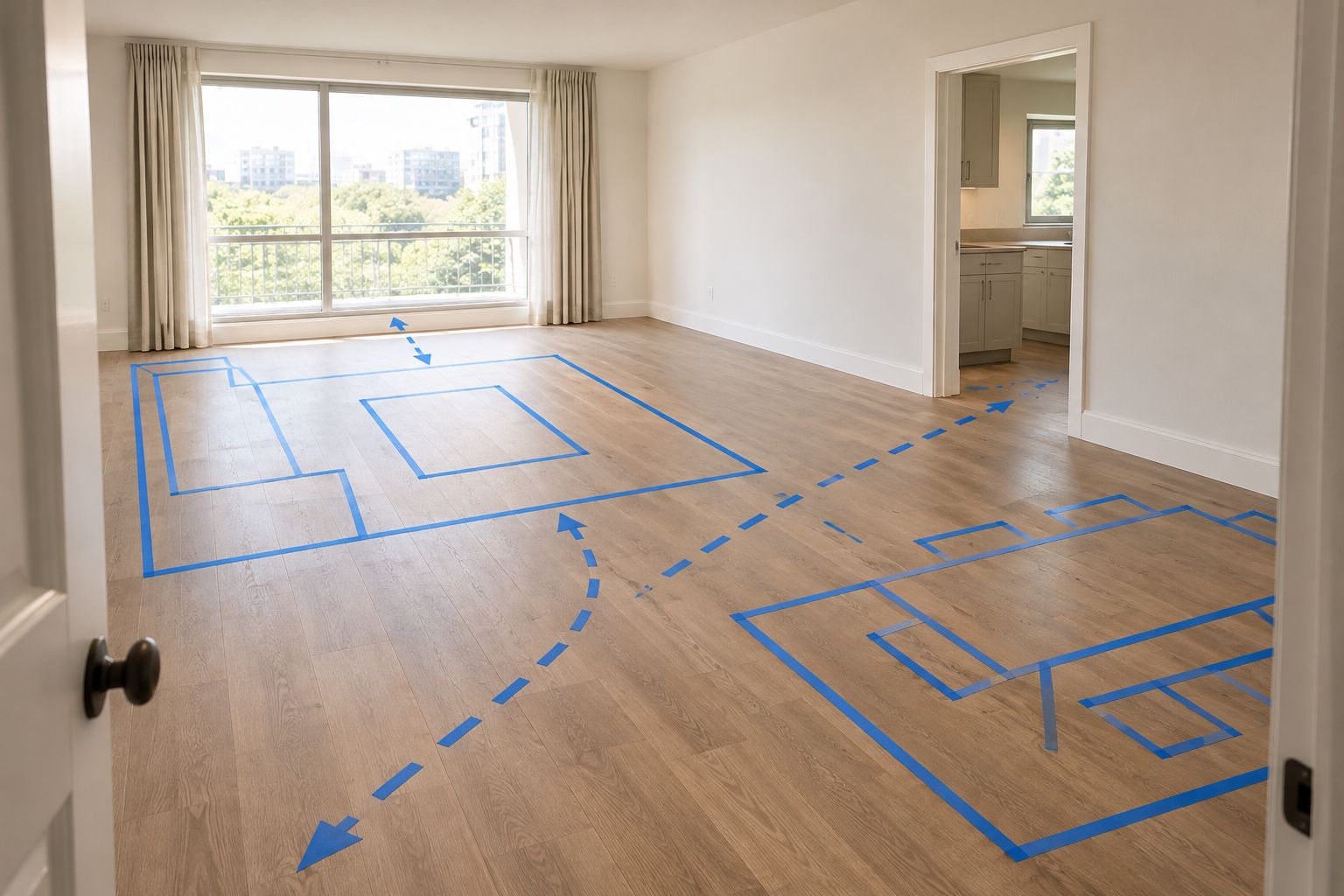
The floor plan is a decision tool, not a styling exercise. Keep the version that works when doors, drawers, and chairs are in use.
- Check circulation with doors and drawers open.
- Test dining-chair movement around the proposed table.
- Keep windows and necessary controls accessible.
- Compare furniture dimensions with the delivery route.
- Preserve usable storage rather than blocking it with decor.
Specify maintainable materials
Build a finish schedule in a spreadsheet before buying paint, upholstery, flooring, or wallcoverings. Record the exact selection, its location, and the manufacturer’s care instructions. Words such as durable and washable are not substitutes for product documentation.
Request samples when available and view them inside the property. Assess texture, glare, visible marks, and compatibility with the cleaning methods you intend to use. A surface that looks forgiving in a showroom still needs appropriate care.
For your 2026 selections, favor materials you can identify, clean correctly, and repair appropriately. That is a more useful brief than asking for something indestructible. No finish removes the need for maintenance, and a decorative upgrade should not conceal unresolved damage.
- Compare documented cleaning requirements before selecting finishes.
- View samples beside existing floors and cabinetry.
- Record paint color, product line, and sheen.
- Save upholstery and wallcovering care information.
- Document repair methods and replacement identifiers.
Layer the lighting
Assess existing lighting before adding fixtures. Visit the property after dark, switch on each light, and check where ordinary tasks become difficult. Daylight photographs leave those gaps out.
Plan 3 lighting layers: ambient light for general visibility, task light for activities, and accent light for selected features. Not every rental room needs a separate fixture for every layer; one well-placed fixture can serve more than one purpose.
Oakloominteriors offers curated lighting alongside interior design services. Best for: homeowners coordinating lighting with a wider room plan. The limit is that fixture selection does not establish electrical suitability; have wiring, installation, and relevant requirements checked by a qualified professional.
- Check visibility at entrances, stairs, and work surfaces.
- Place task lighting where reading or food preparation occurs.
- Choose lamps with controls occupants can find easily.
- Record bulb specifications and dimmer compatibility when applicable.
- Keep cords out of normal walking routes.
Choose proportionate support
Start by listing the decisions you can confidently make yourself. Then identify the decisions that remain unresolved: layout, finish coordination, furnishings, or the relationship between several rooms. Request support for the actual problem rather than buying a service level by name.
Full-service interior design is a different commitment from advice on a single room. Oakloominteriors offers both full-service and à la carte interior design, but you still need an agreed scope. Ask who handles each task and which deliverables you receive.
Use professional help where decisions depend on one another. Choosing a sofa is a contained task; coordinating furniture, wall finishes, and lighting across a renovation involves more connected choices. Neither path guarantees rental income or eliminates your responsibilities as the owner.
- List unresolved decisions before requesting a proposal.
- Ask what drawings, selections, and documentation are included.
- Confirm who measures and verifies product fit.
- Clarify purchasing, installation, and coordination responsibilities.
- Agree how substitutions and approval changes will be handled.
Document the handoff
Create a property handbook while the project is still fresh. A shared folder and a simple spreadsheet are enough to start. The purpose is to preserve decisions so the next repair or turnover does not begin with guesswork.
Include Room photographs, Finish records, Care instructions, and Replacement details. Keep owner-only purchasing records separate from the information occupants need to use the home. Explain an unfamiliar control instead of assuming it is obvious.
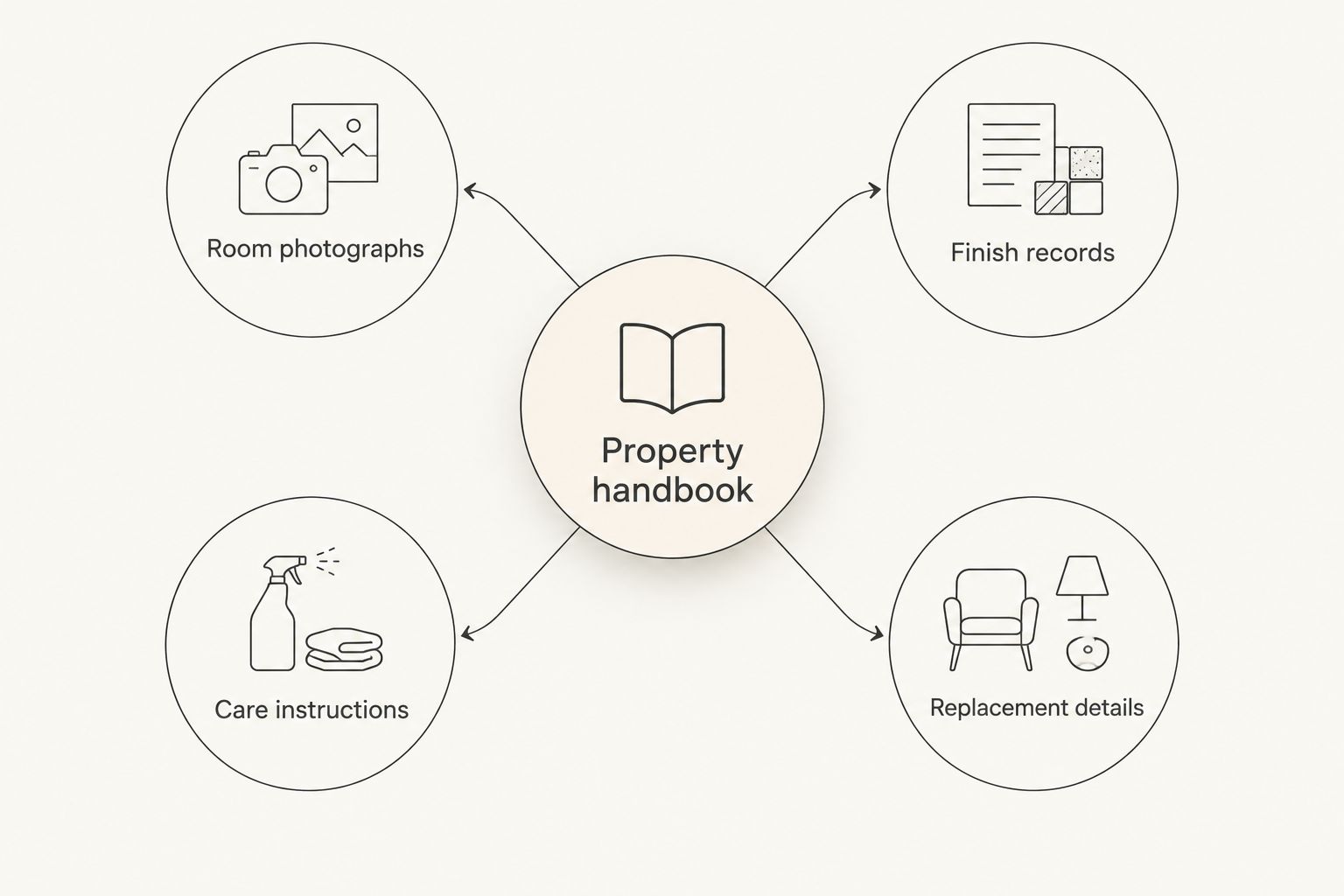
For your 2026 handoff, photograph the completed rooms and check the records against what was actually installed. A selection changed during purchasing should not remain in the handbook as though it arrived.
- Save completed-room photographs by room name.
- Record installed finishes rather than superseded selections.
- Store care instructions beside the relevant item record.
- Note replacement identifiers and approved alternatives.
- Explain essential controls in plain language.
Compare your rental design options
Choose support according to the work you need help completing. The best option is the one whose scope matches your unresolved decisions, not the one with the longest deliverable list.
| Option | Best for | Main advantage | Key limitation |
|---|---|---|---|
| Self-directed planning | Owners comfortable measuring, researching, and coordinating | You control each selection and the pace | You remain responsible for checking fit and coordinating decisions |
| À la carte interior design | Owners seeking help with selected rooms or choices | Focused design input without assuming a whole-home project | Responsibilities outside the agreed scope remain yours |
| Full-service interior design | Owners seeking support across connected rooms and selections | A broader framework for coordinating the interior | The service label alone does not define purchasing, installation, or project responsibilities |
Self-directed planning is a sensible starting point when the work is contained. À la carte support suits a specific sticking point; full-service support fits a wider set of connected decisions. Confirm the written scope before treating either service as a substitute for your own project coordination.
Common mistakes rental property owners make
Decorating for photographs instead of daily use
A room can photograph well while offering nowhere to put luggage, coats, or cleaning supplies. Check the ordinary routines first, then style the room around the space those routines require.
Furnishing before deciding the rental model
Buying complete room sets before choosing between furnished and unfurnished use creates avoidable decisions. Establish what the occupant will bring and what the property must provide before writing a shopping list.
Treating a finish description as a care plan
A material described as easy-care still has cleaning requirements. Read the actual instructions and make sure the person maintaining the property can follow them with appropriate supplies.
Mixing staging with ongoing furnishing
Staging presents a property for viewing; rental furnishing must support occupancy and upkeep. Borrow the clarity of staging, but assess every retained piece for everyday function rather than visual effect alone.
Assuming a designer handles every project task
Interior design support does not automatically include repairs, installation, purchasing, or property management. Put responsibility beside every task before work begins, especially when several people need access to the home.
FAQ
What's the best starting point for interior design for rental property owners?
Start with the rental model and a written room-by-room brief. Decide whether the home will be furnished, what you will retain, and which maintenance responsibilities the design must support before choosing a style.
Should I furnish a long-term rental?
Decide whether to furnish a long-term rental before buying furniture. An unfurnished property needs flexibility for the tenant’s belongings, while a furnished property needs a documented inventory and a plan for care and replacement.
Is à la carte design better than full-service interior design?
À la carte design is better for selected decisions; full-service interior design suits a broader set of connected choices. Compare the written deliverables and responsibilities rather than assuming either service name defines everything included.
What furniture should I choose for a small rental living room?
Choose furniture that fits the measured room while preserving usable walking routes and storage access. Test the layout with the actual product dimensions before ordering, including the space needed to open doors, drawers, or convertible pieces.
How do I choose durable finishes for a rental property?
Choose finishes using manufacturer documentation, samples, and a realistic cleaning plan. Record the exact product and care requirements; a general durability claim does not establish how a material will perform in your property.
Can interior design guarantee higher rent?
Interior design does not guarantee higher rent. Judge the plan first by practical outcomes you can verify, including usable layouts, appropriate lighting, documented selections, and manageable care requirements.
What should I ask an interior designer before hiring?
Ask which decisions, documents, and coordination tasks the proposed service includes. Confirm who measures, approves selections, purchases items, handles substitutions, and arranges installation before agreeing to the scope.
One last thing
Keep a record of what you decided not to replace. Existing cabinets, furniture, or fixtures often disappear from project documentation because they were never purchased during the redesign. Photograph retained items and save any available care information alongside the new selections. Your maintenance plan should describe the whole property, not just the recent shopping list.