Yes, you can buy designer furniture without hiring a designer when the seller accepts purchases directly from homeowners. The exception is trade-only furniture: access depends on the supplier’s purchasing rules, and buying a piece does not automatically include room planning, measurements, or design advice.
- Can you buy designer furniture without hiring a designer? Yes, through sellers that accept homeowner purchases.
- Trade-only furniture follows supplier access rules; a designer label alone does not establish a purchasing restriction.
- Oak + Loom Interiors suits Colorado Springs homeowners seeking curated furnishings and optional interior design services.
- Choose independent shopping for a clear purchase; consider focused design help when layout or coordination remains unresolved.
Can you buy designer furniture without hiring a designer?
Yes. You do not need a design contract simply because a piece is described as designer furniture. What matters is whether the business selling that particular piece accepts your order directly.
For your 2026 search, separate furniture access from design support. One question concerns who can purchase; the other concerns who will help you decide what belongs in your home.
Oak + Loom Interiors is a Colorado Springs design studio and showroom offering curated home furnishings alongside full-service and à la carte interior design. Ask whether a furniture-only purchase is possible for the specific item you want rather than assuming every furnishing requires a service engagement.
These are the main routes to consider:
| Purchasing route | Best for | Main advantage | Main limitation |
|---|---|---|---|
| Independent retail shopping | Homeowners who know what they need | You choose and purchase directly where consumer orders are accepted | You remain responsible for checking fit and coordination |
| Showroom shopping | Homeowners who want to assess furnishings in person | You can inspect displayed pieces and ask product questions | A display does not establish purchasing eligibility or included services |
| À la carte design | Homeowners facing a defined design decision | You can seek help with a limited scope | You must confirm the deliverables and purchasing responsibilities |
| Full-service design | Homeowners seeking support across a broader project | Design decisions can sit within an agreed project scope | It requires a broader service engagement than an isolated purchase |
Why this matters
You can love a chair and still be unsure whether it belongs beside your sofa. That uncertainty is a design question, not necessarily a reason to hand over an entire room.
The useful distinction is between choosing a piece and planning the space around it. Independent shopping gives you control, but it also leaves you responsible for the decisions that connect furniture to everyday life.
Start your 2026 furniture search by identifying the unresolved decision. If you already know the size, purpose, material, and placement, shopping directly is a practical route; if those details remain unsettled, more browsing will not resolve the layout.
Buying independently: best for a clearly defined purchase
Independent shopping fits a project with a clear brief. You know what the furniture needs to do, where it will sit, and what existing pieces it must work with.
For example, replacing a bedside table is a different task from furnishing an open living and dining area. The first can be a contained purchase; the second asks you to coordinate circulation, scale, storage, seating, and lighting.
The advantage is control over the selection process. The limitation is that product information does not amount to a room plan, even when a listing includes attractive photographs and detailed dimensions.
Before choosing this route, write down the reason for the purchase. “A reading chair beside the window” gives you a clearer starting point than “something to make the room feel finished.”
Choose independent shopping when the brief is settled, not merely when the piece looks appealing.
À la carte design: best for a specific sticking point
À la carte design is worth discussing when you want help with a defined issue rather than a whole-home project. That issue might be furniture placement, coordinating finishes, or deciding what to keep.
Oak + Loom Interiors offers à la carte interior design, but the exact scope needs to be agreed before you engage the studio. Describe the decision you need help making and ask what the service includes.
The benefit is a focused conversation around your actual difficulty. The limitation is that a narrow scope does not automatically include sourcing, ordering, installation, or decisions outside that scope.
If you are weighing a limited engagement against broader support, the guide to à la carte versus full-service design addresses that distinction. Compare responsibilities and deliverables before choosing a service label.
Full-service design: best for an interconnected project
Full-service design is the route to discuss when furniture decisions belong to a larger furnishing or renovation project. A room with unresolved lighting, finishes, and layout needs a different conversation from an isolated furniture replacement.
The benefit is the opportunity to address connected decisions within an agreed design scope. The limitation is that a broader engagement requires you to define project boundaries, responsibilities, and approvals rather than simply select an object.
Do not assume “full-service” means the same thing everywhere. Ask what is included, what remains your responsibility, and how purchases are handled.
For a 2026 renovation, explain which construction and finish decisions are still open. Those details give a designer a clearer brief than a folder of furniture photographs alone.
Why furniture access and design support vary
“Designer furniture” does not tell you enough about the buying process. Ask about the following factors before treating a piece as either accessible or restricted:
- Seller eligibility: Does the seller accept homeowner purchases, or does the transaction require a trade account?
- Specific collection: Does the purchasing rule apply to this item, rather than merely to other furnishings the seller carries?
- Service scope: Is the conversation about buying furniture, receiving advice, or engaging an interior designer?
- Selection details: Which dimensions, materials, finishes, and configurations must you confirm before ordering?
- Purchase responsibilities: Who verifies measurements, approves specifications, and handles communication about the order?
These questions also protect you from confusing a helpful sales conversation with a design service. Ask directly what guidance comes with a purchase and what requires a separate engagement.
A furniture label is not a purchasing policy. Confirm access with the seller handling the exact piece.
How do you buy designer furniture without making a costly mistake?
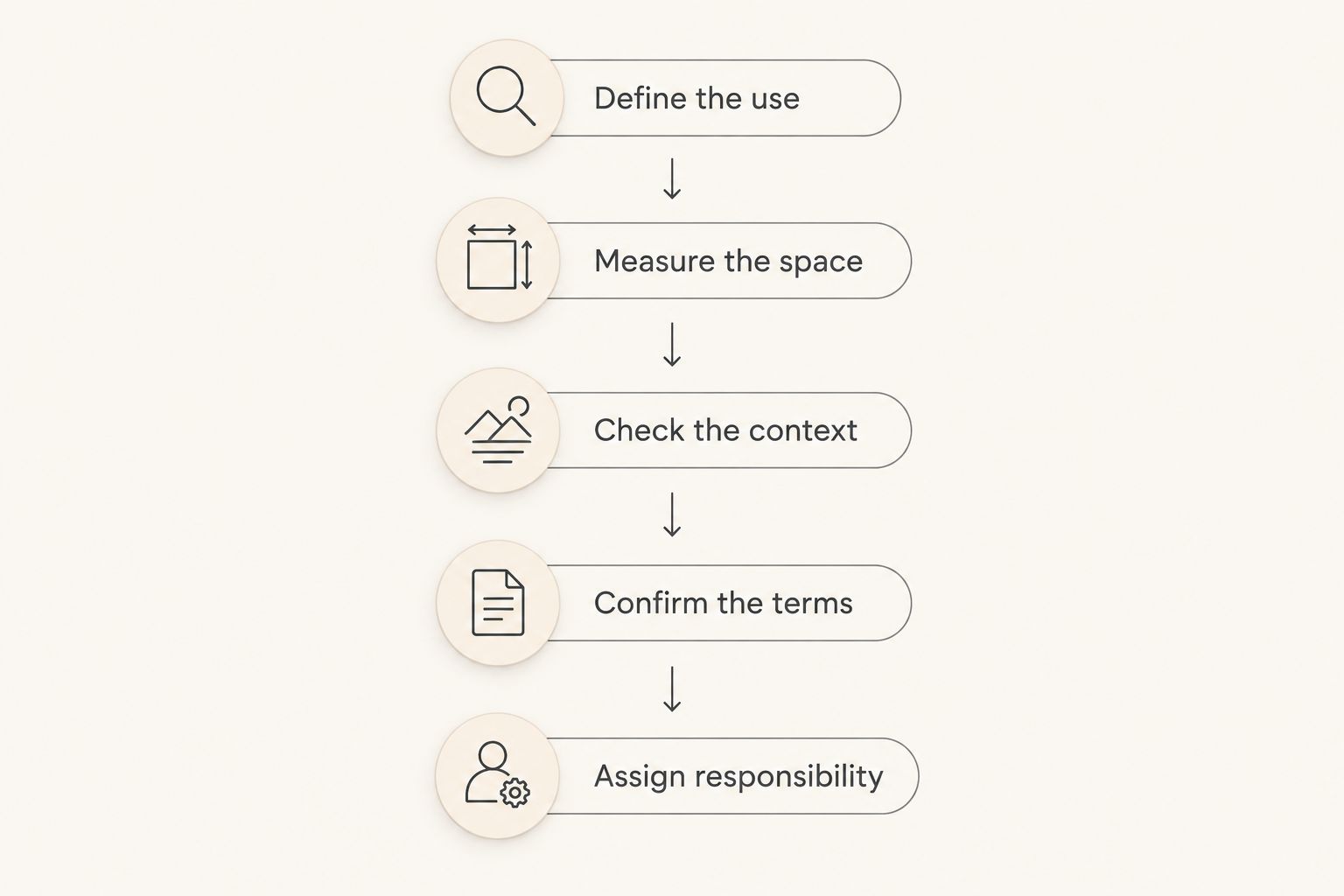
Use these 5 steps to turn an appealing piece into a considered purchase. They work whether you are shopping independently or preparing for a focused design conversation.
1. Define the use
Write a short brief that describes what the piece must do. For seating, think about reading, conversation, lounging, and getting up comfortably; for storage, identify what you need to put away.
Then separate requirements from preferences. A finish you admire should not distract you from a cabinet that cannot hold what you need it to hold.
2. Measure the space
Record 3 dimensions for the furniture: width, depth, and height. Compare them with the intended position in your room, not just with the dimensions of the piece you are replacing.
Make 2 separate checks: room fit and delivery access. A sofa can suit the living room while still presenting a problem at a doorway, stair turn, or elevator.
Mark the footprint on the floor and walk around it. Open nearby doors and drawers so your assessment includes how the room works, not only how the furniture looks against a wall.
3. Check the context
Compare the proposed piece with the furniture, flooring, and finishes you intend to keep. Look at proportions as well as color: a delicate side table and a substantial sofa need consideration together.
Where samples are offered, ask to examine them in the intended room. A screen image cannot show you how a material feels, and a photograph does not recreate your home’s lighting.
4. Confirm the terms
Ask the seller to explain the purchasing requirements and the terms that apply to your selection. Confirm the exact configuration, material, finish, and dimensions in writing before approving an order.
For your 2026 purchase, use the current written specification rather than an old screenshot. Keep the approved details together so you can distinguish what you considered from what you actually selected.
5. Assign responsibility
Decide who is checking measurements, placing the order, and responding if a specification needs clarification. If you are working with a designer, make those responsibilities part of the agreed scope.
Independent shopping does not require you to become an interior designer. It does require a clear owner for each purchasing decision.
Does trade-only furniture mean you must hire a designer?
Trade-only furniture requires a purchasing route accepted by the supplier. That restriction does not, by itself, tell you what level of design service you need.
Ask who is permitted to place the order and what relationship or documentation the supplier requires. Do not assume a showroom can arrange access, and do not assume the only possible engagement is full-service design.
If the piece is unavailable to you through a permitted route, return to the qualities that attracted you. Shape, scale, material, and function give you a useful search brief without tying the whole room to an inaccessible item.
Can you ask for help with just one furniture decision?
Yes, you can seek a focused design engagement rather than assume every question requires a whole-room project. The designer must agree to that scope, and the deliverable should identify the decision being addressed.
Arrive with room photographs, measurements, and a list of what you plan to keep. Explain whether you need a recommendation, a layout review, or help evaluating a particular piece; those are different requests.
A clear question makes a smaller engagement useful. “Does this sofa work with this layout?” is more actionable than asking someone to make an undefined room feel better.
Is showroom furniture shopping the same as hiring a designer?
No, shopping in a showroom and engaging an interior designer are separate activities unless the business expressly combines them. Confirm what assistance is included before relying on a conversation as a room-planning service.
Oak + Loom Interiors combines a showroom and interior design services, making it relevant to homeowners considering either route. Ask about furniture purchasing and design support as separate questions, then choose the level of involvement that fits your project.
Clarify your furniture project
Ask about furniture purchasing and the design support that fits your room.
FAQ
Can I buy designer furniture without an interior designer in 2026?
Yes, you can buy designer furniture directly when the seller accepts homeowner purchases. Confirm the purchasing rules for the exact item, especially when a supplier describes its furnishings as trade-only.
Does designer furniture always mean trade-only furniture?
No, a designer label does not establish a trade-only purchasing restriction. Ask the seller whether you can place the order directly and what requirements apply.
What's the best route if I only need a new sofa?
Independent shopping is a practical route when you have settled the sofa’s dimensions, purpose, and placement. Consider focused design help if the layout or relationship to existing furniture is still unresolved.
Can Oak + Loom Interiors help with furniture and interior design?
Oak + Loom Interiors offers curated home furnishings, full-service interior design, and à la carte interior design in Colorado Springs. Ask which purchasing route and service scope fit your specific project.
Do I need full-service design to get help choosing furniture?
No, a focused design engagement is an alternative when a designer accepts the requested scope. Agree on the deliverable and confirm whether sourcing or purchasing assistance is included.
What should I bring when I visit a furniture showroom?
Bring room measurements, photographs, and a description of how you use the space. Include details of furniture you are keeping and check the delivery route separately from the room layout.
What should I confirm before ordering designer furniture?
Confirm purchasing eligibility, dimensions, materials, finishes, configuration, and applicable purchase terms. Keep the approved specification in writing and establish who is responsible for each check.
One last thing
Before adding furniture, check whether the room needs a different arrangement rather than another piece. Move what you already own into the proposed layout and test the way you walk, sit, and reach for everyday things.
Make that your final 2026 shopping check. You can then purchase independently or ask for help with a specific problem, one room, one piece, one thoughtful decision at a time.