
Multigenerational household furniture is furniture chosen for people of different generations sharing a home, with the aim of making everyday living comfortable for everyone. Choosing furniture for multigenerational households means balancing different bodies, routines, and preferences—not finding one seat or layout that everyone must accept.
- Choose furniture for multigenerational households by testing everyday tasks, not by assigning needs according to age.
- Oak + Loom Interiors suits Colorado Springs homeowners seeking interior design and curated home furnishings together.
- Combine shared seating with individual chairs, clear routes, and storage assigned to each household member.
- Resolve furniture placement before choosing upholstery, lighting, or decorative finishes.
Why furniture matters for multigenerational households
A shared living room serves different purposes throughout the day: conversation, homework, television, reading, and rest. Furniture decisions need to account for those overlapping activities without making one person's comfort another person's obstacle.
Start your 2026 furnishing plan with actual household routines. A grandparent does not automatically need a recliner, and a child does not automatically need a separate playroom. Ask each person what works, what feels difficult, and what they want to keep.
Oak + Loom Interiors is best for Colorado Springs homeowners seeking interior design and curated furnishings from one studio. Design support is an option when you want help bringing those preferences together; your household's lived experience remains the starting point.
The goal is not matching furniture everywhere. It is a home where people can sit, move, eat, and put their belongings away without negotiating every task.
How to choose furniture everyone can use
1. Map your household's daily routines
Before opening a furniture catalog, walk through an ordinary day together. Record where people gather, where someone needs quiet, and which activities compete for the same surface. Include the routines that happen when nobody is entertaining guests.
For your first pass, document 3 daily routines: getting ready, sharing a meal, and settling down in the evening. This is a planning exercise, not a design standard. Add other activities that matter in your home, such as caregiving, working remotely, or hosting relatives.
Distinguish a furniture problem from a household agreement. A larger coffee table will not resolve conflicting television schedules. A separate reading chair helps only if someone actually wants to read in that room.
- Ask each person to name a comfortable place and an uncomfortable one.
- Record which activities happen at the same time.
- Identify belongings that currently lack a storage location.
- Note furniture with sentimental value before proposing replacements.
- Separate everyday needs from occasional guest needs.
2. Test seating with the people who use it
Seat height alone does not tell you whether a chair fits. Cushion firmness, seat depth, arm position, and the person's preferred posture all affect the experience. Test those features together rather than selecting a chair because its description sounds suitable for a particular age.
Try 2 seating layouts with existing furniture before buying anything in 2026: one centered on conversation and another arranged around your household's main shared activity. Photograph both, then compare how people enter, sit, and leave.
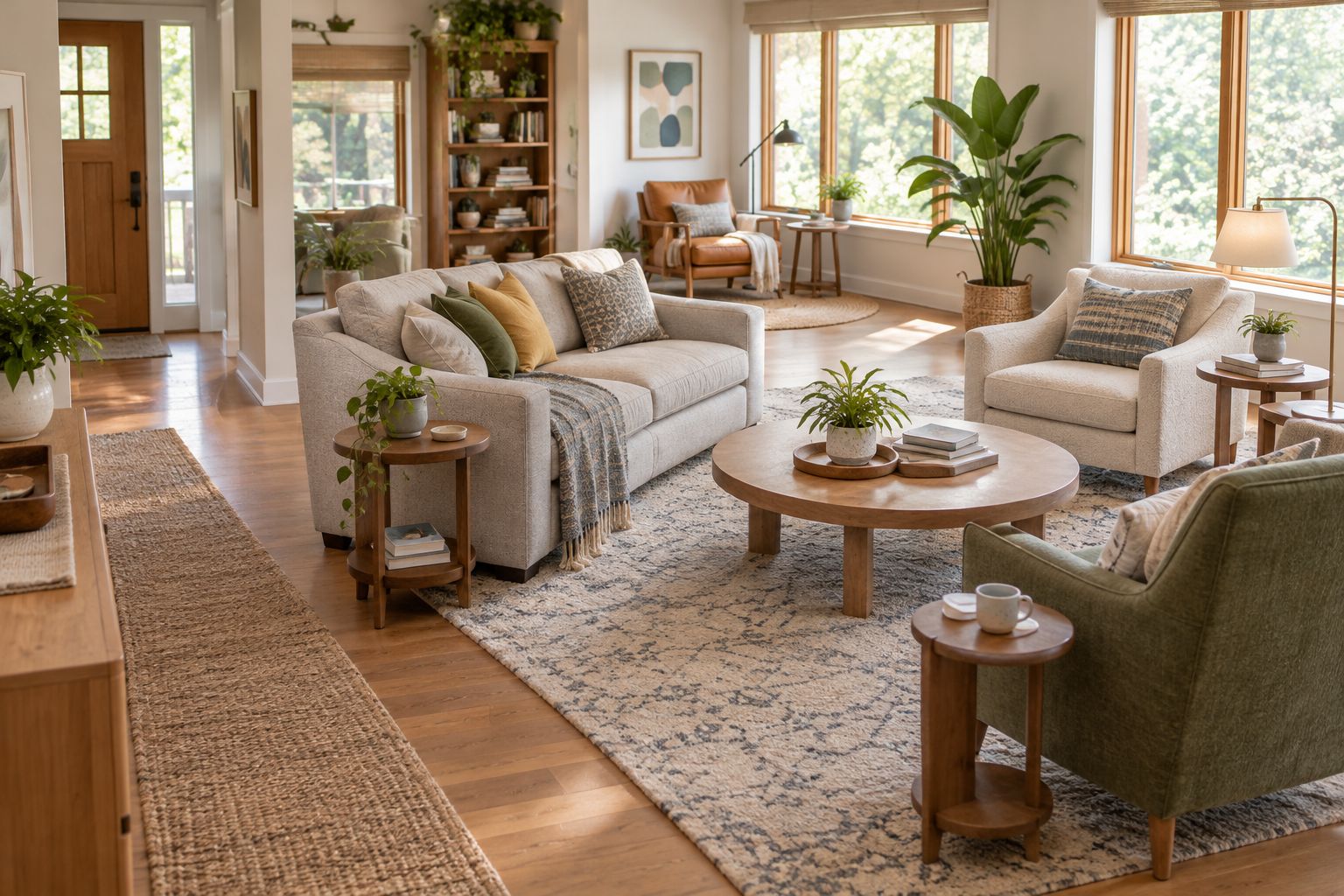
Keep the assessment personal. If someone needs assistance transferring or uses a mobility device, ask a qualified occupational therapist to assess individual requirements rather than treating general furniture advice as a prescription.
- Check whether feet rest comfortably when seated.
- Test sitting down and standing up in the usual way.
- Compare seat depths without relying on extra pillows to correct every mismatch.
- Check whether armrests help or obstruct the person using them.
- Walk the room with chairs occupied, not just pushed back.
3. Choose the level of design help you need
You can develop a useful room plan with paper, a tape measure, and your existing furniture. Sketch doors, windows, fixed features, and furniture footprints. Then mark the routes people actually take rather than the routes that look neat on a drawing.
Bring in design help when the decisions become interconnected: replacing seating affects the rug, the rug changes furniture placement, and the new placement changes where lighting belongs. Ask for help with the unresolved decision, not automatically the entire house.
Oak + Loom Interiors offers full-service and à la carte interior design alongside curated furnishings. Discuss which format fits your project, and confirm the scope before assuming that purchasing, delivery coordination, installation, or other tasks are included.
- List decisions you can make confidently yourself.
- Separate layout questions from furnishing selections.
- Bring measurements, photographs, and furniture you intend to keep.
- Explain conflicting preferences rather than hiding them.
- Confirm responsibilities and deliverables before engaging a designer.
4. Match dining furniture to ordinary meals
Choose your everyday dining arrangement before planning for holiday gatherings. A table that accommodates an occasional crowd still needs to work when fewer people eat, someone walks through the room, or a household member needs help getting settled.
For your 2026 plan, test the full dining setup rather than judging a table in isolation. Chair arms need to work with the tabletop and apron; chair legs need to coexist with the table base. A bench has a different entry and exit pattern from an individual chair.
Individual chairs suit people who want to enter and leave their seat independently. A bench suits households that prefer shared seating and are comfortable with its access limitations. Neither is the automatic answer for every generation.
- Sit in the intended chair at the intended table whenever possible.
- Check knee space around legs, aprons, and supports.
- Test pulling out chairs while someone passes behind them.
- Decide where occasional extra seating will live.
- Check the operating instructions before choosing an extending table.
5. Give shared rooms personal storage
Start by sorting the belongings already in the room. Keep frequently used items near their activity, and move occasional items elsewhere when practical. Reorganizing an existing cabinet often answers the question more clearly than immediately buying another one.
Then assign storage by person or task. A shared room feels less contested when reading glasses, school supplies, chargers, and craft materials each have an understood place. Private papers and medications require different arrangements from communal games or blankets.
Choose storage that its intended user can operate comfortably. Doors, drawers, handles, and lifting lids deserve the same hands-on attention as seating. Follow the manufacturer's installation and anchoring instructions, especially where children are present.
- Give each person a clearly agreed storage location.
- Keep daily belongings within comfortable reach of their user.
- Separate private items from shared supplies.
- Test handles, hinges, drawers, and lids before selecting furniture.
- Plan cable routes without putting cords across walking paths.
6. Examine materials and moving parts
Ask to see material samples and care instructions before committing to upholstery or finishes. A fabric's appearance does not establish its cleaning requirements. Likewise, a finish described as suitable for family use still needs to be evaluated against the manufacturer's actual guidance.
For furniture selected in 2026, write down the care requirements you are willing to follow. If nobody wants to maintain a particular material, that mismatch matters more than whether it looks right in a photograph.
Moving furniture also needs an everyday-use test. Recliners, sleeper mechanisms, extending tables, and nesting pieces change their footprint or configuration during use. Evaluate the open position as carefully as the closed one; added functions bring added tasks.
- Read cleaning instructions for the exact material selected.
- Examine samples in your room's daylight and evening light.
- Ask how spills should be handled on that specific finish.
- Test mechanisms with the household members who will operate them.
- Check where cords, controls, and moving components sit during use.
7. Furnish one room before repeating the approach
Begin with 1 shared room where a change would solve a daily problem. Rearrange what you own, identify the remaining gap, and make the next selection deliberately. This keeps the project focused without requiring every room to reach the same stage at once.
Live with the revised arrangement through normal household routines before copying it elsewhere. Ask whether people actually use the new seating, whether belongings return to their places, and whether circulation still works when the room is busy.
Keep comfort and identity together. An inherited cabinet, a favorite chair, or a familiar lamp can remain part of the plan when it works for the household. A coordinated room does not require erasing everyone's previous home.
- Choose the room with the clearest everyday problem.
- Rearrange existing pieces before ordering replacements.
- Prioritize the item that resolves the main difficulty.
- Confirm delivery access and the assembled furniture footprint.
- Revisit the layout after ordinary shared use.
Compare furnishing approaches for your household
The right approach depends on how much decision-making and coordination you want to retain. For a 2026 project, compare responsibilities before comparing presentation: a set of appealing room images does not tell you who will measure, select, order, or resolve outstanding questions.
| Option | Best for | Main advantage | Key limitation |
|---|---|---|---|
| Self-directed | Households comfortable measuring and making selections together | You control the pace and each decision | You reconcile conflicting needs and check fit yourself |
| Room-by-room | Households with a clear priority space | You can assess changes before repeating them | Choices still need to relate to adjacent spaces |
| À la carte | Homeowners seeking help with a defined design question | Support can focus on a specific decision | Work outside the agreed scope remains separate |
| Full-service | Homeowners seeking a coordinated design project | Decisions can be considered within a wider plan | Responsibilities and deliverables still require explicit agreement |
These approaches can overlap. A room-by-room project can include professional help, and a self-directed household can seek advice on a difficult layout.
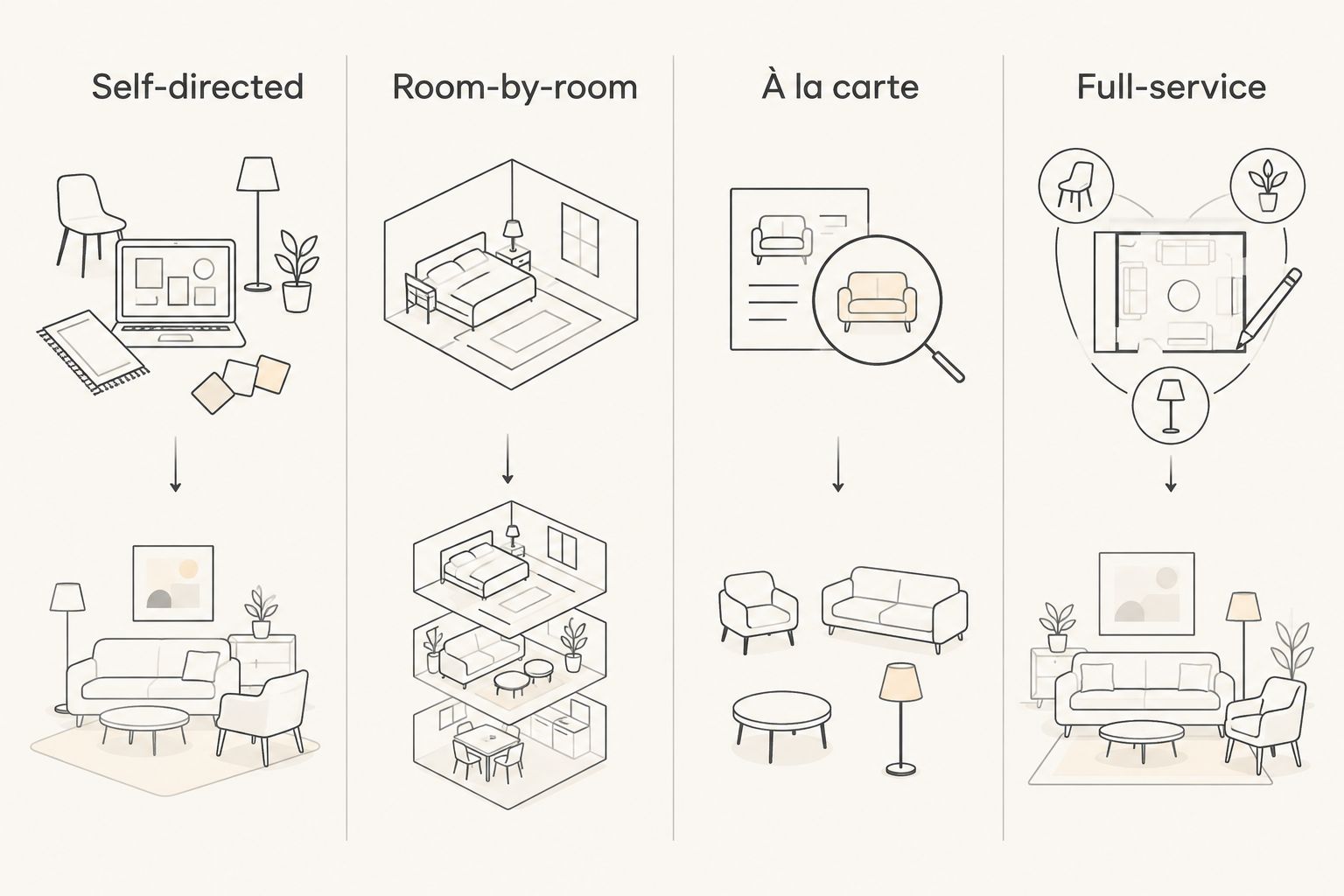
For Oak + Loom Interiors projects, ask which service format addresses your household's unresolved decisions. The service label alone does not establish the scope.
Common mistakes multigenerational households make
Buying one large sofa to solve every seating need
A large sofa provides shared seating, but it does not offer different seat depths or arm positions for every user. Combine seating types when comfort needs differ. Keep the sofa if it works, and assess which individual seat is missing rather than replacing everything together.
Treating age as a furniture specification
People of the same age do not necessarily sit, move, or rest in the same way. Ask each person to test furniture and describe difficulties directly. Where individual access or transfer needs require specialist input, seek that assessment before selecting a piece.
Planning only for the room when it is empty
An open floor plan can become awkward once dining chairs are pulled out, a recliner is extended, or a sofa bed is open. Test those occupied arrangements. Furniture needs to fit during its intended activity, not only while neatly closed and unused.
Letting the most visible preference decide everything
One person's favorite style should not settle everyone else's comfort, storage, or privacy needs. Separate shared requirements from personal choices: agree on circulation and seating first, then give individuals room to choose finishes or pieces that matter to them. A home can feel connected without making every preference identical.
FAQ
What's the best furniture for multigenerational households?
The best furniture fits the people using it and supports their shared routines. Combine tested seating, usable storage, and layouts that remain clear when the furniture is occupied or extended.
Is a sectional better than separate chairs for a shared family room?
A sectional suits shared lounging, while separate chairs allow more individual seating choices. Test the room layout and each person's comfort before deciding; a combination can serve different preferences.
How do I choose a chair for an older parent?
Ask your parent to test the chair rather than choosing from an age label. Check sitting, standing, seat depth, and arm position; seek an occupational therapist's assessment for individual transfer or access requirements.
Should everyone use the same dining chairs?
No, dining chairs do not need to match if different chairs better serve the people using them. Check each chair against the table's height, apron, base, and available space.
Can I furnish a multigenerational home without replacing everything?
Yes, start by rearranging existing furniture and identifying the specific gap that remains. Keep useful and meaningful pieces, then replace or add furniture where it solves an everyday problem.
Can Oak + Loom Interiors help with a shared family home?
Oak + Loom Interiors offers full-service and à la carte interior design plus curated home furnishings in Colorado Springs. Discuss your household's routines, existing furniture, and project scope to determine the appropriate service.
What should I bring to a furniture design consultation?
Bring room measurements, photographs, and a list of furniture you want to keep. Include each household member's priorities and the activities that compete for space.
One last thing
The most useful furniture decision in your 2026 plan might be removing a piece. Before adding another table, cabinet, or chair, temporarily move the least-used item out of the room and repeat your daily routines. Keep the change if the room works better; buy only when you can name the need that remains.